THE ADVENTURE COLLECTIVE® · Independent discovery and booking for outdoor travel

Shop a busy Krabi market and then turn fresh herbs into southern Thai curry paste in a small, hands-on class. Learn coconut oil pressing and fruit carving while sampling street snacks and regional dishes.
Shop a busy Krabi market and then turn fresh herbs into southern Thai curry paste in a small, hands-on class. Learn coconut oil pressing and fruit carving while sampling street snacks and regional dishes.
You step off the tuk-tuk into a narrow corridor of color—piles of lime-green kaffir leaves, islands of chilies, sacks of turmeric and the sharp tang of citrus that dares you to taste. The instructor guides the small group through bargaining rituals and explains which herbs are essential to southern Thai food before you choose what will become dinner.
Verified experiences and guided adventures in the surrounding area.
Operated by B's Thai Cooking Classes · Krabi, Krabi Province
You step off the tuk-tuk into a narrow corridor of color—piles of lime-green kaffir leaves, islands of chilies, sacks of turmeric and the sharp tang of citrus that dares you to taste. The instructor guides the small group through bargaining rituals and explains which herbs are essential to southern Thai food before you choose what will become dinner.
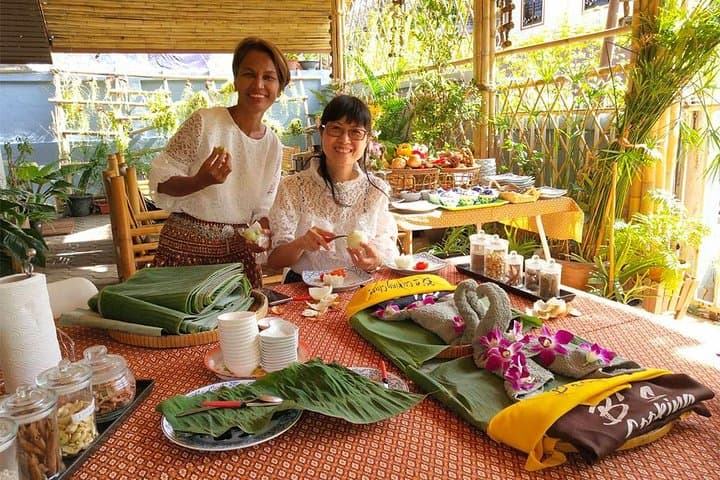
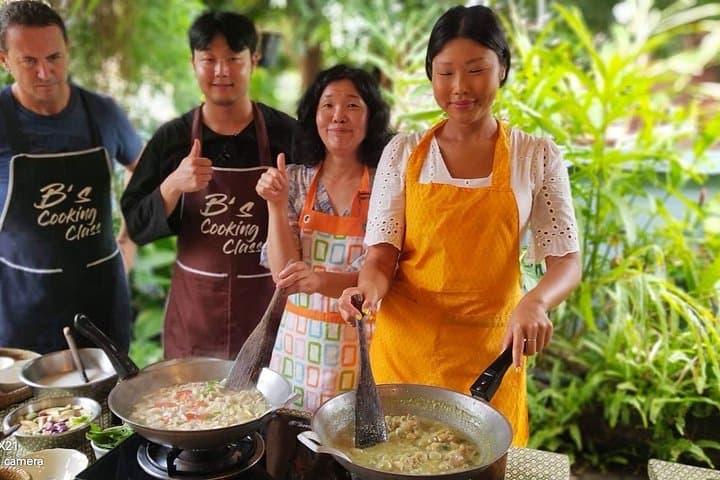
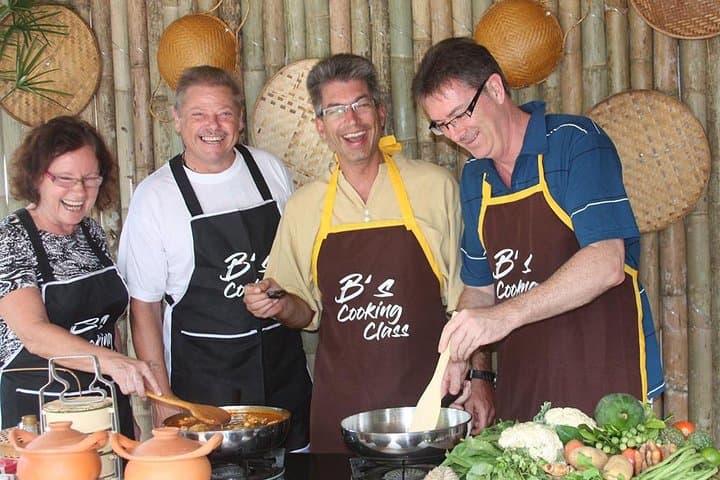
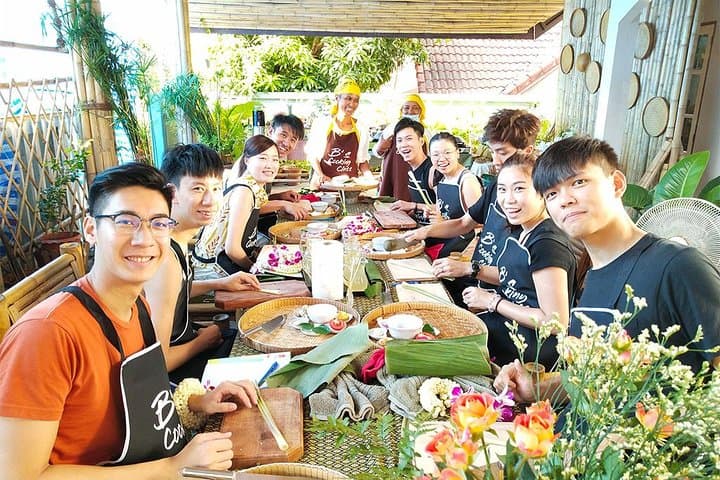
Krabi's food culture is shaped by maritime trade and Malay influence: rich coconut-based curries, bright herb pastes and seafood cooked simply to let the sea speak. Geologically the region is limestone and mangrove—the same soil that makes coconuts and palms prolific—and those local ingredients define southern plates. The class pairs a brisk market walk with a hands-on session in an open-air kitchen where students (2–6 people) make curry paste from scratch, press extra-virgin cold‑pressed coconut oil, prepare deep-fried fish with southern herbs and learn fruit-carving techniques that elevate simple garnishes.
Expect a practical, family-friendly pace: demonstrations, individual feedback and shared tasting. The operator emphasizes natural ingredients and avoids single-use plastic, and includes bottled water, homemade fruit shakes and market snacks.
Practical guidance: arrive early to avoid midday heat, wear closed-toe shoes for market surfaces and bring a small reusable bag for purchases. The class lasts about five hours, is wheelchair accessible and suitable for curious cooks of almost any age. It’s equal parts cultural primer and skill-building kitchen time—ideal for travelers who want a tactile way into Krabi's flavors.
easy.
5 hours.
Light activity—walking through the market and standing in the kitchen for several hours; suitable for most fitness levels
The experience runs about five hours and includes a guided market tour, cooking instruction in an open-air kitchen, bottled water, homemade fruit shakes and market snacks.
Yes—this is family-friendly and wheelchair accessible; notify the operator about mobility or seating needs when booking for the best accommodations.
Inform the host before the class about allergies or dietary restrictions; many dishes can be adapted but advance notice is required for substitutions.
You can take home non-perishables; for fresh items the host can suggest how to pack them or recommend local vendors who ship, but refrigeration is the traveler’s responsibility.
Southern Thai cuisine in Krabi reflects centuries of trade with Malay and Muslim communities; coconut and seafood have long been economic staples in the region.
Hosts prioritize natural ingredients and avoid single-use plastics; supporting small vendors helps sustain local food systems and reduce food miles.
B's Thai Cooking Classes operates guided outdoor trips and adventures with an emphasis on safety, stewardship, and memorable experiences.
You step off the tuk-tuk into a narrow corridor of color—piles of lime-green kaffir leaves, islands of chilies, sacks of turmeric and the sharp tang of citrus that dares you to taste. The instructor guides the small group through bargaining rituals and explains which herbs are essential to southern Thai food before you choose what will become dinner.
You step off the tuk-tuk into a narrow corridor of color—piles of lime-green kaffir leaves, islands of chilies, sacks of turmeric and the sharp tang of citrus that dares you to taste. The instructor guides the small group through bargaining rituals and explains which herbs are essential to southern Thai food before you choose what will become dinner.
Krabi's food culture is shaped by maritime trade and Malay influence: rich coconut-based curries, bright herb pastes and seafood cooked simply to let the sea speak. Geologically the region is limestone and mangrove—the same soil that makes coconuts and palms prolific—and those local ingredients define southern plates. The class pairs a brisk market walk with a hands-on session in an open-air kitchen where students (2–6 people) make curry paste from scratch, press extra-virgin cold‑pressed coconut oil, prepare deep-fried fish with southern herbs and learn fruit-carving techniques that elevate simple garnishes.
Expect a practical, family-friendly pace: demonstrations, individual feedback and shared tasting. The operator emphasizes natural ingredients and avoids single-use plastic, and includes bottled water, homemade fruit shakes and market snacks.
Practical guidance: arrive early to avoid midday heat, wear closed-toe shoes for market surfaces and bring a small reusable bag for purchases. The class lasts about five hours, is wheelchair accessible and suitable for curious cooks of almost any age. It’s equal parts cultural primer and skill-building kitchen time—ideal for travelers who want a tactile way into Krabi's flavors.