THE ADVENTURE COLLECTIVE® · Independent discovery and booking for outdoor travel

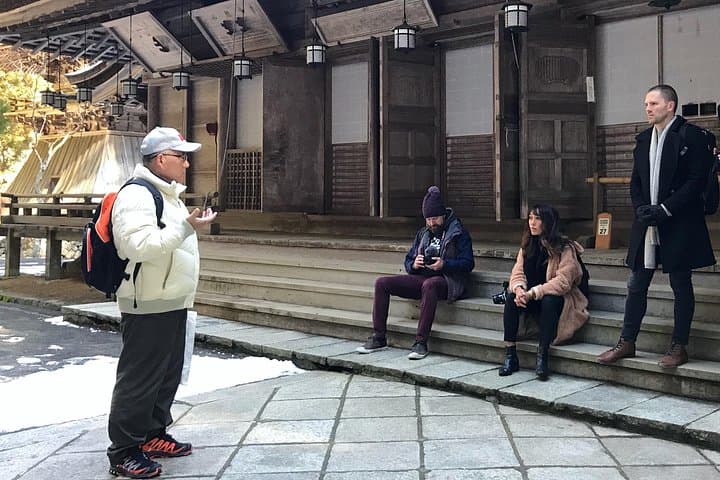
Explore Koyasan’s sacred plateau with a licensed local guide: walk through Okunoin’s centuries of gravestones, stand before the Kompon Daito at Garan, and view Kongobuji’s painted sliding doors. This private full-day tour blends religious history with a measured hike through cedar forests.
Explore Koyasan’s sacred plateau with a licensed local guide: walk through Okunoin’s centuries of gravestones, stand before the Kompon Daito at Garan, and view Kongobuji’s painted sliding doors. This private full-day tour blends religious history with a measured hike through cedar forests.
The morning bus climbs through cedar-shaded switchbacks and drops you onto a high plateau where prayer flags move like punctuation in the cool air. Walk past centuries-old stone lanterns; cedar trunks rise straight and dark, their bark holding the scent of resin and rain. In Okunoin the path narrows to a hushed avenue of gravestones, two kilometers of memory where moss and lichen press close to names carved long ago.
Verified experiences and guided adventures in the surrounding area.
Operated by WAK Guide · Koyasan, Wakayama Prefecture
The morning bus climbs through cedar-shaded switchbacks and drops you onto a high plateau where prayer flags move like punctuation in the cool air. Walk past centuries-old stone lanterns; cedar trunks rise straight and dark, their bark holding the scent of resin and rain. In Okunoin the path narrows to a hushed avenue of gravestones, two kilometers of memory where moss and lichen press close to names carved long ago.
Koyasan sits on Mount Koya in the Kii Peninsula, a Buddhist town founded in the 9th century by Kukai (Kobo Daishi). Geologically the plateau is part of the complex uplift of the Kii range; soils are deep and acidic, fueling the dense cedar and beech forests that frame temples and burial mounds. The Garan monastic complex displays Kompon Daito, a circular mandala tower central to Shingon esoteric practice, while Kongobuji—head temple—holds painted sliding doors and a dry rock garden dating to the Edo period.
Expect roughly four hours of guided walking and stops: an introductory overview, a close look at Garan’s main hall, a 2–3 km stroll through Okunoin to Kobo Daishi’s mausoleum, and a final hour at Kongobuji. Wear sturdy shoes for compacted paths and occasional roots, carry cash for small temple offerings and snacks, and plan for quiet reflection—photography rules vary by site. Mornings bring mist and the clearest light; afternoons can be busy with day trips from Osaka. The private guide frames history, ritual, and architecture into a single loop, making Koyasan legible while leaving room for the place to speak on its own terms.
moderate.
4–5 hours.
Moderate fitness for several short walks and standing during temple visits; able to walk 2–3 km on uneven paths.
Expect about 3–4 kilometers total, including the 2 km Okunoin stretch; walking is steady but not strenuous.
Photography rules vary—exterior and cemetery photos are generally okay but interior halls and certain altars often prohibit photos; follow signs and your guide’s instructions.
Some areas have uneven ground and steps; the tour notes wheelchair accessibility for some transport, but discuss specific mobility needs when booking.
This private tour covers guiding services; some specific temple admissions or special areas may require separate fees—check with the operator.
Koyasan was established by Kukai (Kobo Daishi) in 816 as the center for Shingon esoteric Buddhism and has been a monastic hub ever since.
The area balances tourism with temple preservation; visitors help by staying on paths, minimizing noise, and avoiding offerings that harm plant life.
WAK Guide operates guided outdoor trips and adventures with an emphasis on safety, stewardship, and memorable experiences.
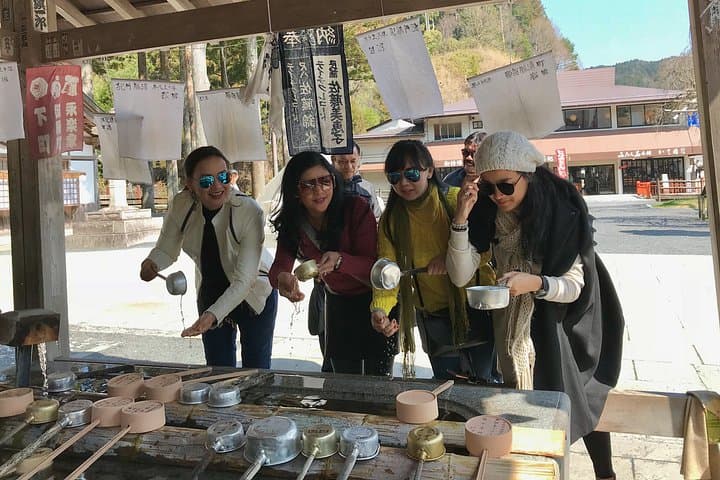
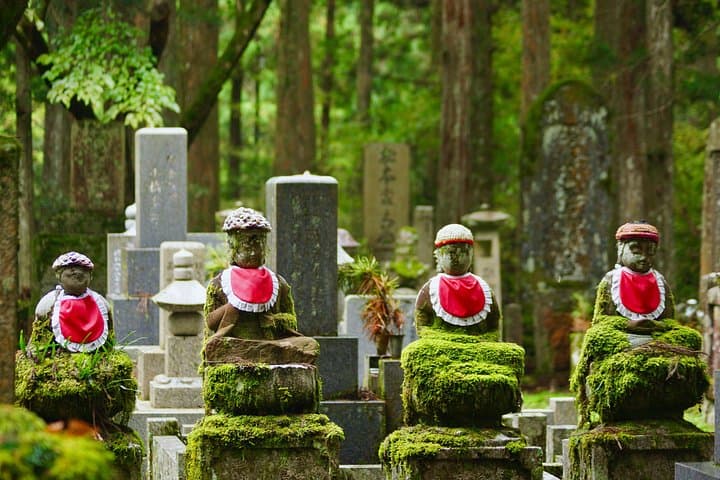
The morning bus climbs through cedar-shaded switchbacks and drops you onto a high plateau where prayer flags move like punctuation in the cool air. Walk past centuries-old stone lanterns; cedar trunks rise straight and dark, their bark holding the scent of resin and rain. In Okunoin the path narrows to a hushed avenue of gravestones, two kilometers of memory where moss and lichen press close to names carved long ago.
The morning bus climbs through cedar-shaded switchbacks and drops you onto a high plateau where prayer flags move like punctuation in the cool air. Walk past centuries-old stone lanterns; cedar trunks rise straight and dark, their bark holding the scent of resin and rain. In Okunoin the path narrows to a hushed avenue of gravestones, two kilometers of memory where moss and lichen press close to names carved long ago.
Koyasan sits on Mount Koya in the Kii Peninsula, a Buddhist town founded in the 9th century by Kukai (Kobo Daishi). Geologically the plateau is part of the complex uplift of the Kii range; soils are deep and acidic, fueling the dense cedar and beech forests that frame temples and burial mounds. The Garan monastic complex displays Kompon Daito, a circular mandala tower central to Shingon esoteric practice, while Kongobuji—head temple—holds painted sliding doors and a dry rock garden dating to the Edo period.
Expect roughly four hours of guided walking and stops: an introductory overview, a close look at Garan’s main hall, a 2–3 km stroll through Okunoin to Kobo Daishi’s mausoleum, and a final hour at Kongobuji. Wear sturdy shoes for compacted paths and occasional roots, carry cash for small temple offerings and snacks, and plan for quiet reflection—photography rules vary by site. Mornings bring mist and the clearest light; afternoons can be busy with day trips from Osaka. The private guide frames history, ritual, and architecture into a single loop, making Koyasan legible while leaving room for the place to speak on its own terms.