THE ADVENTURE COLLECTIVE® · Independent discovery and booking for outdoor travel

Spend a day moving between olive groves, mountain springs and a swim-friendly freshwater lake. This guided loop from Rethymno combines an olive-oil mill tour, Argyroupolis’ waterfalls and free time at Kournas Lake for lunch and a dip.
Spend a day moving between olive groves, mountain springs and a swim-friendly freshwater lake. This guided loop from Rethymno combines an olive-oil mill tour, Argyroupolis’ waterfalls and free time at Kournas Lake for lunch and a dip.
A cool morning breeze off the north coast carries the smell of olive leaves as the minibus hums away from Rethymno toward inland springs and a freshwater lake. At Kournas, the road opens onto a shallow, green-blue basin ringed by low hills; fishermen push small skiffs across water that invites a slow swim while tavern terraces pour coffee and raki. Later, Argyroupolis presents a different cadence—stone lanes threaded by clear springs and cascading drops that keep plane trees and ferns green through summer.
Verified experiences and guided adventures in the surrounding area.
Operated by Markidis Travel · Rethymno, Crete
A cool morning breeze off the north coast carries the smell of olive leaves as the minibus hums away from Rethymno toward inland springs and a freshwater lake. At Kournas, the road opens onto a shallow, green-blue basin ringed by low hills; fishermen push small skiffs across water that invites a slow swim while tavern terraces pour coffee and raki. Later, Argyroupolis presents a different cadence—stone lanes threaded by clear springs and cascading drops that keep plane trees and ferns green through summer.
This circuit sketches Crete’s long human and geological story: limestone ridges carved by winter torrents feed springs that sustained settlements from Roman times to the present, while olive groves—cultivated here for millennia—still supply cold-pressed oil at family mills. Cultural life in these villages centers on food, water, and the rhythm of harvests; taverns serve local cheeses, dakos, and grilled fish or trout from nearby streams.
Practically, expect about a half-day excursion that mixes short walks, a mill tour, time at waterfalls, and 2–2.5 hours at the lake for swimming and lunch. The terrain is low-elevation and easy underfoot but can be uneven near springs; bring swimwear, water, and sun protection. Photography is rewarding at dawn or late afternoon when reflections sharpen and tavern light softens.
Whether you go for a swim, a guided look at traditional olive pressing, or a slow meal by the water, this loop gives a compact, varied taste of Cretan landscape, food traditions, and freshwater ecosystems.
easy.
6–7 hours.
Suitable for travelers in average physical condition; includes short easy walks and some standing during the mill visit
Tours commonly offer pickup from Rethymno meeting points or hotels—confirm your pickup point at booking and allow time for a scheduled pickup window.
Yes; the tour allows roughly 2–2.5 hours at the lake for swimming and lunch—bring swimwear and a towel.
Yes; the mill visit is informative and family-friendly, showing traditional and modern pressing methods with tasting opportunities.
Argyroupolis and the mill have uneven, stone surfaces and steps; accessibility is limited—contact the operator to discuss specific needs.
Olive cultivation and oil production have shaped Crete for thousands of years; many local mills continue centuries-old practices adapted with modern presses. Argyroupolis grew around perennial springs and contains archaeological remains from Roman and Byzantine periods.
Kournas Lake is a freshwater habitat sensitive to tourism pressures—avoid litter, limit motorized boats, and support local businesses that follow sustainable practices.
Markidis Travel operates guided outdoor trips and adventures with an emphasis on safety, stewardship, and memorable experiences.


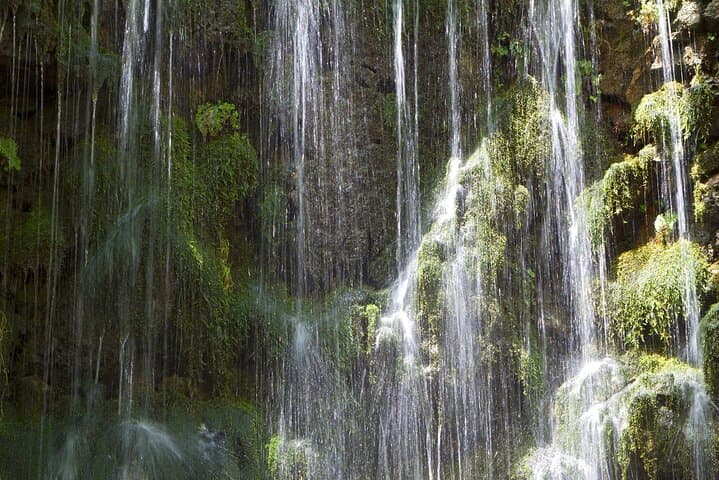
A cool morning breeze off the north coast carries the smell of olive leaves as the minibus hums away from Rethymno toward inland springs and a freshwater lake. At Kournas, the road opens onto a shallow, green-blue basin ringed by low hills; fishermen push small skiffs across water that invites a slow swim while tavern terraces pour coffee and raki. Later, Argyroupolis presents a different cadence—stone lanes threaded by clear springs and cascading drops that keep plane trees and ferns green through summer.
A cool morning breeze off the north coast carries the smell of olive leaves as the minibus hums away from Rethymno toward inland springs and a freshwater lake. At Kournas, the road opens onto a shallow, green-blue basin ringed by low hills; fishermen push small skiffs across water that invites a slow swim while tavern terraces pour coffee and raki. Later, Argyroupolis presents a different cadence—stone lanes threaded by clear springs and cascading drops that keep plane trees and ferns green through summer.
This circuit sketches Crete’s long human and geological story: limestone ridges carved by winter torrents feed springs that sustained settlements from Roman times to the present, while olive groves—cultivated here for millennia—still supply cold-pressed oil at family mills. Cultural life in these villages centers on food, water, and the rhythm of harvests; taverns serve local cheeses, dakos, and grilled fish or trout from nearby streams.
Practically, expect about a half-day excursion that mixes short walks, a mill tour, time at waterfalls, and 2–2.5 hours at the lake for swimming and lunch. The terrain is low-elevation and easy underfoot but can be uneven near springs; bring swimwear, water, and sun protection. Photography is rewarding at dawn or late afternoon when reflections sharpen and tavern light softens.
Whether you go for a swim, a guided look at traditional olive pressing, or a slow meal by the water, this loop gives a compact, varied taste of Cretan landscape, food traditions, and freshwater ecosystems.