THE ADVENTURE COLLECTIVE® · Independent discovery and booking for outdoor travel

Spend a half-day moving from Kotor’s medieval lanes to Perast’s waterfront, cross to Our Lady of the Rocks and finish in a local kitchen where you learn to make Adriatic dishes. This tour blends history, a short boat ride and hands-on cuisine into a single practical experience.
Spend a half-day moving from Kotor’s medieval lanes to Perast’s waterfront, cross to Our Lady of the Rocks and finish in a local kitchen where you learn to make Adriatic dishes. This tour blends history, a short boat ride and hands-on cuisine into a single practical experience.
The morning air over Boka Bay smells of salt and citrus; fishermen untie lines while the town clock on Armory Square clicks through another hour. Walks through Kotor’s compact medieval lanes put you face to face with centuries of trade—stone alleys, carved doorways and domes that have watched merchants come and go. This half-day tour stitches together that urban pulse with the stillness of Perast and a short boat ride to the artificial island of Our Lady of the Rocks, then finishes in a Kotor family kitchen where you apron up and cook the bay’s food.
Verified experiences and guided adventures in the surrounding area.
Operated by Monte Mare Travel · Kotor, Kotor Municipality
The morning air over Boka Bay smells of salt and citrus; fishermen untie lines while the town clock on Armory Square clicks through another hour. Walks through Kotor’s compact medieval lanes put you face to face with centuries of trade—stone alleys, carved doorways and domes that have watched merchants come and go. This half-day tour stitches together that urban pulse with the stillness of Perast and a short boat ride to the artificial island of Our Lady of the Rocks, then finishes in a Kotor family kitchen where you apron up and cook the bay’s food.
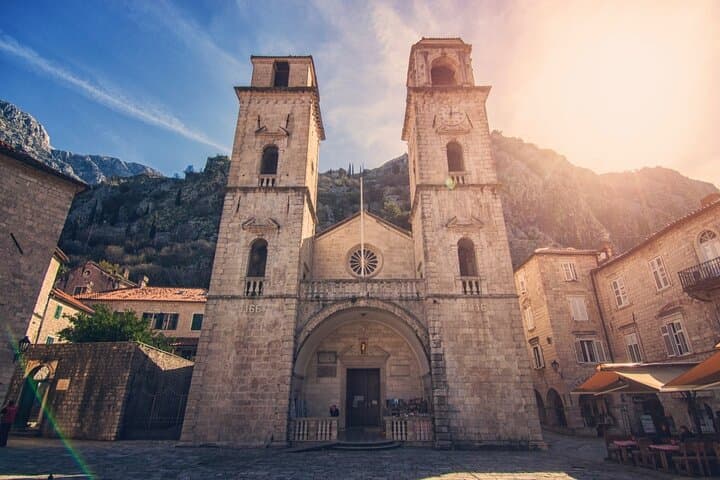
Kotor’s walls and churches reflect a layered history: Roman foundations, Venetian palaces and Austro-Hungarian details stacked like chapters. The city is UNESCO-listed for good reason—its defensive ramparts and tight urban fabric survived earthquakes and empires. Perast, 12 km northwest, feels quieter: baroque palaces leaning toward the water and bell towers that trace a maritime past stretching back to Neolithic finds in the area. Our Lady of the Rocks itself is a human-made island with a 15th-century church and museum whose icons and votive gifts tell of sailors’ vows and the bay’s old superstitions.
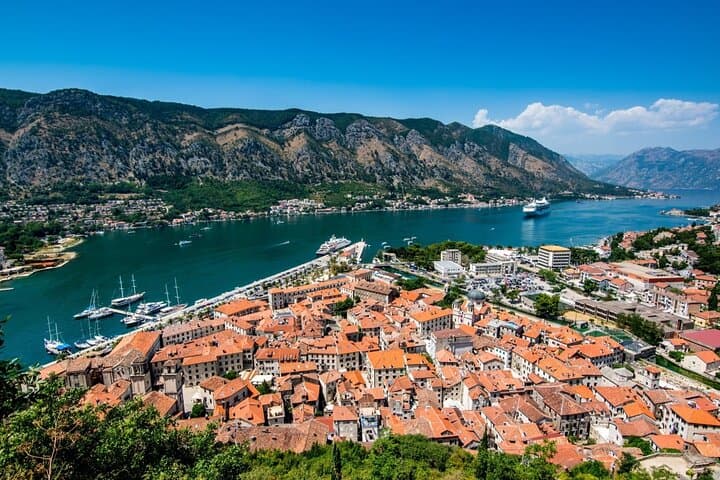
Geologically, the bay is a drowned karst valley—a fjord-like inlet where limestone cliffs slope into calm, reflective water. That geology shapes everything here: narrow coastal roads, sheltered anchorages and lenses of clear Mediterranean sea that dare visitors to look closer. The region’s cuisine is a practical response to place: olive oil, citrus, local fish and simple herbs. The cooking class brings those ingredients into focus—learn two or three local dishes and sit down to a three-course lunch with local wine or rakija.
Practical: the tour runs about 5–6 hours, including transfer, a 20-minute coastal drive/boat crossing to Perast, a 45-minute island visit and roughly three hours for the home cooking session. Terrains are cobbled streets, short stair sections and a stable short boat transfer—suitable for most fitness levels but expect steps and narrow alleys. Bring sensible shoes for cobbles and a light jacket for the sea breeze.
Timing matters: mornings are best for soft light and fewer cruise crowds in Kotor; late-afternoon departures make the boat ride golden but shorten daylight in the kitchen. Accessibility is generally good; transportation and many sites are wheelchair-friendly, though island access requires boarding a small boat.
Local etiquette: greet hosts with curiosity and a smile—family kitchens here are social. Take the recipes home, but also try the regional variations: Perast fish stews, baked Adriatic fish, and desserts built on simple fruit and honey. Leave plastic behind; Boka Bay sustains itself best when visitors follow local recycling and water-conservation habits.
For travelers who want a compact cultural day—historic streets, a calm island, and hands-on food—this tour tightens the best of Montenegro’s coast into a single, practical, and memorable experience.
easy.
5–6 hours.
Suitable for most fitness levels; requires short walks on cobbles and boarding a small boat
The short boat crossing from Perast to the island takes about 10–20 minutes each way, depending on conditions.
Yes—families and children can participate, though younger kids may sit out parts of the hands-on prep; check with the operator for infant seating.
Inform the operator at booking; hosts can usually adjust dishes for common allergies and dietary needs if notified in advance.
The standard itinerary includes exterior visits and viewpoints; specific entrance tickets (like Saint Tryphon) may require extra time or fees—ask to include it when booking.
The tour includes an English-speaking licensed guide; other languages may be available on request for an extra fee.
The organizer may cancel or reschedule due to bad weather—boat crossings and island visits depend on safe sea conditions.
Kotor’s fortified core shows Venetian maritime power and later Austro-Hungarian influences; Perast was a wealthy seafaring town whose sailors funded the man-made island Our Lady of the Rocks.
Boka Bay is ecologically sensitive—minimize plastic use, follow local waste rules, and support family-run operations that practice small-scale, low-impact tourism.
Monte Mare Travel operates guided outdoor trips and adventures with an emphasis on safety, stewardship, and memorable experiences.
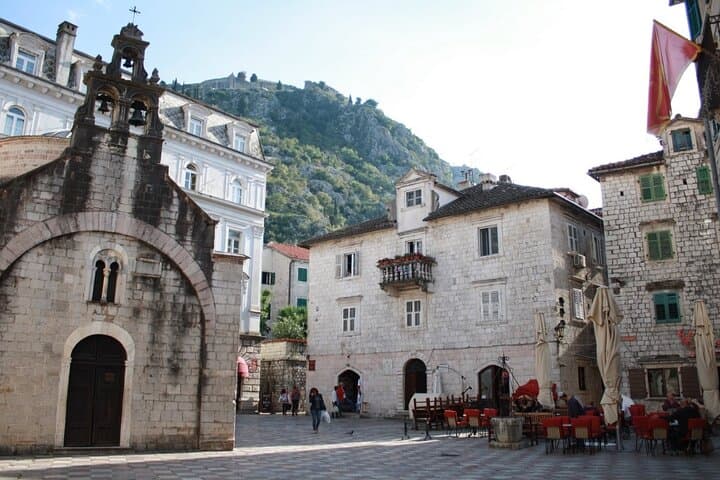
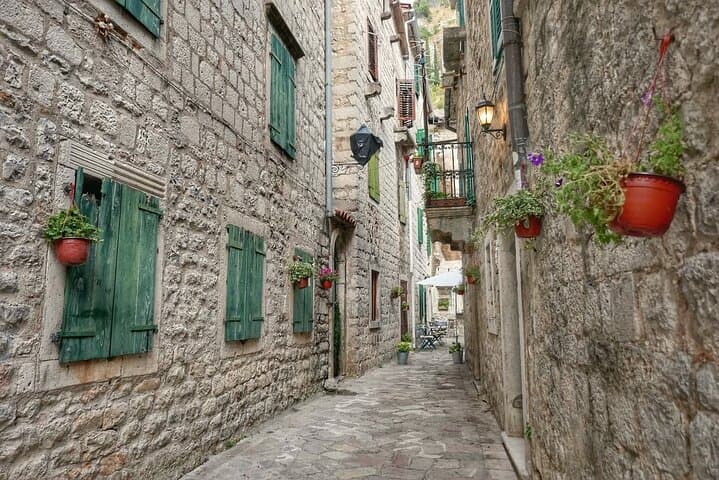
The morning air over Boka Bay smells of salt and citrus; fishermen untie lines while the town clock on Armory Square clicks through another hour. Walks through Kotor’s compact medieval lanes put you face to face with centuries of trade—stone alleys, carved doorways and domes that have watched merchants come and go. This half-day tour stitches together that urban pulse with the stillness of Perast and a short boat ride to the artificial island of Our Lady of the Rocks, then finishes in a Kotor family kitchen where you apron up and cook the bay’s food.
The morning air over Boka Bay smells of salt and citrus; fishermen untie lines while the town clock on Armory Square clicks through another hour. Walks through Kotor’s compact medieval lanes put you face to face with centuries of trade—stone alleys, carved doorways and domes that have watched merchants come and go. This half-day tour stitches together that urban pulse with the stillness of Perast and a short boat ride to the artificial island of Our Lady of the Rocks, then finishes in a Kotor family kitchen where you apron up and cook the bay’s food.
Kotor’s walls and churches reflect a layered history: Roman foundations, Venetian palaces and Austro-Hungarian details stacked like chapters. The city is UNESCO-listed for good reason—its defensive ramparts and tight urban fabric survived earthquakes and empires. Perast, 12 km northwest, feels quieter: baroque palaces leaning toward the water and bell towers that trace a maritime past stretching back to Neolithic finds in the area. Our Lady of the Rocks itself is a human-made island with a 15th-century church and museum whose icons and votive gifts tell of sailors’ vows and the bay’s old superstitions.
Geologically, the bay is a drowned karst valley—a fjord-like inlet where limestone cliffs slope into calm, reflective water. That geology shapes everything here: narrow coastal roads, sheltered anchorages and lenses of clear Mediterranean sea that dare visitors to look closer. The region’s cuisine is a practical response to place: olive oil, citrus, local fish and simple herbs. The cooking class brings those ingredients into focus—learn two or three local dishes and sit down to a three-course lunch with local wine or rakija.
Practical: the tour runs about 5–6 hours, including transfer, a 20-minute coastal drive/boat crossing to Perast, a 45-minute island visit and roughly three hours for the home cooking session. Terrains are cobbled streets, short stair sections and a stable short boat transfer—suitable for most fitness levels but expect steps and narrow alleys. Bring sensible shoes for cobbles and a light jacket for the sea breeze.
Timing matters: mornings are best for soft light and fewer cruise crowds in Kotor; late-afternoon departures make the boat ride golden but shorten daylight in the kitchen. Accessibility is generally good; transportation and many sites are wheelchair-friendly, though island access requires boarding a small boat.
Local etiquette: greet hosts with curiosity and a smile—family kitchens here are social. Take the recipes home, but also try the regional variations: Perast fish stews, baked Adriatic fish, and desserts built on simple fruit and honey. Leave plastic behind; Boka Bay sustains itself best when visitors follow local recycling and water-conservation habits.
For travelers who want a compact cultural day—historic streets, a calm island, and hands-on food—this tour tightens the best of Montenegro’s coast into a single, practical, and memorable experience.