THE ADVENTURE COLLECTIVE® · Independent discovery and booking for outdoor travel

Walk Kotor’s UNESCO-listed old town in an hour: explore medieval squares, Saint Tryphon’s cathedral, and compact streets that reveal the bay’s seafaring history. Ideal for a quick, informative introduction to Boka Kotorska.
Walk Kotor’s UNESCO-listed old town in an hour: explore medieval squares, Saint Tryphon’s cathedral, and compact streets that reveal the bay’s seafaring history. Ideal for a quick, informative introduction to Boka Kotorska.
A cool Adriatic breeze hits the Sea Gate as you step off the quay into Kotor’s compact old town—stone streets underfoot, boats bobbing in the near-silent bay, and a clock tower watching the square. The first hour of this guided walk concentrates the city into an approachable circuit: Armory Square, Flour Square, Saint Tryphon’s façade, and the layered churches that mark Kotor’s faiths and fortunes.
Verified experiences and guided adventures in the surrounding area.
Operated by Monte Mare Travel · Kotor, Kotor Municipality
A cool Adriatic breeze hits the Sea Gate as you step off the quay into Kotor’s compact old town—stone streets underfoot, boats bobbing in the near-silent bay, and a clock tower watching the square. The first hour of this guided walk concentrates the city into an approachable circuit: Armory Square, Flour Square, Saint Tryphon’s façade, and the layered churches that mark Kotor’s faiths and fortunes.
Kotor’s history reads like a map of empires: Illyrian roots, Venetian traders who fortified the town, Ottoman threats kept at bay, then Austro-Hungarian influence. Geologically, the bay is a drowned river canyon carved by rivers and glaciation, producing steep limestone slopes that rise from the water and give Kotor dramatic verticality—hence the famous ancient walls climbing the hills above the old town.
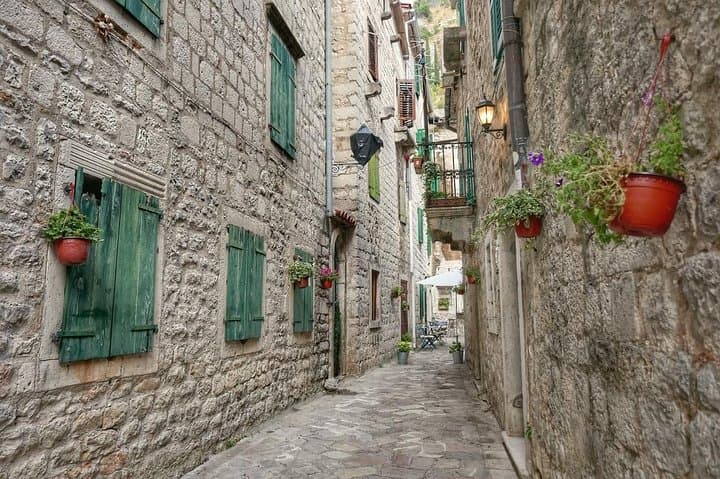
Culturally, the town is maritime and festival-driven; local cafes pour thick coffee, and narrow lanes open onto family-run konobas serving grilled fish and local cheeses. The guide points out architectural markers—medieval palaces, Orthodox and Catholic churches—while pausing at viewpoints where the bay seems to compress into a single polished mirror.
Practical guidance: wear firm-soled shoes for cobbles and brief stair sections, bring water and sun protection in summer, and plan the tour early or late in the day to avoid peak cruise-ship crowds. The route is compact and wheelchair accessible on main streets, but some alleys and viewpoints require steps. Allow an hour to absorb key sites, and add time afterward to linger in a piazza or climb the initial ramparts for a wider view of Boka Kotorska.
easy.
1 hour.
Suitable for most fitness levels; requires comfortable walking on cobbles and brief steps for some viewpoints.
The guided itinerary runs about 60 minutes and covers the main squares, the cathedral, and key churches in the old town.
Main streets and central squares are wheelchair accessible, but some alleys and viewpoints include steps and uneven paving.
This tour offers instant confirmation and accepts mobile tickets, but book ahead in high season to guarantee your spot.
Admission to specific monuments is not included; the tour focuses on exterior views and historical interpretation.
Kotor evolved as a merchant and naval town under Venetian rule; its fortified walls and layout reflect centuries of maritime trade and defensive needs.
Kotor manages visitor flow to protect fragile stonework and historic interiors; stick to marked routes, avoid climbing on ruins, and support local businesses to sustain heritage stewardship.
Monte Mare Travel operates guided outdoor trips and adventures with an emphasis on safety, stewardship, and memorable experiences.
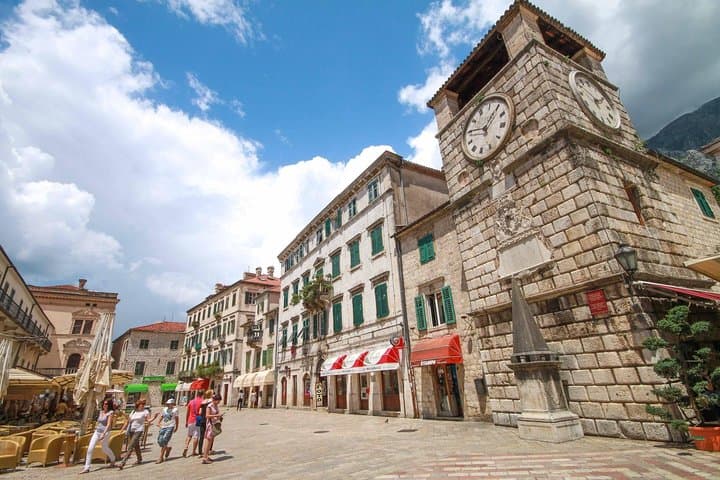
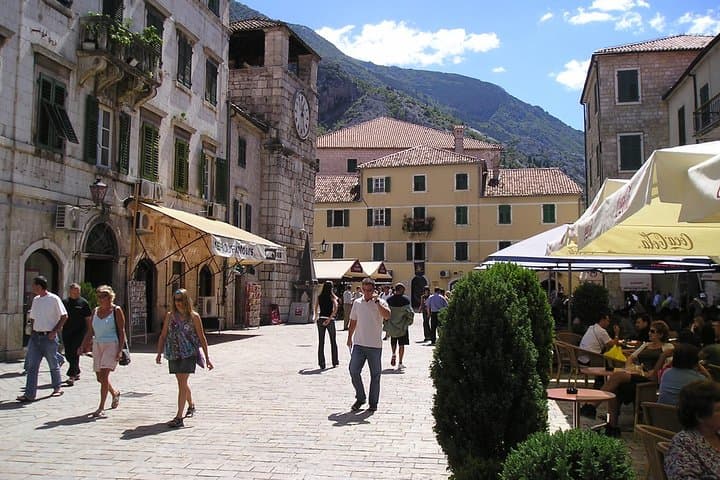
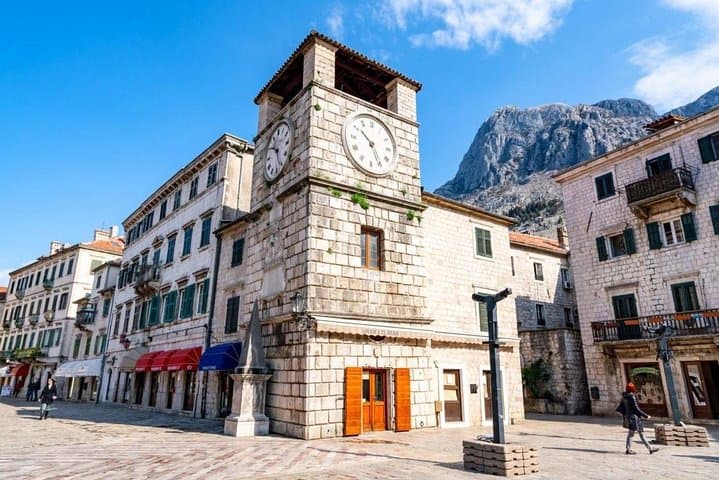
A cool Adriatic breeze hits the Sea Gate as you step off the quay into Kotor’s compact old town—stone streets underfoot, boats bobbing in the near-silent bay, and a clock tower watching the square. The first hour of this guided walk concentrates the city into an approachable circuit: Armory Square, Flour Square, Saint Tryphon’s façade, and the layered churches that mark Kotor’s faiths and fortunes.
A cool Adriatic breeze hits the Sea Gate as you step off the quay into Kotor’s compact old town—stone streets underfoot, boats bobbing in the near-silent bay, and a clock tower watching the square. The first hour of this guided walk concentrates the city into an approachable circuit: Armory Square, Flour Square, Saint Tryphon’s façade, and the layered churches that mark Kotor’s faiths and fortunes.
Kotor’s history reads like a map of empires: Illyrian roots, Venetian traders who fortified the town, Ottoman threats kept at bay, then Austro-Hungarian influence. Geologically, the bay is a drowned river canyon carved by rivers and glaciation, producing steep limestone slopes that rise from the water and give Kotor dramatic verticality—hence the famous ancient walls climbing the hills above the old town.
Culturally, the town is maritime and festival-driven; local cafes pour thick coffee, and narrow lanes open onto family-run konobas serving grilled fish and local cheeses. The guide points out architectural markers—medieval palaces, Orthodox and Catholic churches—while pausing at viewpoints where the bay seems to compress into a single polished mirror.
Practical guidance: wear firm-soled shoes for cobbles and brief stair sections, bring water and sun protection in summer, and plan the tour early or late in the day to avoid peak cruise-ship crowds. The route is compact and wheelchair accessible on main streets, but some alleys and viewpoints require steps. Allow an hour to absorb key sites, and add time afterward to linger in a piazza or climb the initial ramparts for a wider view of Boka Kotorska.