THE ADVENTURE COLLECTIVE® · Independent discovery and booking for outdoor travel

Glide out of Kotor for a four-hour private cruise that pairs history and geology with a culinary finale: swimming in the luminous Blue Cave and eating oysters straight from a family farm. Expect wartime forts, submarine tunnels and a Baroque island church before the tasting.
Glide out of Kotor for a four-hour private cruise that pairs history and geology with a culinary finale: swimming in the luminous Blue Cave and eating oysters straight from a family farm. Expect wartime forts, submarine tunnels and a Baroque island church before the tasting.
The boat slips out of the old port just after mid-morning, the stone ramparts of Kotor shrinking behind you as the bay widens like an invitation. Salt shoots at the bow; gulls wheel and the water takes on the flat, luminous blue that makes sailors talk about light as if it were weather. By the time the captain has set a steady course along the inner shore, the outline of Mamula island – a squat Austro-Hungarian fort – has the quiet, stubborn look of a place that remembers being fought over.
Verified experiences and guided adventures in the surrounding area.
Operated by Montenegro Spot Travel - Private and Semi-Private tours · Kotor, Kotor Municipality
The boat slips out of the old port just after mid-morning, the stone ramparts of Kotor shrinking behind you as the bay widens like an invitation. Salt shoots at the bow; gulls wheel and the water takes on the flat, luminous blue that makes sailors talk about light as if it were weather. By the time the captain has set a steady course along the inner shore, the outline of Mamula island – a squat Austro-Hungarian fort – has the quiet, stubborn look of a place that remembers being fought over.
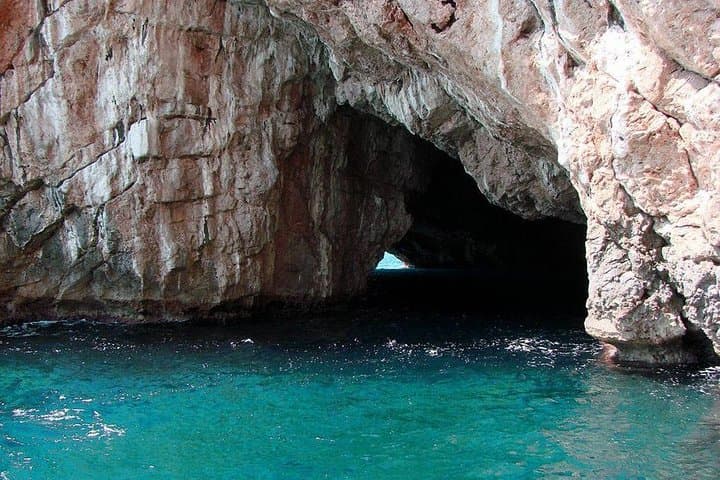
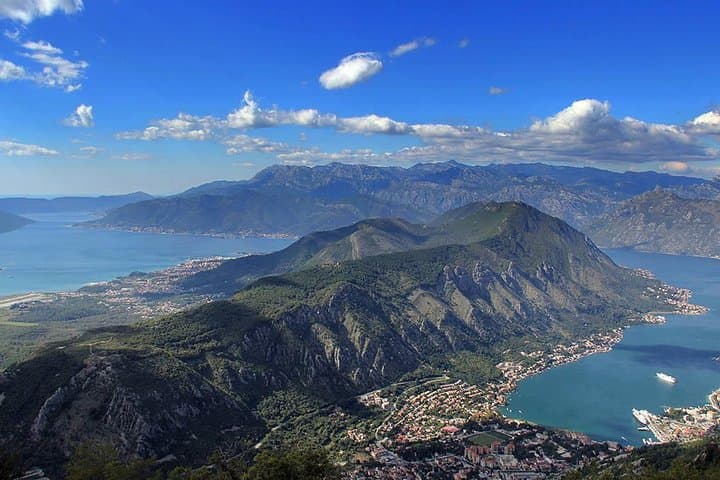
This four-hour private cruise stitches together the human history and the geology of Boka Kotorska (Kotor Bay) with a food-focused climax: oysters at a family farm in Ljuta. The route follows a necklace of bays – Kotor, Herceg Novi, Tivat – before skirting the Luštica Peninsula to the Blue Cave, whose name comes from an optical trick. Sun hits the sandy floor through roughly six meters of water, bouncing a cool cobalt up into the chamber and making the whole grotto appear to glow. You’ll also float past Yugoslav-era submarine tunnels by Rose and nose up to Mamula while a guide traces their wartime stories.
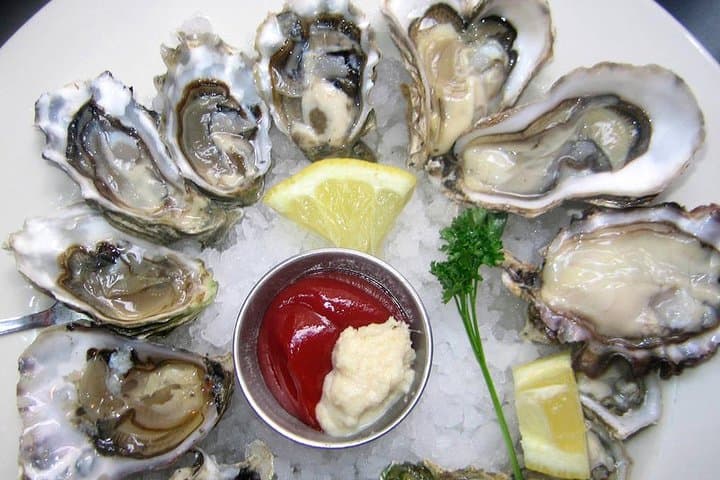
Perast’s Our Lady of the Rocks, an artificial island founded by seafaring craftsmen, provides a quieter chapter: Baroque church facades, votive paintings and a museum that explain local devotion and maritime craftsmanship. Then the boat eases into a private oyster berth where a local family farms shellfish by hand. You taste oysters straight from the net, washed down with Montenegrin white wine and a sip of rakija – bracing, made-for-celebration spirit that locals are proud to share.
Practical guidance: the tour lasts roughly four hours; minimum group size is four people. Wear a swimsuit under clothes you can dry quickly, and bring a quick-dry towel, reef-safe sunscreen, and a light windbreaker—sea breezes sharpen when you stop. If you’re prone to motion sickness, take medication before boarding; the bay is usually calm but can pick up chop in an afternoon wind. Cameras with polarizing filters and fast-shutter settings get the best Blue Cave shots; keep electronics in waterproof pouches during approach and swims. Expect a moderate pace: short historical stops, a 20–30 minute Blue Cave swim, and a longer tasting at the oyster farm.
Bookings include private transport, bottled water, lunch and local alcoholic tastings. The combination of geology, military relics and hands-on food culture makes this more than a swim-and-photo run – it’s a compact primer on why the Bay of Kotor has been strategic, fertile and fiercely held for centuries.
easy.
4 hours.
Suitable for most fitness levels; you should be comfortable getting on and off a small boat and able to swim short distances.
Meeting is at the city park near Kotor’s port; hotel or port pickups are available—be ready 20 minutes before departure for boarding.
Swimming in the Blue Cave is a highlight but not mandatory; non-swimmers can remain on board and still enjoy cave views and other stops.
The tour requires a minimum of four passengers; single travelers cannot book alone.
Oysters and a bottle of local white wine are included as part of the tasting; you can decline any food if you have dietary restrictions—notify the operator beforehand.
Children are welcome; the tour is rated easy, but boarding a small boat and moving around the vessel requires basic mobility—notify the operator about special needs.
If you’re prone to seasickness, take medication before boarding and sit centrally on the boat where motion is least noticeable.
Mamula island began as an Austro-Hungarian fort; during World War II it was used as a prison camp, while Yugoslav-era submarine tunnels on Luštica reflect Cold War naval strategy.
The oyster farm operates at a family scale and the tour emphasizes local handling to reduce waste; visitors are asked to use reef-safe sunscreen and avoid littering to protect bay ecology.
Montenegro Spot Travel - Private and Semi-Private tours operates guided outdoor trips and adventures with an emphasis on safety, stewardship, and memorable experiences.
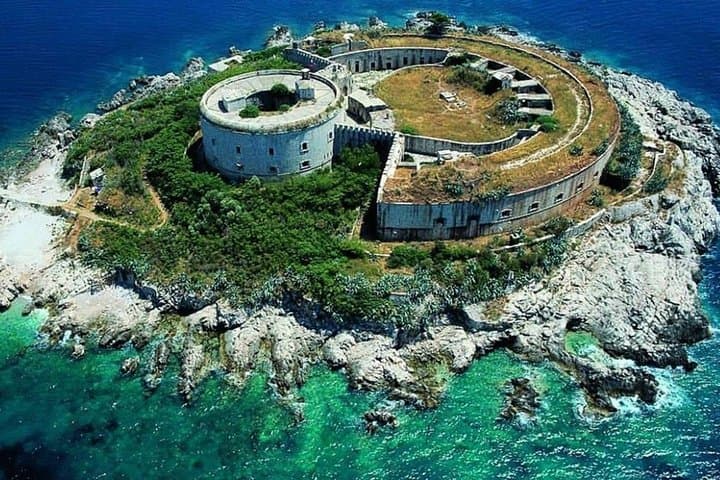
The boat slips out of the old port just after mid-morning, the stone ramparts of Kotor shrinking behind you as the bay widens like an invitation. Salt shoots at the bow; gulls wheel and the water takes on the flat, luminous blue that makes sailors talk about light as if it were weather. By the time the captain has set a steady course along the inner shore, the outline of Mamula island – a squat Austro-Hungarian fort – has the quiet, stubborn look of a place that remembers being fought over.
The boat slips out of the old port just after mid-morning, the stone ramparts of Kotor shrinking behind you as the bay widens like an invitation. Salt shoots at the bow; gulls wheel and the water takes on the flat, luminous blue that makes sailors talk about light as if it were weather. By the time the captain has set a steady course along the inner shore, the outline of Mamula island – a squat Austro-Hungarian fort – has the quiet, stubborn look of a place that remembers being fought over.
This four-hour private cruise stitches together the human history and the geology of Boka Kotorska (Kotor Bay) with a food-focused climax: oysters at a family farm in Ljuta. The route follows a necklace of bays – Kotor, Herceg Novi, Tivat – before skirting the Luštica Peninsula to the Blue Cave, whose name comes from an optical trick. Sun hits the sandy floor through roughly six meters of water, bouncing a cool cobalt up into the chamber and making the whole grotto appear to glow. You’ll also float past Yugoslav-era submarine tunnels by Rose and nose up to Mamula while a guide traces their wartime stories.
Perast’s Our Lady of the Rocks, an artificial island founded by seafaring craftsmen, provides a quieter chapter: Baroque church facades, votive paintings and a museum that explain local devotion and maritime craftsmanship. Then the boat eases into a private oyster berth where a local family farms shellfish by hand. You taste oysters straight from the net, washed down with Montenegrin white wine and a sip of rakija – bracing, made-for-celebration spirit that locals are proud to share.
Practical guidance: the tour lasts roughly four hours; minimum group size is four people. Wear a swimsuit under clothes you can dry quickly, and bring a quick-dry towel, reef-safe sunscreen, and a light windbreaker—sea breezes sharpen when you stop. If you’re prone to motion sickness, take medication before boarding; the bay is usually calm but can pick up chop in an afternoon wind. Cameras with polarizing filters and fast-shutter settings get the best Blue Cave shots; keep electronics in waterproof pouches during approach and swims. Expect a moderate pace: short historical stops, a 20–30 minute Blue Cave swim, and a longer tasting at the oyster farm.
Bookings include private transport, bottled water, lunch and local alcoholic tastings. The combination of geology, military relics and hands-on food culture makes this more than a swim-and-photo run – it’s a compact primer on why the Bay of Kotor has been strategic, fertile and fiercely held for centuries.