THE ADVENTURE COLLECTIVE® · Independent discovery and booking for outdoor travel

Follow an old Austrian road from Brajići up to the Kosmač fortress, then descend to the 11th‑century Praskvica Monastery. This 9 km ridge walk combines coastal views, Ottoman‑era history, and quiet monastic sites in the Budva hinterland.
Follow an old Austrian road from Brajići up to the Kosmač fortress, then descend to the 11th‑century Praskvica Monastery. This 9 km ridge walk combines coastal views, Ottoman‑era history, and quiet monastic sites in the Budva hinterland.
You step from the minivan in Brajići and the hill takes over: scrubby pine slopes cut by an old Austrian road, open viewpoints that pin the Adriatic to the horizon, and the scent of olive groves drifting up from the valley.
Verified experiences and guided adventures in the surrounding area.
Operated by Monte Mare Travel · Budva, Budva Municipality
You step from the minivan in Brajići and the hill takes over: scrubby pine slopes cut by an old Austrian road, open viewpoints that pin the Adriatic to the horizon, and the scent of olive groves drifting up from the valley.
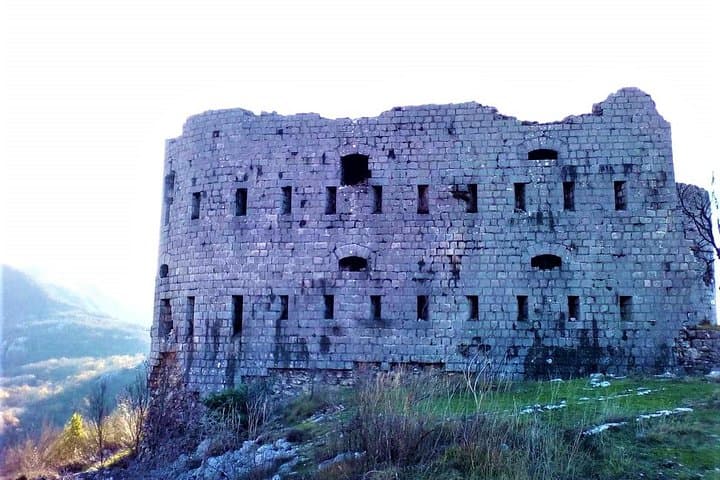
The route follows a 9 km circuit that climbs to roughly 765 m at the Kosmač fortress, an Austrian-built 19th-century border fort, then eases along historic military tracks toward Ograđenica and the Spiridon and Rustovo monastic sites before descending Jegorov path toward Praskvica. Geologically this stretch sits on coastal limestone ridges that drop sharply toward the sea—expect stony macadam and packed dirt underfoot.
Culturally, Praskvica Monastery (founded 1050) is one of the oldest Orthodox complexes in the Pastrovići area, surrounded by olive trees that signal centuries of local cultivation. From viewpoints at Čelobrdo the tiny silhouette of Sveti Stefan and the manicured lawns of Miločer feel like landmarks in a living map, while winds from the Adriatic push inland and shape the scrub.
Practical guidance: the tour is moderate—about 5 hours on-trail (total 270 minutes) with steady uphill sections and exposed ridge walking. Bring 1.5–2 L of water, sturdy shoes with good grip, sun protection, and light layers; hiking poles are provided but helpful on descents. Start early for cooler air and clearer sea views, and allow extra time for transfers to and from Budva. The trail is best between November and June when heat is milder and crowds are lower.
moderate.
5 hours (plus transfers).
Good general fitness for continuous walking, steady climbs, and some uneven terrain; able to sustain 4–6 hours of trail time.
The guided route covers about 9 km with a maximum altitude near 765 m; overall elevation change includes a steady climb to Kosmač and a descent toward Praskvica.
The tour requires moderate fitness and steady footing; it’s not recommended for those with limited mobility or young children who cannot manage several hours of uneven trail.
Guides typically speak English or Russian; transfers from accommodation in the booking area are included by minivan or minibus but transfer time depends on your location.
November through June offers cooler temperatures and fewer crowds; summer can be hot on exposed ridges, so early departures are advised then.
Kosmač was built by the Austrians between 1841–1850 as a border fortification; Praskvica Monastery dates to the 11th century and reflects regional Orthodox tradition.
Stay on established tracks to protect fragile limestone vegetation and olive groves; pack out all trash and avoid disturbing monastic sites.
Monte Mare Travel operates guided outdoor trips and adventures with an emphasis on safety, stewardship, and memorable experiences.
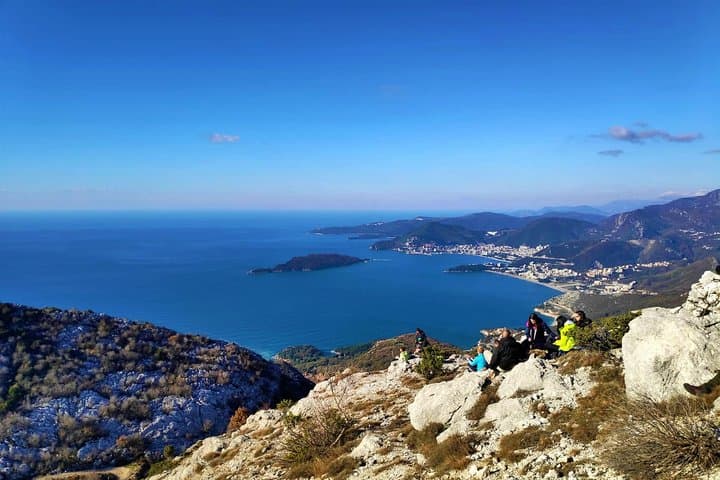
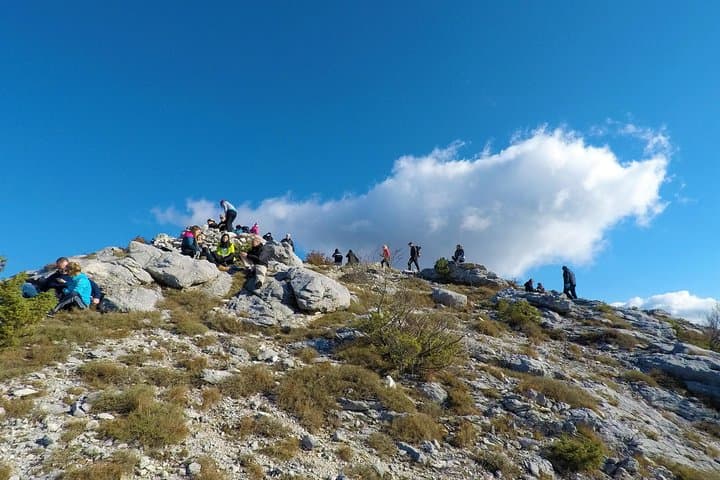
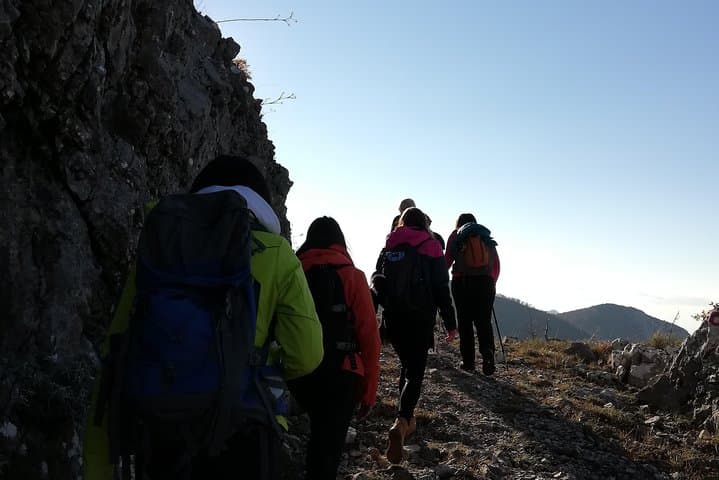
You step from the minivan in Brajići and the hill takes over: scrubby pine slopes cut by an old Austrian road, open viewpoints that pin the Adriatic to the horizon, and the scent of olive groves drifting up from the valley.
You step from the minivan in Brajići and the hill takes over: scrubby pine slopes cut by an old Austrian road, open viewpoints that pin the Adriatic to the horizon, and the scent of olive groves drifting up from the valley.
The route follows a 9 km circuit that climbs to roughly 765 m at the Kosmač fortress, an Austrian-built 19th-century border fort, then eases along historic military tracks toward Ograđenica and the Spiridon and Rustovo monastic sites before descending Jegorov path toward Praskvica. Geologically this stretch sits on coastal limestone ridges that drop sharply toward the sea—expect stony macadam and packed dirt underfoot.
Culturally, Praskvica Monastery (founded 1050) is one of the oldest Orthodox complexes in the Pastrovići area, surrounded by olive trees that signal centuries of local cultivation. From viewpoints at Čelobrdo the tiny silhouette of Sveti Stefan and the manicured lawns of Miločer feel like landmarks in a living map, while winds from the Adriatic push inland and shape the scrub.
Practical guidance: the tour is moderate—about 5 hours on-trail (total 270 minutes) with steady uphill sections and exposed ridge walking. Bring 1.5–2 L of water, sturdy shoes with good grip, sun protection, and light layers; hiking poles are provided but helpful on descents. Start early for cooler air and clearer sea views, and allow extra time for transfers to and from Budva. The trail is best between November and June when heat is milder and crowds are lower.