THE ADVENTURE COLLECTIVE® · Independent discovery and booking for outdoor travel

Turn Kortrijk into a playable map: an app-led scavenger hunt guides you past Beguinage courtyards, medieval towers and textile museums at your own pace. Ideal for families and small groups, the self-guided game mixes history, puzzles and accessible urban exploration.
Turn Kortrijk into a playable map: an app-led scavenger hunt guides you past Beguinage courtyards, medieval towers and textile museums at your own pace. Ideal for families and small groups, the self-guided game mixes history, puzzles and accessible urban exploration.
Morning light falls across the cobbled Grote Markt and the Lys river seems to prod passersby toward the next square; this is where a self-guided e-scavenger hunt in Kortrijk begins. Players open an app, let GPS lead them past medieval towers and quiet courtyards, and answer clues that reshape a routine city walk into a small, competitive expedition.
Verified experiences and guided adventures in the surrounding area.
Operated by Qula · Kortrijk, West Flanders
Morning light falls across the cobbled Grote Markt and the Lys river seems to prod passersby toward the next square; this is where a self-guided e-scavenger hunt in Kortrijk begins. Players open an app, let GPS lead them past medieval towers and quiet courtyards, and answer clues that reshape a routine city walk into a small, competitive expedition.
Kortrijk’s streets carry clear layers of history: a 13th-century Beguinage that UNESCO recognizes, Gothic churches started in the 1100s, and the cloth hall and belfry that speak to a medieval textile trade. The Lys Valley’s soft alluvial soils enabled flax cultivation, and the Texture museum explains how linen shaped both economy and identity here. Local culture rewards curiosity—street-level monuments, compact squares and hidden hospital courtyards reveal civic stories when you slow down.
Practically, the game is a flexible, family-friendly circuit for up to six players with a runtime of roughly 2–4 hours depending on how many stops you make. It’s fully accessible—routes are stroller- and wheelchair-friendly—and runs on any modern smartphone. Players control pace: pause to visit a museum or sprint between clues for a faster finish. Wear comfortable walking shoes, charge your phone, and expect a mix of paved streets and occasional narrow alleys. Public transport links make meeting points easy.
This experience is low-impact and ideal for curious travelers who prefer independent exploration with structure. It’s part walking tour, part puzzle, and part local primer—designed to turn the city into a game board and leave the historic fabric of Kortrijk intact.
easy.
2–4 hours.
Light walking—suitable for most fitness levels; expect flat terrain.
After booking you receive instructions and login details; open the online app on your phone, enter the game code, and begin at the suggested start point in the city center.
Yes—routes and surfaces are wheelchair- and stroller-accessible, though some historic cobbles may be uneven.
Yes—the self-guided format lets you stop and restart at any time within your booking window; progress is saved in the app.
Most city-game apps offer multiple languages—check the booking page for available language options before departure.
Kortrijk’s medieval wealth came from flax and cloth; landmarks like the Beguinage and the belfry reflect centuries of textile trade and civic identity.
The game promotes low-impact visits—stick to public pathways, avoid climbing on historic structures, and carry out any litter to protect Kortrijk’s heritage.
Qula operates guided outdoor trips and adventures with an emphasis on safety, stewardship, and memorable experiences.



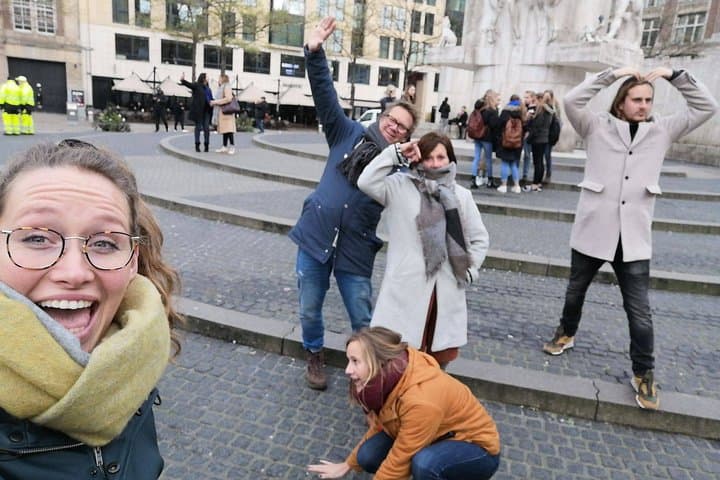
Morning light falls across the cobbled Grote Markt and the Lys river seems to prod passersby toward the next square; this is where a self-guided e-scavenger hunt in Kortrijk begins. Players open an app, let GPS lead them past medieval towers and quiet courtyards, and answer clues that reshape a routine city walk into a small, competitive expedition.
Morning light falls across the cobbled Grote Markt and the Lys river seems to prod passersby toward the next square; this is where a self-guided e-scavenger hunt in Kortrijk begins. Players open an app, let GPS lead them past medieval towers and quiet courtyards, and answer clues that reshape a routine city walk into a small, competitive expedition.
Kortrijk’s streets carry clear layers of history: a 13th-century Beguinage that UNESCO recognizes, Gothic churches started in the 1100s, and the cloth hall and belfry that speak to a medieval textile trade. The Lys Valley’s soft alluvial soils enabled flax cultivation, and the Texture museum explains how linen shaped both economy and identity here. Local culture rewards curiosity—street-level monuments, compact squares and hidden hospital courtyards reveal civic stories when you slow down.
Practically, the game is a flexible, family-friendly circuit for up to six players with a runtime of roughly 2–4 hours depending on how many stops you make. It’s fully accessible—routes are stroller- and wheelchair-friendly—and runs on any modern smartphone. Players control pace: pause to visit a museum or sprint between clues for a faster finish. Wear comfortable walking shoes, charge your phone, and expect a mix of paved streets and occasional narrow alleys. Public transport links make meeting points easy.
This experience is low-impact and ideal for curious travelers who prefer independent exploration with structure. It’s part walking tour, part puzzle, and part local primer—designed to turn the city into a game board and leave the historic fabric of Kortrijk intact.