THE ADVENTURE COLLECTIVE® · Independent discovery and booking for outdoor travel

Explore a rarely seen side of Korea: a mountain cemetery where geomancy, folklore and fall color converge. This respectful small-group hike pairs moderate terrain with stories of burial customs and ancestor belief.
Explore a rarely seen side of Korea: a mountain cemetery where geomancy, folklore and fall color converge. This respectful small-group hike pairs moderate terrain with stories of burial customs and ancestor belief.
A cool wind moves through pines as the group threads a narrow trail between stone markers and low earthen mounds. The cemetery slopes are quiet but for the rustle of leaves and the guide’s low voice, recounting legends that bind the living to their dead. In autumn the maplesflare, and the hillside cemetery becomes less an archive of names than a living landscape that shapes local memory.
Verified experiences and guided adventures in the surrounding area.
Operated by ZenKimchi Experiences · Seoul, Seoul
A cool wind moves through pines as the group threads a narrow trail between stone markers and low earthen mounds. The cemetery slopes are quiet but for the rustle of leaves and the guide’s low voice, recounting legends that bind the living to their dead. In autumn the maplesflare, and the hillside cemetery becomes less an archive of names than a living landscape that shapes local memory.
Korean burial sites are often sited according to pungsu (geomancy): ridgelines, water lines and viewpoints matter as much as family lines. Many graves here date generations back and reflect regional styles—stone tablets, stacked cairns, and painted wooden markers—giving hikers a direct look at how culture and terrain interlock.
The hike is moderate: expect uneven stone paths, forested switchbacks and roughly 5–7 km of walking with 200–300 m of cumulative gain. The guide weaves folklore about funerary rites, ancestral rites and beliefs about the afterlife—stories that make sense of why the dead are placed where winds and views converge.
Practical notes: this seasonal tour runs September through November to catch fall color. Wear sturdy footwear, carry water and dress in breathable layers for rapid temperature change. Be mindful: this is an active cemetery; speak softly, follow the guide’s requests about photography, and stay on designated trails to protect graves and fragile understory. Public buses connect the meeting point to central Seoul; the small-group format keeps the atmosphere intimate and respectful. For hikers who want culture with their exertion, this trek pairs crisp mountain air with deep local context.
moderate.
4 hours.
Should have a moderate level of fitness: able to walk 5–7 km over uneven ground and manage short uphill sections.
The tour is about 4 hours total, covering roughly 5–7 km with intermittent uphill sections; difficulty is moderate and suited to those comfortable on uneven ground.
Yes, but follow the guide’s directions—avoid photographing mourners, funerary rites, or sensitive grave details without permission and keep a respectful distance.
Not recommended for those with limited mobility or serious spinal/heart conditions due to uneven paths and stairs; contact the operator for specific accessibility questions.
Tours are led by a professional guide; groups are small (up to six) to maintain an intimate atmosphere—verify language options at booking if you require a specific language.
Korean burial practice emphasizes placement—pungsu influences gravesite choice and ancestor veneration has shaped hillside cemeteries for centuries.
Stay on trails and avoid disturbing burial spots; small groups and guided etiquette reduce cultural impact and protect understory vegetation.
ZenKimchi Experiences operates guided outdoor trips and adventures with an emphasis on safety, stewardship, and memorable experiences.
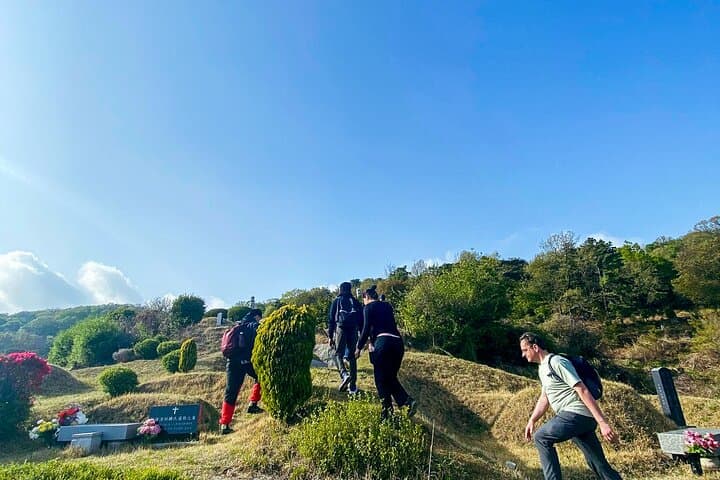
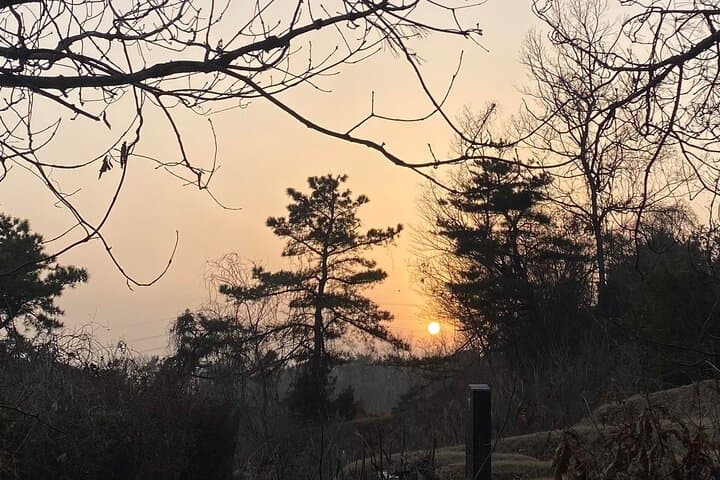
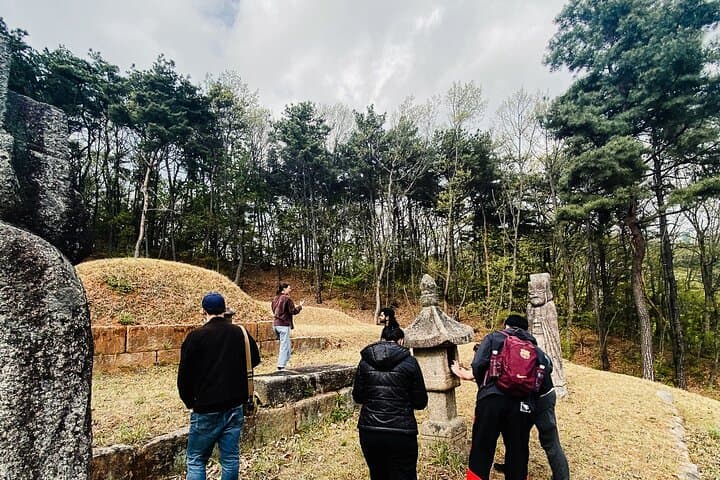

A cool wind moves through pines as the group threads a narrow trail between stone markers and low earthen mounds. The cemetery slopes are quiet but for the rustle of leaves and the guide’s low voice, recounting legends that bind the living to their dead. In autumn the maplesflare, and the hillside cemetery becomes less an archive of names than a living landscape that shapes local memory.
A cool wind moves through pines as the group threads a narrow trail between stone markers and low earthen mounds. The cemetery slopes are quiet but for the rustle of leaves and the guide’s low voice, recounting legends that bind the living to their dead. In autumn the maplesflare, and the hillside cemetery becomes less an archive of names than a living landscape that shapes local memory.
Korean burial sites are often sited according to pungsu (geomancy): ridgelines, water lines and viewpoints matter as much as family lines. Many graves here date generations back and reflect regional styles—stone tablets, stacked cairns, and painted wooden markers—giving hikers a direct look at how culture and terrain interlock.
The hike is moderate: expect uneven stone paths, forested switchbacks and roughly 5–7 km of walking with 200–300 m of cumulative gain. The guide weaves folklore about funerary rites, ancestral rites and beliefs about the afterlife—stories that make sense of why the dead are placed where winds and views converge.
Practical notes: this seasonal tour runs September through November to catch fall color. Wear sturdy footwear, carry water and dress in breathable layers for rapid temperature change. Be mindful: this is an active cemetery; speak softly, follow the guide’s requests about photography, and stay on designated trails to protect graves and fragile understory. Public buses connect the meeting point to central Seoul; the small-group format keeps the atmosphere intimate and respectful. For hikers who want culture with their exertion, this trek pairs crisp mountain air with deep local context.