THE ADVENTURE COLLECTIVE® · Independent discovery and booking for outdoor travel

Explore Ston’s sweeping city walls, taste Pelješac’s renowned wines, and stroll Korčula’s medieval lanes on a private full-day tour from Dubrovnik. This easy-paced excursion mixes short walks, a scenic ferry crossing and local gastronomy into one compact day.
Explore Ston’s sweeping city walls, taste Pelješac’s renowned wines, and stroll Korčula’s medieval lanes on a private full-day tour from Dubrovnik. This easy-paced excursion mixes short walks, a scenic ferry crossing and local gastronomy into one compact day.
You step off an air-conditioned van onto a stretch of sun-baked stone and immediately feel the weight of history — Ston’s massive city walls rise like a deliberate line cut into the coastline, salt pans reflecting the sky beside them.
Verified experiences and guided adventures in the surrounding area.
Operated by Adria Mice · Dubrovnik, Dubrovnik-Neretva County
You step off an air-conditioned van onto a stretch of sun-baked stone and immediately feel the weight of history — Ston’s massive city walls rise like a deliberate line cut into the coastline, salt pans reflecting the sky beside them.
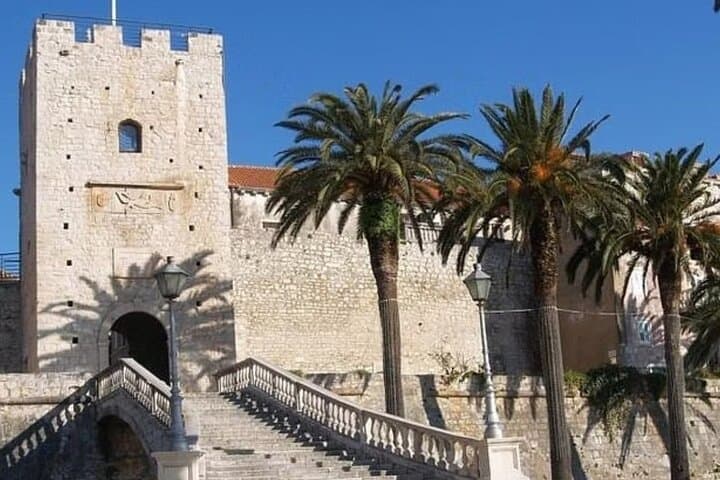
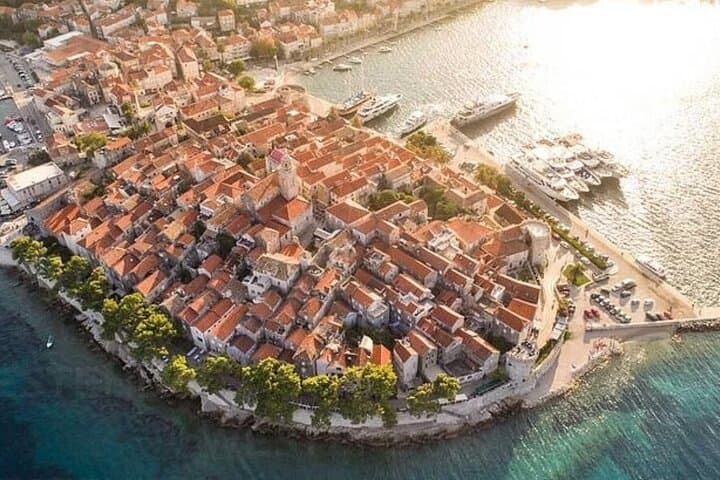
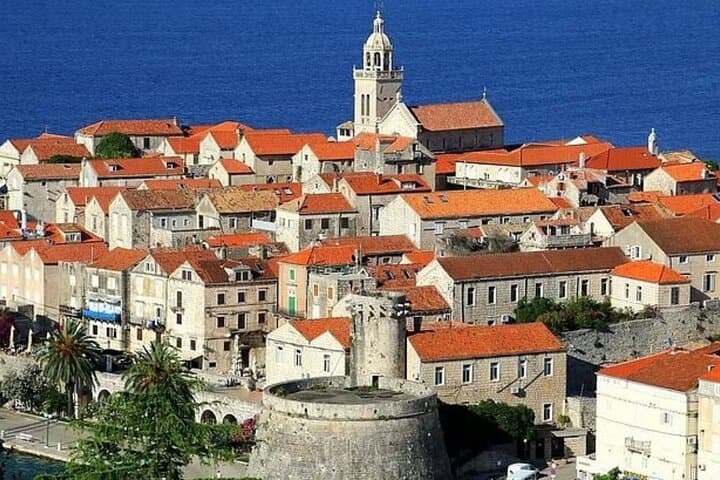
The day moves like a well-measured map: a short walk through Ston’s narrow streets to learn about the medieval walls and saltworks, then a drive across the Pelješac peninsula where vineyards roll toward the sea and the air tastes faintly of sea salt and resin. A ferry crossing from Orebić punctuates the route; the channel opens up and Korčula’s compact medieval town appears, its terracotta roofs and defensive towers close enough to read.
Geology here is coastal karst — limestone cliffs, thin soils and terraces carved for vines — which shaped both settlement and agriculture. Culturally, Pelješac wines (Dingač, Postup) and Korčula’s Moreska sword dance anchor local identity, while the island’s layered past includes Venetian, Ragusan, and Ottoman-era touches.
Practicalities: the tour runs about eight to nine hours with hotel pickup in the Dubrovnik area. Expect cobbled streets, short stair sections and roughly two hours free time in Korčula for sightseeing or a café stop. Bring sturdy shoes for uneven surfaces, sun protection, and a reusable water bottle; winery visits typically include a tasting but check specifics when booking. Early starts avoid afternoon heat and give better light for photos of the walls and vineyards.
This is an easy, scenic day that balances cultural stops, light walking, and relaxed island time — ideal for travelers who want history, wine, and coastal vistas without technical hiking or long sea crossings.
easy.
8–9 hours.
Suitable for people with average mobility; involves light walking on uneven cobbles and short stair sections.
Yes — pickup and drop-off from Dubrovnik-area hotels are included; specify your pickup point when booking.
Ferry tickets from Orebić to Korčula are included as part of the tour price.
The tour stops at a winery for a tasting; check the booking details for whether the tasting is included or priced separately.
The operator notes stroller access and infant seats are available, but cobbled streets in Korčula and Ston can be uneven so a carrier may be easier.
Ston’s walls and saltworks date to medieval Republic of Ragusa engineering aimed at protecting valuable salt production; Korčula’s urban plan preserves a 13th–14th century street grid with Venetian influences.
Vineyard terraces and coastal habitats are sensitive — stick to paths, avoid trampling vines, and support local producers who follow sustainable practices.
Adria Mice operates guided outdoor trips and adventures with an emphasis on safety, stewardship, and memorable experiences.

You step off an air-conditioned van onto a stretch of sun-baked stone and immediately feel the weight of history — Ston’s massive city walls rise like a deliberate line cut into the coastline, salt pans reflecting the sky beside them.
You step off an air-conditioned van onto a stretch of sun-baked stone and immediately feel the weight of history — Ston’s massive city walls rise like a deliberate line cut into the coastline, salt pans reflecting the sky beside them.
The day moves like a well-measured map: a short walk through Ston’s narrow streets to learn about the medieval walls and saltworks, then a drive across the Pelješac peninsula where vineyards roll toward the sea and the air tastes faintly of sea salt and resin. A ferry crossing from Orebić punctuates the route; the channel opens up and Korčula’s compact medieval town appears, its terracotta roofs and defensive towers close enough to read.
Geology here is coastal karst — limestone cliffs, thin soils and terraces carved for vines — which shaped both settlement and agriculture. Culturally, Pelješac wines (Dingač, Postup) and Korčula’s Moreska sword dance anchor local identity, while the island’s layered past includes Venetian, Ragusan, and Ottoman-era touches.
Practicalities: the tour runs about eight to nine hours with hotel pickup in the Dubrovnik area. Expect cobbled streets, short stair sections and roughly two hours free time in Korčula for sightseeing or a café stop. Bring sturdy shoes for uneven surfaces, sun protection, and a reusable water bottle; winery visits typically include a tasting but check specifics when booking. Early starts avoid afternoon heat and give better light for photos of the walls and vineyards.
This is an easy, scenic day that balances cultural stops, light walking, and relaxed island time — ideal for travelers who want history, wine, and coastal vistas without technical hiking or long sea crossings.