THE ADVENTURE COLLECTIVE® · Independent discovery and booking for outdoor travel

A six-hour public-transport day trip from Salzburg to Königssee that combines electric-boat crossings, alpine viewpoints, and Bavarian lakeside culture. Ideal for travelers who want a compact, low-impact way to experience Berchtesgaden National Park.
A six-hour public-transport day trip from Salzburg to Königssee that combines electric-boat crossings, alpine viewpoints, and Bavarian lakeside culture. Ideal for travelers who want a compact, low-impact way to experience Berchtesgaden National Park.
Early morning at Salzburg Hauptbahnhof, the air tastes of coffee and travel; within an hour the bucolic countryside gives way to rising limestone walls, and the road bends toward a lake that holds its own silence. Königssee greets visitors like a reserved host — water so clear it measures the sky and cliffs that seem to watch every ripple.
Verified experiences and guided adventures in the surrounding area.
Operated by Global Guide Services · Schönau am Königssee, Bavaria
Early morning at Salzburg Hauptbahnhof, the air tastes of coffee and travel; within an hour the bucolic countryside gives way to rising limestone walls, and the road bends toward a lake that holds its own silence. Königssee greets visitors like a reserved host — water so clear it measures the sky and cliffs that seem to watch every ripple.
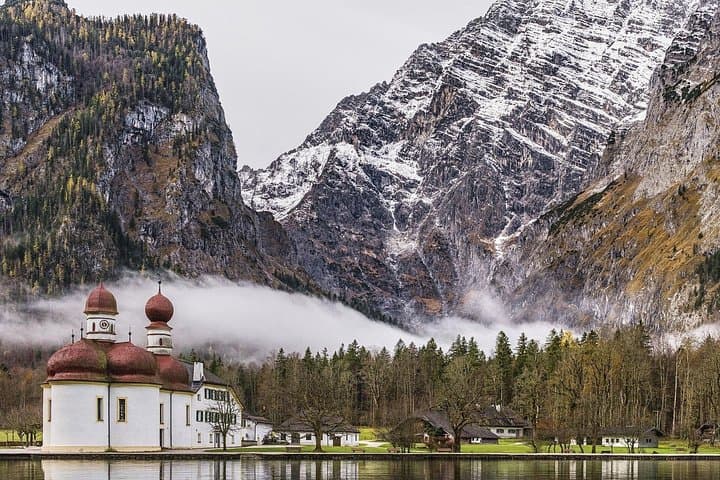
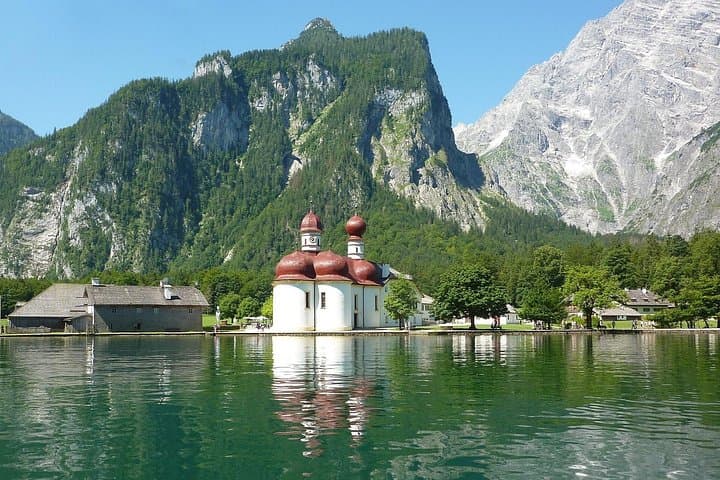
The lake sits in the shadow of the Watzmann massif, a glacially carved basin whose steep faces speak to ice and tectonic lift. Boats have crossed these waters under electric power since 1909, a localized solution to preserve the lake’s glassy surface and the pilgrimage at St. Bartholomä with its red onion domes. Nearby, the Kehlsteinhaus (Eagle’s Nest) and Berchtesgaden town remind you this place carries both Alpine tradition and 20th-century history.
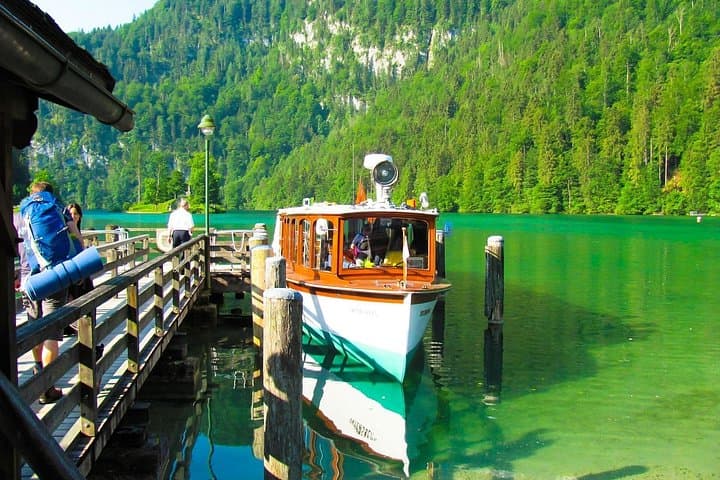
Expect tight choreography between regional buses, short hikes, and the electric boat shuttle that ferries visitors to the peninsula. The route offers Malerwinkel viewpoint, mossy alpine meadows, and the option to walk toward Obersee for quieter water and the route that leads to Röthbachfall. Wildlife moves in the margins — chamois and marmots are common; birds ride the updrafts.
Practical: plan a six-hour day trip, start early to catch the quieter crossings, and book seats on the private excursion in advance during peak season. Bring layered waterproofs and sturdy shoes for short rocky paths, a filled water bottle, and a charged phone or battery — cell coverage can be patchy in the valley. Respect boat rules and the national park: keep distance from wildlife, carry out waste, and savor the lake’s hush.
easy.
6 hours.
Suitable for most fitness levels; requires short flat-to-rocky walks and standing on the boat for up to 90 minutes.
Yes — the private excursion arranges the electric-boat crossing to St. Bartholomä and timing with local schedules, though final boarding logistics are handled on-site.
Meet at Salzburg Hauptbahnhof (main train station) at the arranged time; regional buses to the Berchtesgaden valley depart nearby and are part of the planned itinerary.
Yes — the operator notes stroller access for infants and small children, but expect some short pier steps and limited space on the boat, so a light stroller is best.
If you are traveling from Salzburg (Austria) to Königssee (Germany), carry your passport or ID — both countries are in the Schengen Area but you should still carry identification while crossing borders.
The Berchtesgaden area combines centuries-old pilgrimage traditions at St. Bartholomä with 20th-century history like the Kehlsteinhaus; the electric boats, introduced in the early 1900s, reflect early conservation thinking.
Königssee lies within Berchtesgaden National Park where noise and emissions are managed — electric boats protect water quality and visitors are asked to stay on paths to preserve fragile alpine ecosystems.
Global Guide Services operates guided outdoor trips and adventures with an emphasis on safety, stewardship, and memorable experiences.
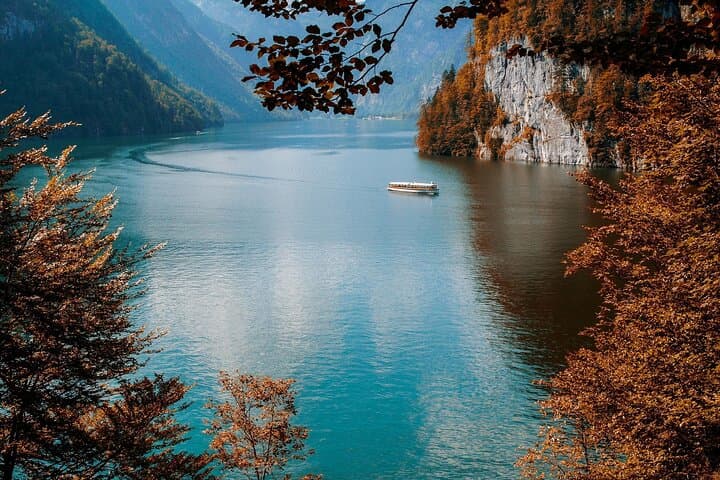
Early morning at Salzburg Hauptbahnhof, the air tastes of coffee and travel; within an hour the bucolic countryside gives way to rising limestone walls, and the road bends toward a lake that holds its own silence. Königssee greets visitors like a reserved host — water so clear it measures the sky and cliffs that seem to watch every ripple.
Early morning at Salzburg Hauptbahnhof, the air tastes of coffee and travel; within an hour the bucolic countryside gives way to rising limestone walls, and the road bends toward a lake that holds its own silence. Königssee greets visitors like a reserved host — water so clear it measures the sky and cliffs that seem to watch every ripple.
The lake sits in the shadow of the Watzmann massif, a glacially carved basin whose steep faces speak to ice and tectonic lift. Boats have crossed these waters under electric power since 1909, a localized solution to preserve the lake’s glassy surface and the pilgrimage at St. Bartholomä with its red onion domes. Nearby, the Kehlsteinhaus (Eagle’s Nest) and Berchtesgaden town remind you this place carries both Alpine tradition and 20th-century history.
Expect tight choreography between regional buses, short hikes, and the electric boat shuttle that ferries visitors to the peninsula. The route offers Malerwinkel viewpoint, mossy alpine meadows, and the option to walk toward Obersee for quieter water and the route that leads to Röthbachfall. Wildlife moves in the margins — chamois and marmots are common; birds ride the updrafts.
Practical: plan a six-hour day trip, start early to catch the quieter crossings, and book seats on the private excursion in advance during peak season. Bring layered waterproofs and sturdy shoes for short rocky paths, a filled water bottle, and a charged phone or battery — cell coverage can be patchy in the valley. Respect boat rules and the national park: keep distance from wildlife, carry out waste, and savor the lake’s hush.