THE ADVENTURE COLLECTIVE® · Independent discovery and booking for outdoor travel

Float above a column of light as manta rays loop and feed beneath you on the Kona coast. This 2.5-hour night snorkel pairs easy-entry ocean conditions with one of the planet’s most reliable manta ray encounters.
Float above a column of light as manta rays loop and feed beneath you on the Kona coast. This 2.5-hour night snorkel pairs easy-entry ocean conditions with one of the planet’s most reliable manta ray encounters.
The sky over Kona blackens and the shoreline lights blink like small beacons as the boat slips away from Honokohau Harbor. You enter the ocean at dusk, anchored above a dark floor while powerful spotlights draw a cloud of plankton upward — and the mantas arrive. They move like living sails, turning and somersaulting through the illuminated column, mouths open to filter tiny prey as you float on the surface or, for certified divers, kneel on the sandy bottom with lights above.
Verified experiences and guided adventures in the surrounding area.
Operated by Kona Ocean Adventures · Kailua-Kona, Hawaii
The sky over Kona blackens and the shoreline lights blink like small beacons as the boat slips away from Honokohau Harbor. You enter the ocean at dusk, anchored above a dark floor while powerful spotlights draw a cloud of plankton upward — and the mantas arrive. They move like living sails, turning and somersaulting through the illuminated column, mouths open to filter tiny prey as you float on the surface or, for certified divers, kneel on the sandy bottom with lights above.
The Kona coast is one of the few places in the world where predictable nocturnal feeding aggregations form, a pattern documented by local fishermen, scientists and dive guides for decades. Basalt lava flows sculpted the shoreline here, creating drop-offs and channels that help concentrate plankton. The experience ties into Hawaiian ocean culture — respect for the creatures and the reef is part of the protocol.
Expect calm to moderate sea conditions, warm water (short wetsuits sometimes used), and close encounters within a few meters. Guides use lights on custom floating platforms to keep groups together; operations often limit numbers for safety and wildlife disturbance. Bring a reusable water bottle and plan for a roughly 2.5-hour excursion including transit and safety briefings.
Practical notes: arrive early to find the octopus-painted truck at the big parking lot by the boat ramp, disclose weight and any medical conditions when booking, and avoid lotions that harm reefs. With basic snorkeling comfort and respect for ocean rules, a night with Kona’s mantas is cinematic, accessible, and unforgettable.
moderate.
2–3 hours.
Basic swimming ability and comfort in open water; not strenuous but requires stamina for floating and re-entry from the water.
Mantas frequently pass within a few meters of groups attracted to the lights; guides control positioning and group size to keep interactions safe and non-intrusive.
Children can join if accompanied by an adult; non-swimmers should discuss flotation options with the operator—this activity assumes comfort in open water.
Basic gear is included (mask, snorkel, fins) and wetsuits available on request, but many travelers bring a personal mask for fit and hygiene reasons.
Yes—many operators offer an easy night dive option, typically kneeling on sand at under 30 feet with lights; contact the operator in advance if you plan to dive.
Kona’s manta aggregations became widely known through local dive guides and research in the late 20th century, and the area now ranks among National Geographic’s top dive sites.
Operators follow strict no-touch and light-management practices; use reef-safe products and avoid chasing wildlife to minimize disturbance.
Kona Ocean Adventures operates guided outdoor trips and adventures with an emphasis on safety, stewardship, and memorable experiences.
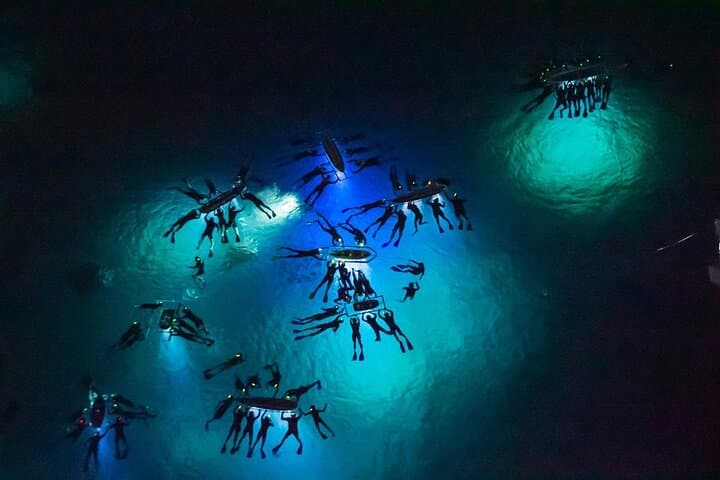
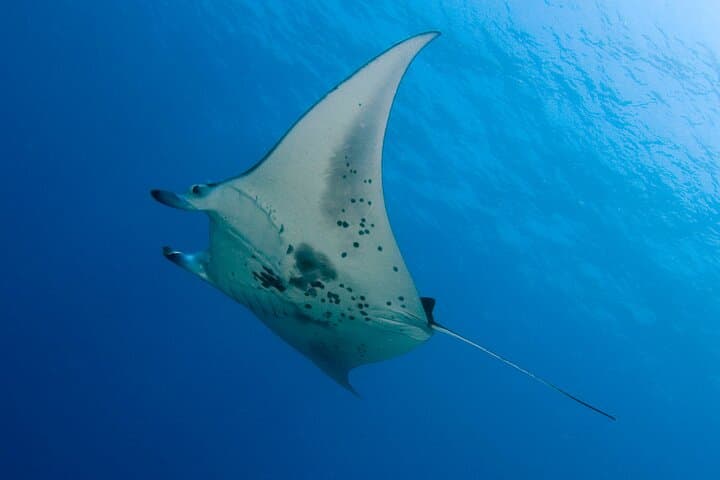
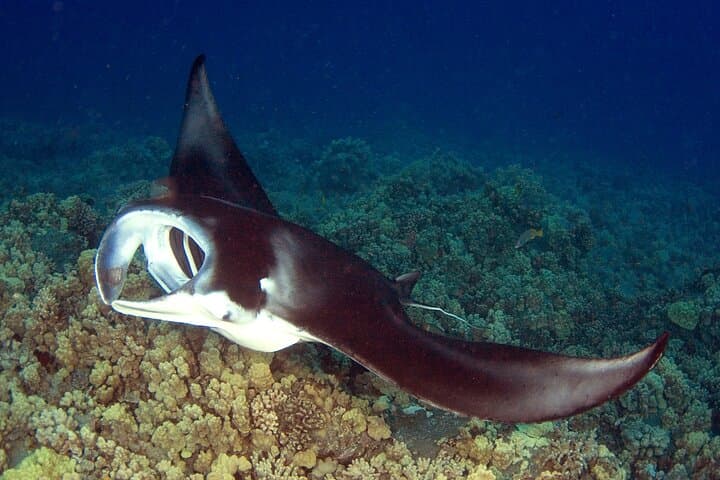
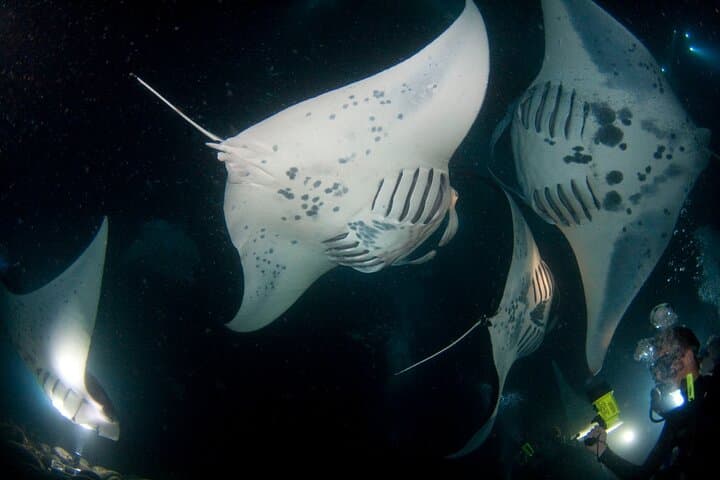
The sky over Kona blackens and the shoreline lights blink like small beacons as the boat slips away from Honokohau Harbor. You enter the ocean at dusk, anchored above a dark floor while powerful spotlights draw a cloud of plankton upward — and the mantas arrive. They move like living sails, turning and somersaulting through the illuminated column, mouths open to filter tiny prey as you float on the surface or, for certified divers, kneel on the sandy bottom with lights above.
The sky over Kona blackens and the shoreline lights blink like small beacons as the boat slips away from Honokohau Harbor. You enter the ocean at dusk, anchored above a dark floor while powerful spotlights draw a cloud of plankton upward — and the mantas arrive. They move like living sails, turning and somersaulting through the illuminated column, mouths open to filter tiny prey as you float on the surface or, for certified divers, kneel on the sandy bottom with lights above.
The Kona coast is one of the few places in the world where predictable nocturnal feeding aggregations form, a pattern documented by local fishermen, scientists and dive guides for decades. Basalt lava flows sculpted the shoreline here, creating drop-offs and channels that help concentrate plankton. The experience ties into Hawaiian ocean culture — respect for the creatures and the reef is part of the protocol.
Expect calm to moderate sea conditions, warm water (short wetsuits sometimes used), and close encounters within a few meters. Guides use lights on custom floating platforms to keep groups together; operations often limit numbers for safety and wildlife disturbance. Bring a reusable water bottle and plan for a roughly 2.5-hour excursion including transit and safety briefings.
Practical notes: arrive early to find the octopus-painted truck at the big parking lot by the boat ramp, disclose weight and any medical conditions when booking, and avoid lotions that harm reefs. With basic snorkeling comfort and respect for ocean rules, a night with Kona’s mantas is cinematic, accessible, and unforgettable.