THE ADVENTURE COLLECTIVE® · Independent discovery and booking for outdoor travel

Spend an hour at a Big Island farm learning three brewing methods—pour‑over, French press and espresso—while tasting how the same Kona beans shift with technique. Hands‑on demos in the roasting room and an optional short farm tour make this a practical lesson for everyday home brewing.
Spend an hour at a Big Island farm learning three brewing methods—pour‑over, French press and espresso—while tasting how the same Kona beans shift with technique. Hands‑on demos in the roasting room and an optional short farm tour make this a practical lesson for everyday home brewing.
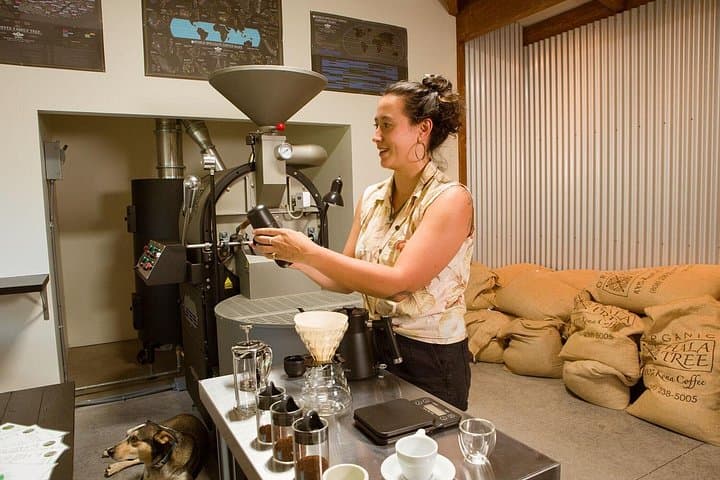
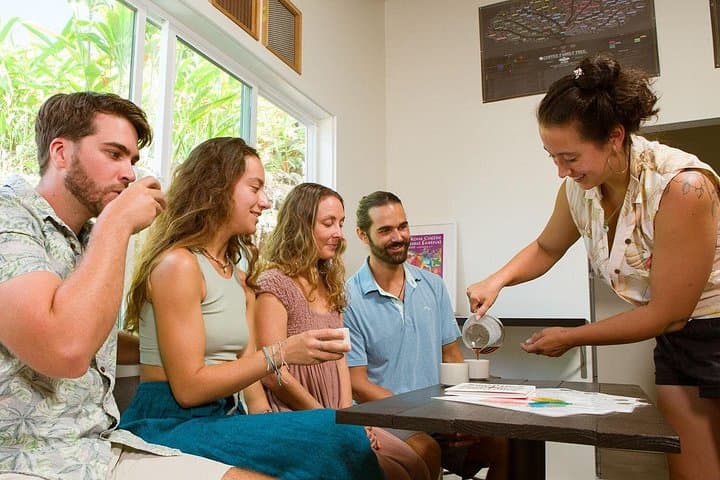
The roasting room smells of warm sugar and citrus; metal gleams and a single glass carafe sits ready. You step in out of Kona sun onto a concrete floor warmed by the roaster, and the guide places three cups on the bar—each a small test of the island's earth and the choices you’ll make as a brewer.
Verified experiences and guided adventures in the surrounding area.
Operated by Hala Tree Coffee · Holualoa, Hawaii
The roasting room smells of warm sugar and citrus; metal gleams and a single glass carafe sits ready. You step in out of Kona sun onto a concrete floor warmed by the roaster, and the guide places three cups on the bar—each a small test of the island's earth and the choices you’ll make as a brewer.
Kona coffee’s story runs from nineteenth‑century immigrant farms to modern micro‑roasters, fed by thin, mineral‑rich volcanic soils and steady trade winds. On this farm you’ll stand where beans shift from cherry to green to brown, and learn how extraction, grind, water temperature and time coax different flavors from the same lot. Culture here is hands‑on: tasting is central, and local growers treat cupping as both craft and conversation.
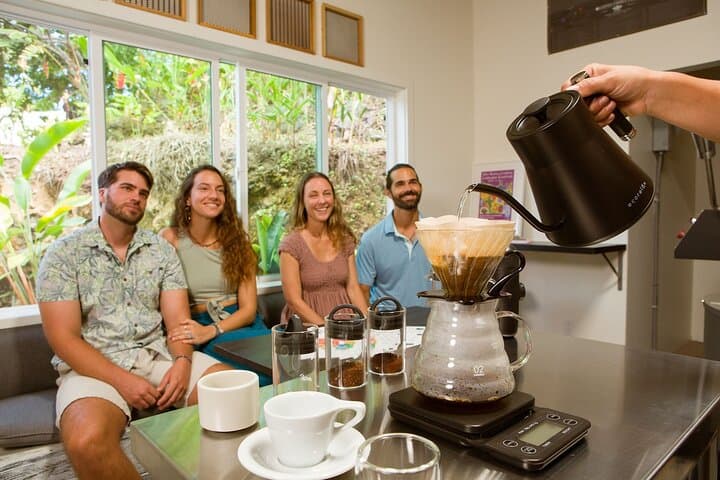
Expect three focused demos—pour‑over, French press and espresso—each lasting long enough to explain technique and let you taste differences. The roaster visible in the room is a practical lesson in how heat and time alter sugars and acidity. If you add the short farm tour, you’ll see shade trees, terraced plots and irrigation that ties coffee to island hydrology.
Practical tips: arrive 10 minutes early, bring any dietary notes for samples, and wear closed‑toe shoes if you opt for the farm walk. The workshop is wheelchair accessible and lasts about an hour. It’s a compact, sensory introduction to brewing that leaves you with clear steps to reproduce better coffee at home and a sharper palate for Kona’s unique profile.
easy.
1 hour.
Minimal fitness required; standing for demonstrations and a short, optional farm walk on uneven ground.
Yes—free samples of medium and dark 100% Kona coffee are included; expect small tasting portions across the three brew methods.
Yes—the roasting room and paths described are wheelchair accessible; indicate accessibility needs when booking.
Yes—there’s a free short farm tour available before or after the workshop; it’s informal and weather dependent.
Absolutely—the class is designed for home brewers with no prior technical skill; instructors cover basics and practical takeaways.
Kona’s coffee economy began in the 19th century with immigrant farmers; volcanic soils and tradewinds created a distinct microclimate prized for flavor.
Many Kona farms practice shade growing and water‑wise irrigation; visitors can reduce impact by staying on paths and avoiding single‑use plastics.
Hala Tree Coffee operates guided outdoor trips and adventures with an emphasis on safety, stewardship, and memorable experiences.

The roasting room smells of warm sugar and citrus; metal gleams and a single glass carafe sits ready. You step in out of Kona sun onto a concrete floor warmed by the roaster, and the guide places three cups on the bar—each a small test of the island's earth and the choices you’ll make as a brewer.
The roasting room smells of warm sugar and citrus; metal gleams and a single glass carafe sits ready. You step in out of Kona sun onto a concrete floor warmed by the roaster, and the guide places three cups on the bar—each a small test of the island's earth and the choices you’ll make as a brewer.
Kona coffee’s story runs from nineteenth‑century immigrant farms to modern micro‑roasters, fed by thin, mineral‑rich volcanic soils and steady trade winds. On this farm you’ll stand where beans shift from cherry to green to brown, and learn how extraction, grind, water temperature and time coax different flavors from the same lot. Culture here is hands‑on: tasting is central, and local growers treat cupping as both craft and conversation.
Expect three focused demos—pour‑over, French press and espresso—each lasting long enough to explain technique and let you taste differences. The roaster visible in the room is a practical lesson in how heat and time alter sugars and acidity. If you add the short farm tour, you’ll see shade trees, terraced plots and irrigation that ties coffee to island hydrology.
Practical tips: arrive 10 minutes early, bring any dietary notes for samples, and wear closed‑toe shoes if you opt for the farm walk. The workshop is wheelchair accessible and lasts about an hour. It’s a compact, sensory introduction to brewing that leaves you with clear steps to reproduce better coffee at home and a sharper palate for Kona’s unique profile.