THE ADVENTURE COLLECTIVE® · Independent discovery and booking for outdoor travel

Cruise from Siem Reap into Kompong Phluk’s stilted village and flooded forest on a half-day boat tour. See fishermen, visit a monks’ training school, and glide through quiet channels onto Tonlé Sap lake.
Cruise from Siem Reap into Kompong Phluk’s stilted village and flooded forest on a half-day boat tour. See fishermen, visit a monks’ training school, and glide through quiet channels onto Tonlé Sap lake.
A low-slung longtail slips away from the riverbank while the road back toward Siem Reap dries into dust behind the minivan. The first sight is a forest on stilts: houses raised meters above the wet season, narrow walkways and wooden ladders balancing daily life over water that swells each year. Guides steady the motorboat as fishermen check nets; monks move quietly through the village near a training school and a large pergola that crowns the shoreline.
Verified experiences and guided adventures in the surrounding area.
Operated by Khmer Detours · Kompong Phluk, Siem Reap Province
A low-slung longtail slips away from the riverbank while the road back toward Siem Reap dries into dust behind the minivan. The first sight is a forest on stilts: houses raised meters above the wet season, narrow walkways and wooden ladders balancing daily life over water that swells each year. Guides steady the motorboat as fishermen check nets; monks move quietly through the village near a training school and a large pergola that crowns the shoreline.
Kompong Phluk sits on the edge of Tonlé Sap, a lake whose seasonal pulse reverses the Mekong and floods a wide plain each rainy season. That flood pulse built the lake’s rich silty soils and created the flooded forests where tangled roots and submerged trunks become habitat for fish and birds. The stilted architecture and the monks’ presence reflect a riverine culture adapted to cyclical inundation and rice-growing rhythms.
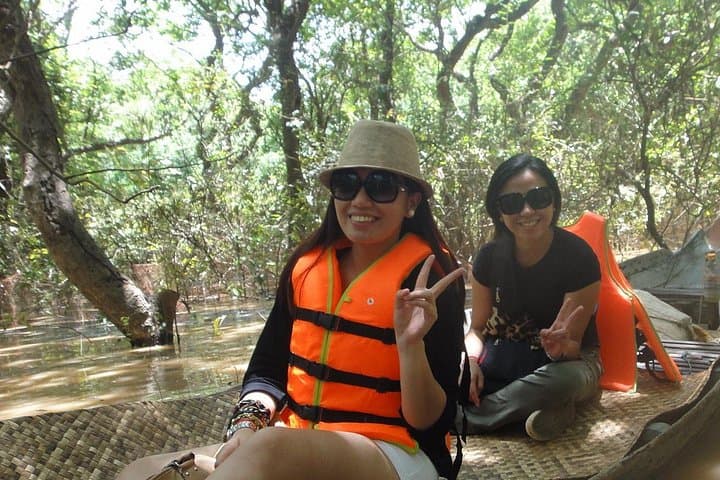
Expect a mix of village cruising, a quiet passage through flooded forest channels (weather and water levels permitting), and a sweep onto the open lake. The experience balances cultural observation — fishermen, temple life, woodcarved homes — with natural spectacle: still, insect-hummed channels and sudden winged flurries above open water.
Practical notes: tours usually include hotel pickup in an air-conditioned minivan because roads get dusty; travel times are 4–5 hours; mornings are cooler and better for still water photography. Bring cash for small purchases or temple donations, sun protection, insect repellent, and a light rain layer if traveling in the wet season. Be respectful around religious sites and dress modestly.
easy.
4–5 hours.
Suitable for most fitness levels; requires sitting in a boat and short, gentle walks on uneven wooden walkways.
The tour runs about 4–5 hours (270 minutes) including hotel pickup and return.
That depends on water levels: in high water you’ll boat through submerged channels; in low water the guide may include short walks along raised paths.
Yes—air-conditioned minivan pickup and drop-off from Siem Reap hotels is typically included.
Yes, children can join but must be accompanied by an adult; infants can ride in strollers during portions on land.
Kompong Phluk’s stilt houses reflect centuries of human adaptation to Tonlé Sap’s annual flood pulse; the lake’s seasonal reversal of flow shapes local livelihoods and settlement patterns.
Tonlé Sap is one of Southeast Asia’s most productive freshwater fisheries but faces pressure from overfishing and habitat change; travel that respects fishing seasons and avoids litter supports local conservation.
Khmer Detours operates guided outdoor trips and adventures with an emphasis on safety, stewardship, and memorable experiences.
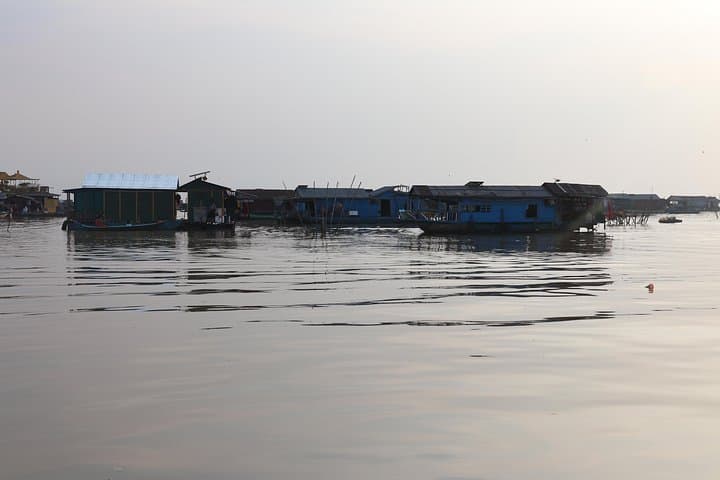
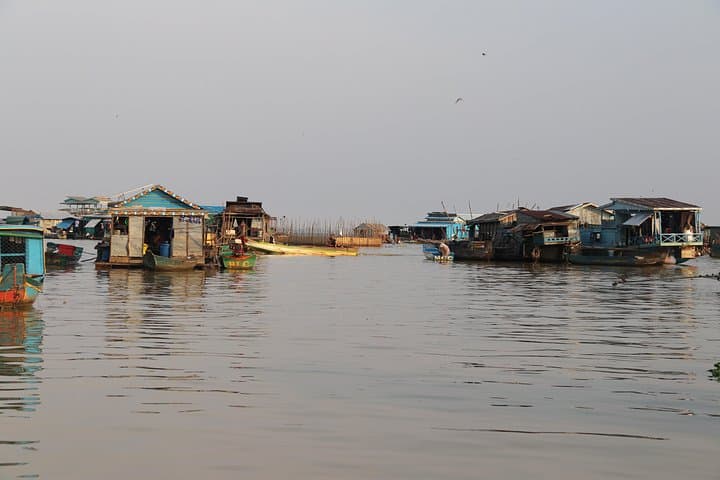
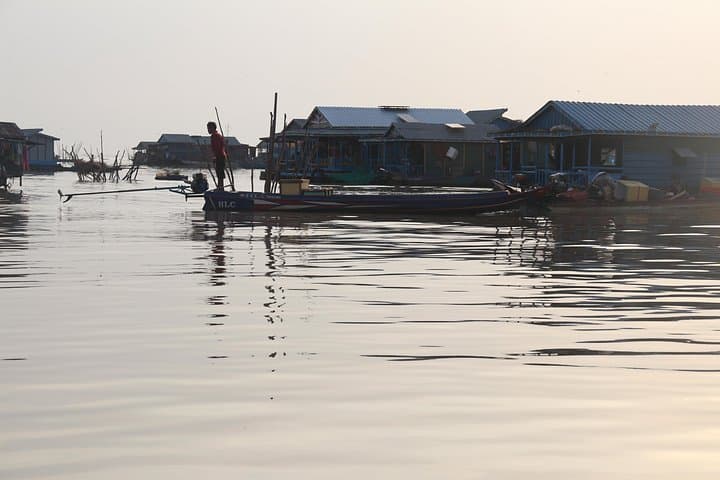
A low-slung longtail slips away from the riverbank while the road back toward Siem Reap dries into dust behind the minivan. The first sight is a forest on stilts: houses raised meters above the wet season, narrow walkways and wooden ladders balancing daily life over water that swells each year. Guides steady the motorboat as fishermen check nets; monks move quietly through the village near a training school and a large pergola that crowns the shoreline.
A low-slung longtail slips away from the riverbank while the road back toward Siem Reap dries into dust behind the minivan. The first sight is a forest on stilts: houses raised meters above the wet season, narrow walkways and wooden ladders balancing daily life over water that swells each year. Guides steady the motorboat as fishermen check nets; monks move quietly through the village near a training school and a large pergola that crowns the shoreline.
Kompong Phluk sits on the edge of Tonlé Sap, a lake whose seasonal pulse reverses the Mekong and floods a wide plain each rainy season. That flood pulse built the lake’s rich silty soils and created the flooded forests where tangled roots and submerged trunks become habitat for fish and birds. The stilted architecture and the monks’ presence reflect a riverine culture adapted to cyclical inundation and rice-growing rhythms.
Expect a mix of village cruising, a quiet passage through flooded forest channels (weather and water levels permitting), and a sweep onto the open lake. The experience balances cultural observation — fishermen, temple life, woodcarved homes — with natural spectacle: still, insect-hummed channels and sudden winged flurries above open water.
Practical notes: tours usually include hotel pickup in an air-conditioned minivan because roads get dusty; travel times are 4–5 hours; mornings are cooler and better for still water photography. Bring cash for small purchases or temple donations, sun protection, insect repellent, and a light rain layer if traveling in the wet season. Be respectful around religious sites and dress modestly.