THE ADVENTURE COLLECTIVE® · Independent discovery and booking for outdoor travel

Explore a working fishing community where houses stand on eight‑meter stilts and a living lake dictates daily life. This private half‑day boat tour from Siem Reap pairs close-up cultural encounters with Tonle Sap’s flooded forest and birdlife.
Explore a working fishing community where houses stand on eight‑meter stilts and a living lake dictates daily life. This private half‑day boat tour from Siem Reap pairs close-up cultural encounters with Tonle Sap’s flooded forest and birdlife.
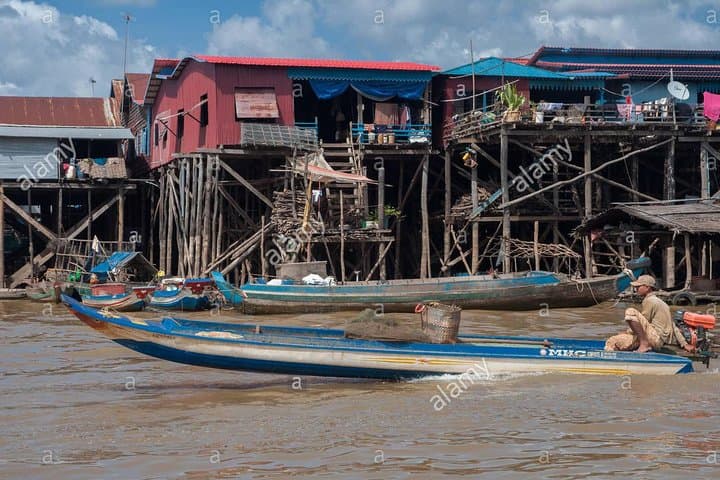
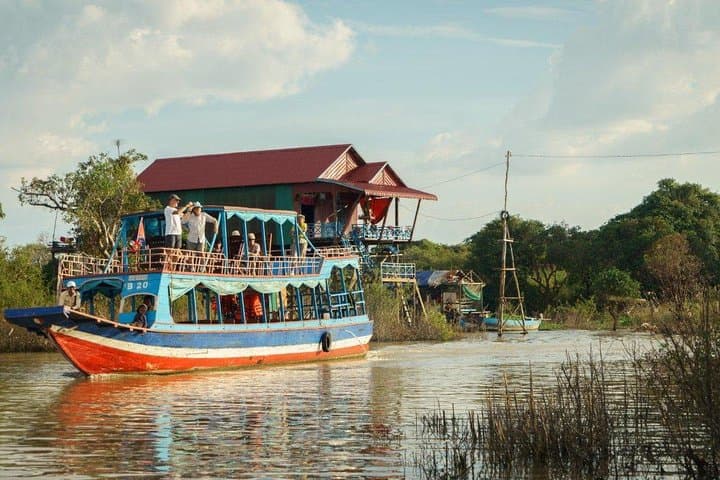
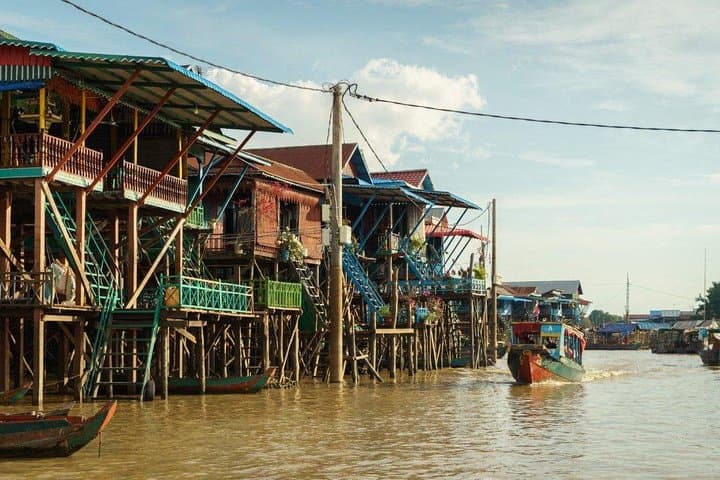
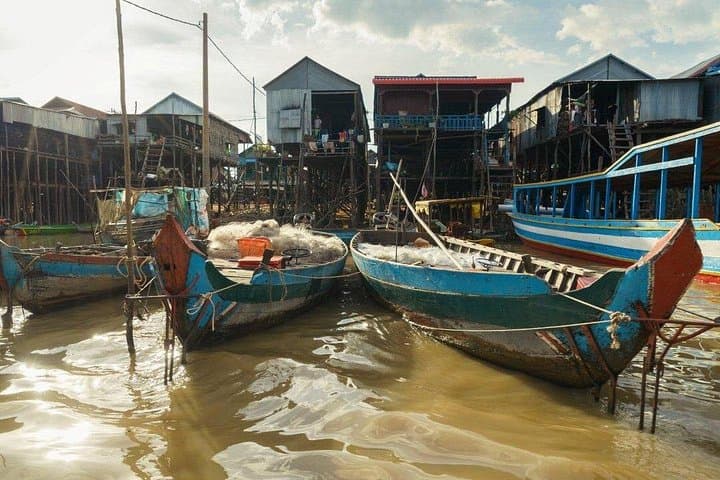
The boat slips away from the pier and the horizon opens into Tonle Sap — a wide, restless sheet of water that pushes and retreats with the seasons. Stilt houses rise like wooden sentinels; during the dry months their long stilts are exposed, in the wet season the lake laps within a meter of the floorboards and the mangrove channels become narrow rivers that dare you to follow them.
Verified experiences and guided adventures in the surrounding area.
Operated by Angkor Wat Travel Tour · Kompong Phluk, Siem Reap Province
The boat slips away from the pier and the horizon opens into Tonle Sap — a wide, restless sheet of water that pushes and retreats with the seasons. Stilt houses rise like wooden sentinels; during the dry months their long stilts are exposed, in the wet season the lake laps within a meter of the floorboards and the mangrove channels become narrow rivers that dare you to follow them.
Kompong Phluk is a permanent fishing community on the northeast edge of Tonle Sap, a lake whose flood pulse is one of Southeast Asia’s defining geological rhythms. For centuries the lake’s annual swell drove local economies and fed the Angkor heartland; today fishing, fish farms and floating commerce keep the village alive. You’ll see the practical architecture — houses hoisted up to eight meters, floating clinics and elevated schools — shaped by water and livelihood.
The tour blends quiet nature and everyday life: watch fishing techniques, glide under a canopy of flooded forest and scan for waterbirds riding exposed snags. In low water, mudflats and root systems reveal themselves; in high water, the forest becomes a watery avenue.
Practical guidance: allow around 40 minutes’ drive from Siem Reap to the pier and plan for a 1.5–2 hour boat ride. Mornings bring cooler light and calmer water; take sun protection, insect repellent and a waterproof layer in the monsoon months. Respect private spaces, ask before photographing people, and carry small Cambodian riel for local purchases. This half-day tour is low-effort but rich in cultural and ecological detail — ideal for travelers who want a compact, immersive window into life on Tonle Sap.
easy.
3–4 hours.
Suitable for general fitness; involves short walks and a seated boat ride
Boat time from the pier typically ranges 1.5–2 hours depending on water levels and season; total tour time including transfer is about 3–4 hours.
Yes—this listing is for a private half‑day tour with a local English-speaking guide and private boat access.
Yes—the activity is rated easy; however, boat boarding may be awkward for those with limited mobility and children must be supervised.
The dry season (November–April) offers lower water, exposed stilt foundations and easier shore access; the wet season (May–October) transforms the landscape into a high-water labyrinth—both have unique appeal.
Tonle Sap’s annual flood pulse has fed Khmer settlements for centuries; communities like Kompong Phluk evolved architectural responses to predictable inundation and remain tied to the lake’s fisheries.
Tonle Sap faces pressure from overfishing and habitat change; low-impact visits help the local economy while minimizing disturbance—avoid single‑use plastics and stick to guide‑approved routes.
Angkor Wat Travel Tour operates guided outdoor trips and adventures with an emphasis on safety, stewardship, and memorable experiences.
The boat slips away from the pier and the horizon opens into Tonle Sap — a wide, restless sheet of water that pushes and retreats with the seasons. Stilt houses rise like wooden sentinels; during the dry months their long stilts are exposed, in the wet season the lake laps within a meter of the floorboards and the mangrove channels become narrow rivers that dare you to follow them.
The boat slips away from the pier and the horizon opens into Tonle Sap — a wide, restless sheet of water that pushes and retreats with the seasons. Stilt houses rise like wooden sentinels; during the dry months their long stilts are exposed, in the wet season the lake laps within a meter of the floorboards and the mangrove channels become narrow rivers that dare you to follow them.
Kompong Phluk is a permanent fishing community on the northeast edge of Tonle Sap, a lake whose flood pulse is one of Southeast Asia’s defining geological rhythms. For centuries the lake’s annual swell drove local economies and fed the Angkor heartland; today fishing, fish farms and floating commerce keep the village alive. You’ll see the practical architecture — houses hoisted up to eight meters, floating clinics and elevated schools — shaped by water and livelihood.
The tour blends quiet nature and everyday life: watch fishing techniques, glide under a canopy of flooded forest and scan for waterbirds riding exposed snags. In low water, mudflats and root systems reveal themselves; in high water, the forest becomes a watery avenue.
Practical guidance: allow around 40 minutes’ drive from Siem Reap to the pier and plan for a 1.5–2 hour boat ride. Mornings bring cooler light and calmer water; take sun protection, insect repellent and a waterproof layer in the monsoon months. Respect private spaces, ask before photographing people, and carry small Cambodian riel for local purchases. This half-day tour is low-effort but rich in cultural and ecological detail — ideal for travelers who want a compact, immersive window into life on Tonle Sap.