THE ADVENTURE COLLECTIVE® · Independent discovery and booking for outdoor travel

Float through Kompong Phluk’s stilted streets, visit Rolous Market and watch the flooded forest change with the light. This half-day morning or sunset trip mixes cultural stops with a motorized boat ride on Tonle Sap.
Float through Kompong Phluk’s stilted streets, visit Rolous Market and watch the flooded forest change with the light. This half-day morning or sunset trip mixes cultural stops with a motorized boat ride on Tonle Sap.
Early light lifts off Tonle Sap and the village answers in reflected motion: stilted houses tiptoe above the water, laundry snaps on slow breezes and wooden boats cut narrow wakes toward shaded canals.
Verified experiences and guided adventures in the surrounding area.
Operated by Siem Reap Shuttle · Siem Reap, Siem Reap Province
Early light lifts off Tonle Sap and the village answers in reflected motion: stilted houses tiptoe above the water, laundry snaps on slow breezes and wooden boats cut narrow wakes toward shaded canals.
Kompong Phluk sits at the eastern edge of the lake where an annual flood cycle rewrites the landscape—homes climb on stilts, rice fields become reed-lined rivers and a flooded forest becomes the village’s back yard. The area grew as a lakeside community tied to the Tonle Sap’s seasonal pulse; local markets and pagodas such as Wat Roga anchor daily life and ritual.
Geology here is simple but dramatic: the Tonle Sap basin swells during the monsoon, reversing flows and expanding lake margins. That hydrology sustains fisheries and migratory birds; it also shapes houses and transport—boats are primary streets. Expect close cultural contact: vendors at Rolous Market, children paddling between stilt houses and monks at the pagoda.
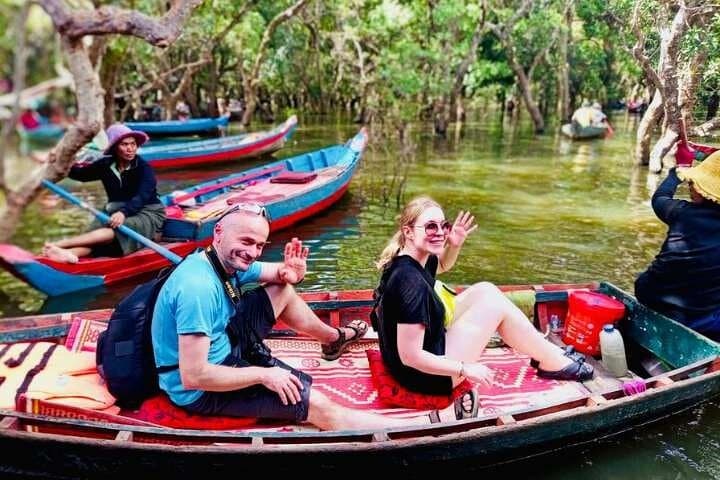
Practical notes: tours run in the morning or at sunset and combine minibus transfer with a motorized boat plus optional rowing-boat loops through flooded mangrove channels. Dress conservatively for pagoda stops, bring sun protection and insect repellent, and wear shoes that handle wet gangways. Guides provide life jackets; balance is needed boarding small boats.
Timing matters—morning offers market activity and cooler light; sunset brings long shadows and calmer water for photography. The half-day format is compact but immersive: you’ll leave with a clear sense of how Tonle Sap both nourishes and tests the communities built on its ever-shifting surface.
moderate.
5 hours.
Moderate fitness required—able to board small boats, step on uneven docks and walk short distances.
The shared half-day tour is about five hours and includes hotel pickup in Siem Reap, a visit to Rolous Market, a motorized boat ride through Kompong Phluk and a stop at a local pagoda; life jackets and bottled water are provided.
The tour is limited to small groups but is not recommended for children under 12 or infants per operator guidelines; assess comfort with boat transfers for younger travelers.
Yes—operators typically offer morning departures for market visits and cooler conditions, and sunset departures for calmer water and photographic light.
This tour requires stepping onto small boats and moving across uneven docks; it’s not recommended for travelers with serious mobility or spinal issues.
Kompong Phluk developed around the Tonle Sap’s seasonal floods; the community’s stilt architecture and boat-based lifestyle are adaptations to the lake’s annual expansion and contraction.
Tonle Sap faces pressure from overfishing, development and plastic pollution—choose operators who limit waste and support local livelihoods.
Siem Reap Shuttle operates guided outdoor trips and adventures with an emphasis on safety, stewardship, and memorable experiences.
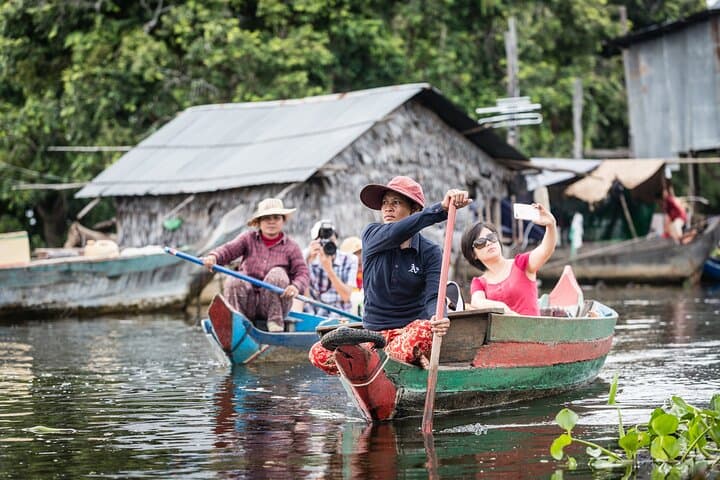
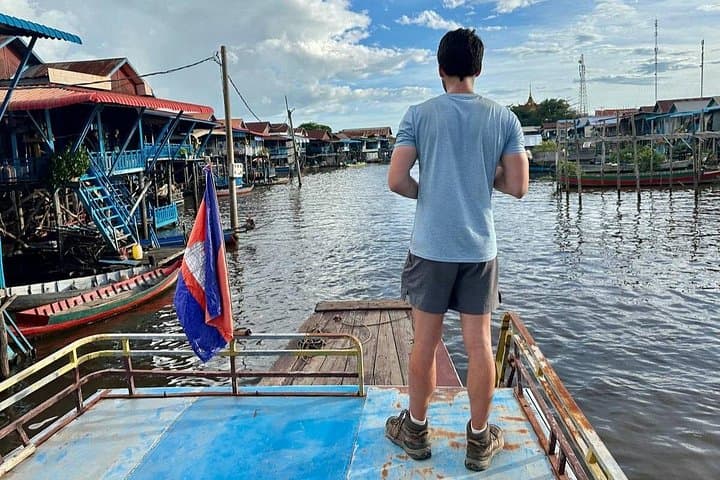
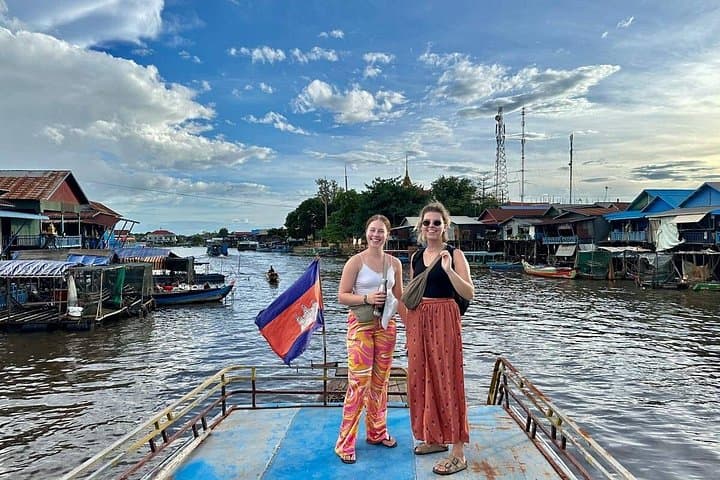
Early light lifts off Tonle Sap and the village answers in reflected motion: stilted houses tiptoe above the water, laundry snaps on slow breezes and wooden boats cut narrow wakes toward shaded canals.
Early light lifts off Tonle Sap and the village answers in reflected motion: stilted houses tiptoe above the water, laundry snaps on slow breezes and wooden boats cut narrow wakes toward shaded canals.
Kompong Phluk sits at the eastern edge of the lake where an annual flood cycle rewrites the landscape—homes climb on stilts, rice fields become reed-lined rivers and a flooded forest becomes the village’s back yard. The area grew as a lakeside community tied to the Tonle Sap’s seasonal pulse; local markets and pagodas such as Wat Roga anchor daily life and ritual.
Geology here is simple but dramatic: the Tonle Sap basin swells during the monsoon, reversing flows and expanding lake margins. That hydrology sustains fisheries and migratory birds; it also shapes houses and transport—boats are primary streets. Expect close cultural contact: vendors at Rolous Market, children paddling between stilt houses and monks at the pagoda.
Practical notes: tours run in the morning or at sunset and combine minibus transfer with a motorized boat plus optional rowing-boat loops through flooded mangrove channels. Dress conservatively for pagoda stops, bring sun protection and insect repellent, and wear shoes that handle wet gangways. Guides provide life jackets; balance is needed boarding small boats.
Timing matters—morning offers market activity and cooler light; sunset brings long shadows and calmer water for photography. The half-day format is compact but immersive: you’ll leave with a clear sense of how Tonle Sap both nourishes and tests the communities built on its ever-shifting surface.