THE ADVENTURE COLLECTIVE® · Independent discovery and booking for outdoor travel

Glide through Tonle Sap’s flooded forests and high‑stilt houses on a private half‑day boat trip from Siem Reap. This intimate tour shows everyday fishing life, a local pagoda, and quiet channels best experienced in the morning.
Glide through Tonle Sap’s flooded forests and high‑stilt houses on a private half‑day boat trip from Siem Reap. This intimate tour shows everyday fishing life, a local pagoda, and quiet channels best experienced in the morning.
You slide out of Siem Reap’s morning haze and onto a teak skiff, the motor ticking as the shoreline opens to mirror-flat water. Palms and stilt houses rise from the lake like a reclaimed village; fishermen move with practiced economy, nets skimming the surface, while the float forest presses close enough to touch.
Verified experiences and guided adventures in the surrounding area.
Operated by K-YORK TRAVEL SERVICE CO.Ltd · Siem Reap, Siem Reap Province
You slide out of Siem Reap’s morning haze and onto a teak skiff, the motor ticking as the shoreline opens to mirror-flat water. Palms and stilt houses rise from the lake like a reclaimed village; fishermen move with practiced economy, nets skimming the surface, while the float forest presses close enough to touch.
Kompong Phluk sits on the eastern edges of Tonle Sap, a lake whose yearly flood pulse rewrites the map of the countryside. Houses on high stilts and seasonal walkways are practical responses to those rhythms — local life is adapted to water that can rise several meters between dry and wet seasons. The trip pairs quiet observation of everyday fishing life with a stop at a local pagoda and a slow paddle deeper into flooded trees where birds rule the canopy.
Expect a mix of motorized and manually rowed boats, short transfers on narrow channels, and time to step ashore for a village walk. The tour is intimate by design — private transfers from Siem Reap, English-speaking guides, and a window into traditions tied to the lake’s ecology.
Practical notes: mornings are cooler and best for light, wildlife-rich viewing; the wet season brings higher water and more immersive forest paddles but also mosquitoes and unpredictable rain. Wear stable shoes for boarding, sun protection, and bring small cash for refreshments or temple donations. Respect private homes, stay on guide-led paths, and keep plastic out of the water; Tonle Sap’s seasonal heartbeat supports both people and one of Southeast Asia’s most productive freshwater fisheries.
easy.
4 hours.
Suitable for most fitness levels; must be able to step on/off boats and walk short uneven village paths.
The transfer is about 30–45 minutes depending on traffic and road conditions; the total tour time is approximately four hours with boat time included.
Yes—operators commonly accommodate children; infants can ride in a stroller during transfers, but expect small boats and life jackets for water segments.
Yes—guides often let guests try rowing the smaller boats in the flooded forest under supervision, weather and conditions permitting.
Life jackets are provided for all passengers on both the larger skiff and the smaller rowing boats as a standard safety measure.
Communities around Tonle Sap built elevated houses and floating structures to adapt to an annual flood pulse that dramatically expands and shrinks the lake each year.
Tonle Sap is ecologically vital and sensitive; visitors should avoid single-use plastics, follow guide instructions, and support community-run services to minimize impact.
K-YORK TRAVEL SERVICE CO.Ltd operates guided outdoor trips and adventures with an emphasis on safety, stewardship, and memorable experiences.
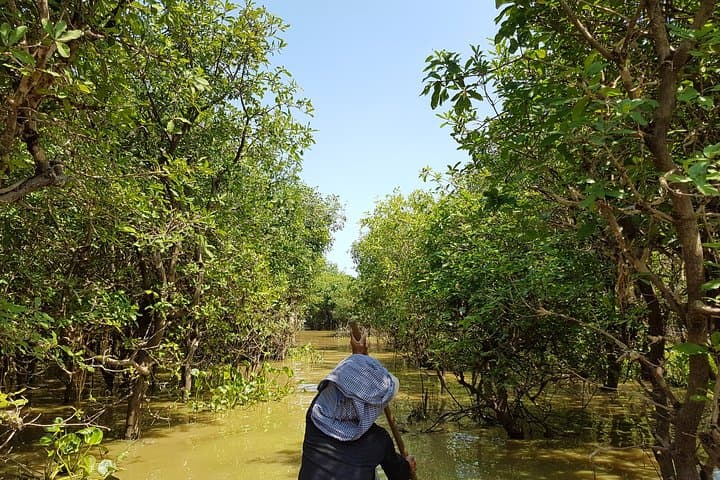
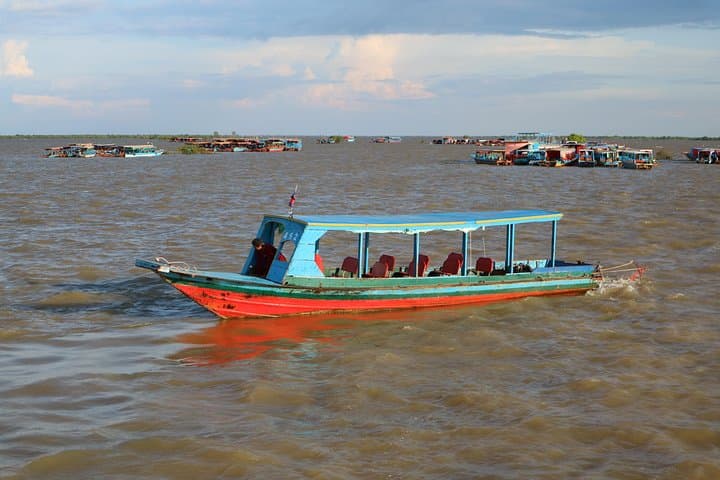
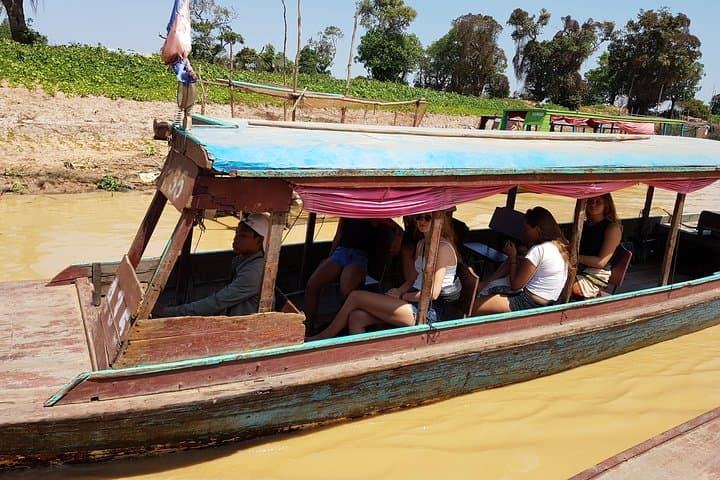
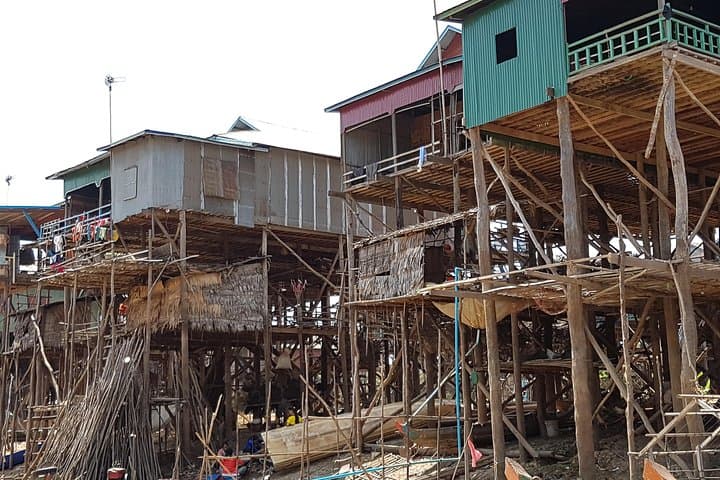
You slide out of Siem Reap’s morning haze and onto a teak skiff, the motor ticking as the shoreline opens to mirror-flat water. Palms and stilt houses rise from the lake like a reclaimed village; fishermen move with practiced economy, nets skimming the surface, while the float forest presses close enough to touch.
You slide out of Siem Reap’s morning haze and onto a teak skiff, the motor ticking as the shoreline opens to mirror-flat water. Palms and stilt houses rise from the lake like a reclaimed village; fishermen move with practiced economy, nets skimming the surface, while the float forest presses close enough to touch.
Kompong Phluk sits on the eastern edges of Tonle Sap, a lake whose yearly flood pulse rewrites the map of the countryside. Houses on high stilts and seasonal walkways are practical responses to those rhythms — local life is adapted to water that can rise several meters between dry and wet seasons. The trip pairs quiet observation of everyday fishing life with a stop at a local pagoda and a slow paddle deeper into flooded trees where birds rule the canopy.
Expect a mix of motorized and manually rowed boats, short transfers on narrow channels, and time to step ashore for a village walk. The tour is intimate by design — private transfers from Siem Reap, English-speaking guides, and a window into traditions tied to the lake’s ecology.
Practical notes: mornings are cooler and best for light, wildlife-rich viewing; the wet season brings higher water and more immersive forest paddles but also mosquitoes and unpredictable rain. Wear stable shoes for boarding, sun protection, and bring small cash for refreshments or temple donations. Respect private homes, stay on guide-led paths, and keep plastic out of the water; Tonle Sap’s seasonal heartbeat supports both people and one of Southeast Asia’s most productive freshwater fisheries.