THE ADVENTURE COLLECTIVE® · Independent discovery and booking for outdoor travel

Walk among broad cotton fields, meet ex‑kolkhozians over family‑style palov, and see the Zeravchan River’s dry basin firsthand. This private day tour from Samarkand combines cultural exchange, short field walks, and seasonal farm work opportunities.
Walk among broad cotton fields, meet ex‑kolkhozians over family‑style palov, and see the Zeravchan River’s dry basin firsthand. This private day tour from Samarkand combines cultural exchange, short field walks, and seasonal farm work opportunities.
You step out of the private vehicle onto a sunbaked dirt lane and the rhythm of rural Uzbekistan takes over: children running after a stray dog, a woman carrying a thermos of steaming tea, and cotton fields spreading to the horizon. The Zeravchan River, reduced to a braided, partly dry bed in places, runs like a memory through the landscape, its irrigation channels threading life into parched soil.
Verified experiences and guided adventures in the surrounding area.
Operated by TRIP ORIENT · Samarkand, Samarkand Region
You step out of the private vehicle onto a sunbaked dirt lane and the rhythm of rural Uzbekistan takes over: children running after a stray dog, a woman carrying a thermos of steaming tea, and cotton fields spreading to the horizon. The Zeravchan River, reduced to a braided, partly dry bed in places, runs like a memory through the landscape, its irrigation channels threading life into parched soil.
The village was once organized as a kolkhoz under Soviet collectivization; the traces of that era are visible in field geometry, communal farm buildings and the prominence of cotton—central to the Soviet economy. Geologically the plain is alluvial: flat terraces, loamy soils and seasonal river deposits that make the area good for crops but dependent on irrigation. Culturally, expect warm hospitality, family-style palov lunches, and the possibility of meeting local students studying French.
Practically, the day is long but low-impact: roughly 10–11 hours door-to-door with about 7–8 km of walking across flat terrain in stages (a 4.5 km riverside walk and a 2.5 km stroll through apiaries and fields). Wear sturdy, closed shoes for uneven field tracks, bring sun protection and at least 2 liters of water, and carry small cash for market purchases or gifts. Photography is welcome but always ask before shooting portraits; accept invitations to share food with gratitude. Seasonally, visits change—silkworm work in spring, cotton in bloom in June, harvest in September–October. The tour includes private transport, guide, and a family lunch, and offers a close look at water challenges and sustainable practices emerging in the region.
easy.
10–11 hours.
Suitable for walkers in basic fitness; mostly flat field tracks with short distances on foot.
Expect about 7–8 km of walking split into shorter sections (around 4.5 km along the river and 2.5 km through fields and the beekeeper's area).
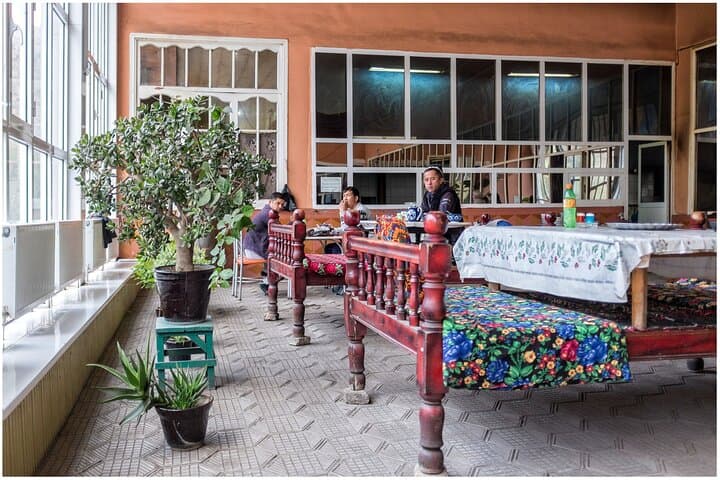
Yes—lunch is served in a local home and typically features palov, a regional rice and meat dish shared family‑style.
Seasonal tasks vary; visitors may assist during planting in spring or harvesting in September–October but should follow hosts' instructions and safety guidance.
The tour is rated easy and accommodates strollers, but some field paths are uneven—check with the operator about specific mobility needs.
The kolkhoz structure reflects Soviet collectivization that reshaped land use and introduced large-scale cotton monoculture across Central Asia.
Water is the central conservation issue here—the Zeravchan’s diverted flows reflect wider regional pressures; visitors can support local producers and avoid wasting water during visits.
TRIP ORIENT operates guided outdoor trips and adventures with an emphasis on safety, stewardship, and memorable experiences.
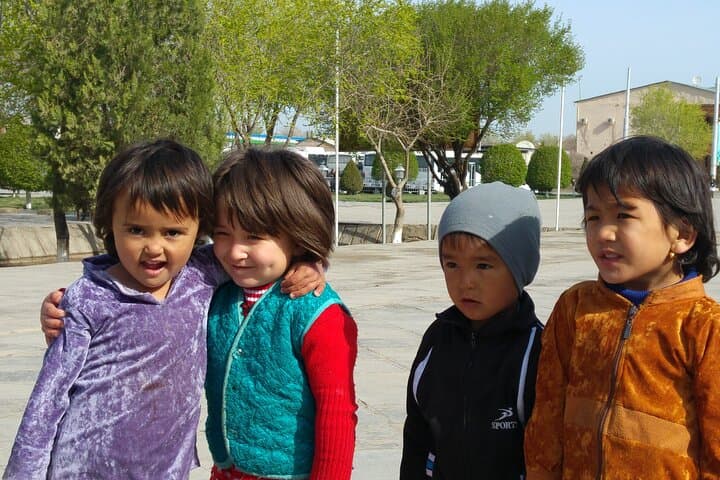
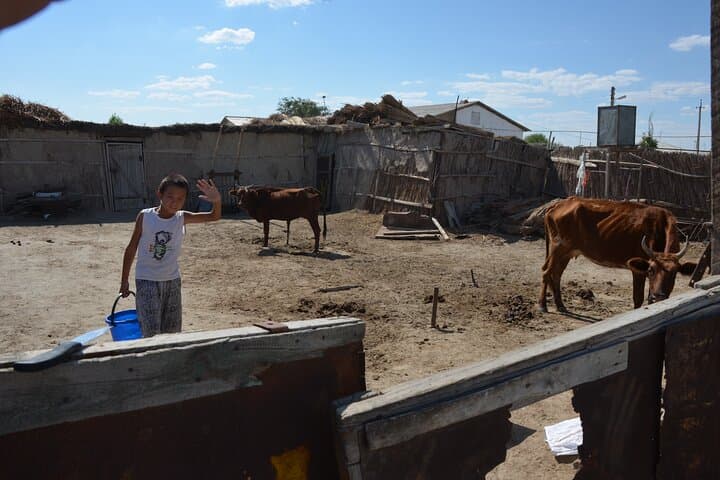
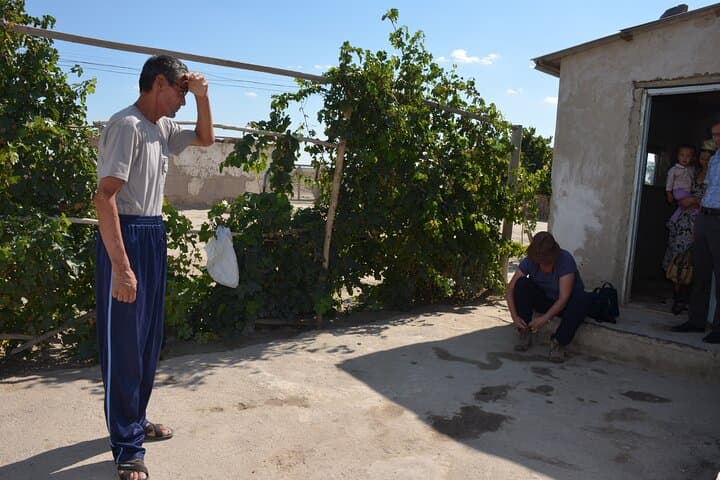
You step out of the private vehicle onto a sunbaked dirt lane and the rhythm of rural Uzbekistan takes over: children running after a stray dog, a woman carrying a thermos of steaming tea, and cotton fields spreading to the horizon. The Zeravchan River, reduced to a braided, partly dry bed in places, runs like a memory through the landscape, its irrigation channels threading life into parched soil.
You step out of the private vehicle onto a sunbaked dirt lane and the rhythm of rural Uzbekistan takes over: children running after a stray dog, a woman carrying a thermos of steaming tea, and cotton fields spreading to the horizon. The Zeravchan River, reduced to a braided, partly dry bed in places, runs like a memory through the landscape, its irrigation channels threading life into parched soil.
The village was once organized as a kolkhoz under Soviet collectivization; the traces of that era are visible in field geometry, communal farm buildings and the prominence of cotton—central to the Soviet economy. Geologically the plain is alluvial: flat terraces, loamy soils and seasonal river deposits that make the area good for crops but dependent on irrigation. Culturally, expect warm hospitality, family-style palov lunches, and the possibility of meeting local students studying French.
Practically, the day is long but low-impact: roughly 10–11 hours door-to-door with about 7–8 km of walking across flat terrain in stages (a 4.5 km riverside walk and a 2.5 km stroll through apiaries and fields). Wear sturdy, closed shoes for uneven field tracks, bring sun protection and at least 2 liters of water, and carry small cash for market purchases or gifts. Photography is welcome but always ask before shooting portraits; accept invitations to share food with gratitude. Seasonally, visits change—silkworm work in spring, cotton in bloom in June, harvest in September–October. The tour includes private transport, guide, and a family lunch, and offers a close look at water challenges and sustainable practices emerging in the region.