THE ADVENTURE COLLECTIVE® · Independent discovery and booking for outdoor travel

Cycle from Skopje through rural villages to Kokino, a Bronze Age observatory carved into volcanic rock and identified by NASA among the world’s older megalithic sites. This half‑day ride pairs cultural stops with open‑air stone markers aligned to solstices.
Cycle from Skopje through rural villages to Kokino, a Bronze Age observatory carved into volcanic rock and identified by NASA among the world’s older megalithic sites. This half‑day ride pairs cultural stops with open‑air stone markers aligned to solstices.
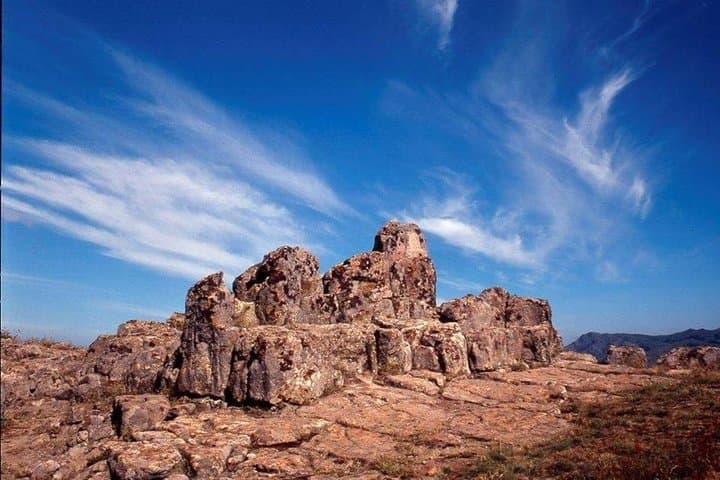
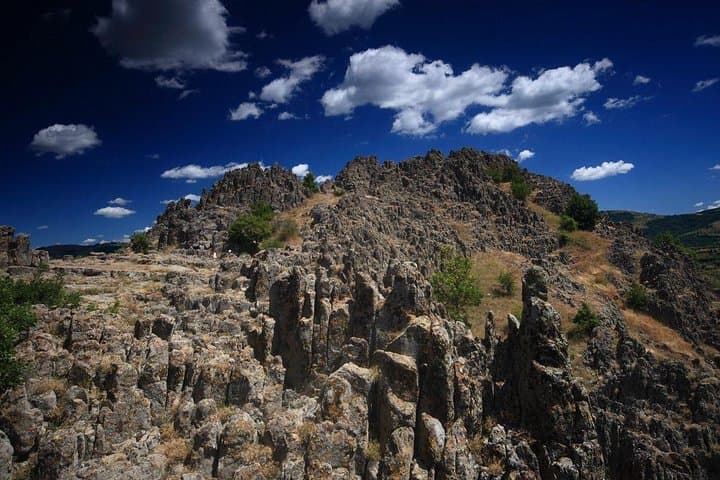
You arrive beneath a wide Macedonian sky, pedals humming as the van drops the group at a small roadside restaurant outside Kumanovo. The road ahead is asphalt, flanked by low hills and fields; villages slip past like frames in a film. Riding out from the restaurant, the rhythm is steady — short climbs, brief descents — until the rock outcrop of Kokino rises ahead, its flat platforms and carved seats cutting a silhouette against the horizon.
Verified experiences and guided adventures in the surrounding area.
Operated by E-bike Tours Macedonia · Kumanovo, Northeastern
You arrive beneath a wide Macedonian sky, pedals humming as the van drops the group at a small roadside restaurant outside Kumanovo. The road ahead is asphalt, flanked by low hills and fields; villages slip past like frames in a film. Riding out from the restaurant, the rhythm is steady — short climbs, brief descents — until the rock outcrop of Kokino rises ahead, its flat platforms and carved seats cutting a silhouette against the horizon.
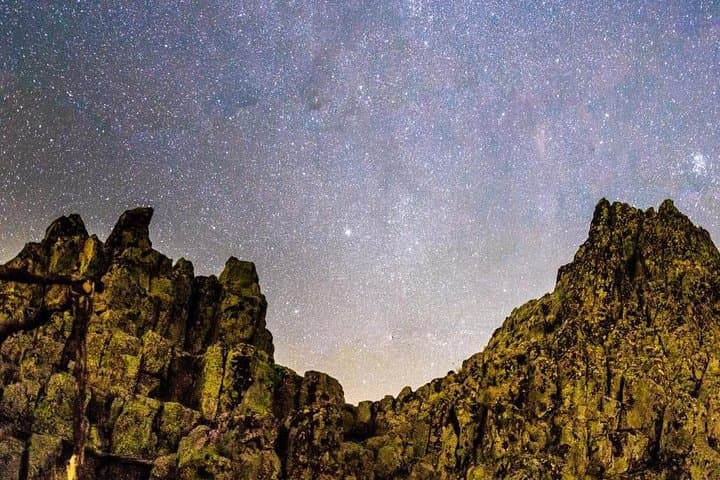
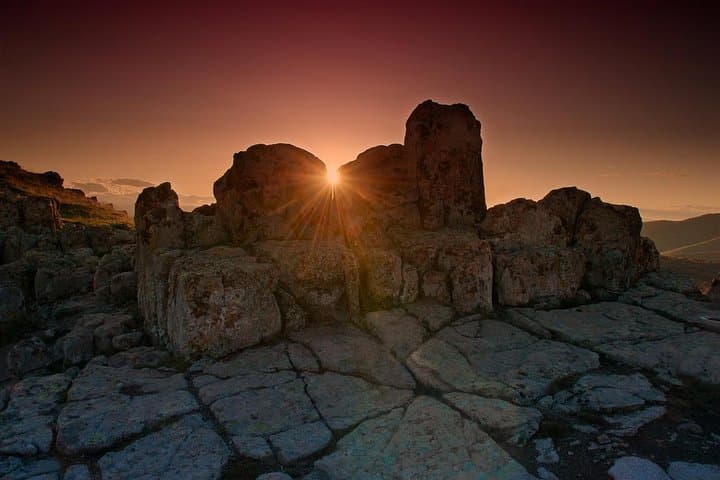
Kokino is a place where geology and human curiosity meet. The site’s volcanic and metamorphic bedrock allowed ancient observers to carve markers and seats aligned with sunrise positions; NASA has listed it among the world’s older megalithic observatories. Local history around Kumanovo layers Ottoman-era villages and Orthodox churches — the tour typically stops at the 11th‑century Church of Saint George, whose frescoes recall medieval devotional life.
Expect a mix of cultural context and straightforward fieldwork: guides point out stone "thrones" used to track solstices and equinoxes, demonstrate lines of sight to the eastern horizon, and explain how stationary observation recorded solar and lunar cycles.
Practical side: the route is mostly paved, suitable for riders of average fitness, and the visit is exposed — sun, wind, and sudden weather shifts are real. Wear grippy shoes for short rocky sections and bring water; lunch back at the restaurant finishes the loop. Timing your visit for early morning or late afternoon softens light and reduces heat, and a bit of patience pays when navigating the rocky viewing platforms.
moderate.
6–8 hours (including transfer and lunch).
Suitable for average fitness; able to ride paved roads for several kilometers and handle short rocky sections on foot.
The cycling segment is short—typically several kilometers on mostly paved road with a few gentle climbs; total active riding time is under an hour.
The main platforms are rocky and uneven but small; most visitors can walk the site without technical gear, though good shoes are recommended.
This tour generally includes the visit as part of the itinerary; confirm with the operator if any site fees apply beforehand.
The tour is family-friendly and listed as suitable for all fitness levels, but children should be comfortable on bicycles and supervised on rocky areas.
Kokino’s carved markers were used for stationary astronomical observations—alignments mark solstices and equinoxes, linking the site to Bronze Age timekeeping and ritual.
The site is fragile: stay on established walking areas, avoid touching carved panels, and support local guides who help manage visitor impact.
E-bike Tours Macedonia operates guided outdoor trips and adventures with an emphasis on safety, stewardship, and memorable experiences.
You arrive beneath a wide Macedonian sky, pedals humming as the van drops the group at a small roadside restaurant outside Kumanovo. The road ahead is asphalt, flanked by low hills and fields; villages slip past like frames in a film. Riding out from the restaurant, the rhythm is steady — short climbs, brief descents — until the rock outcrop of Kokino rises ahead, its flat platforms and carved seats cutting a silhouette against the horizon.
You arrive beneath a wide Macedonian sky, pedals humming as the van drops the group at a small roadside restaurant outside Kumanovo. The road ahead is asphalt, flanked by low hills and fields; villages slip past like frames in a film. Riding out from the restaurant, the rhythm is steady — short climbs, brief descents — until the rock outcrop of Kokino rises ahead, its flat platforms and carved seats cutting a silhouette against the horizon.
Kokino is a place where geology and human curiosity meet. The site’s volcanic and metamorphic bedrock allowed ancient observers to carve markers and seats aligned with sunrise positions; NASA has listed it among the world’s older megalithic observatories. Local history around Kumanovo layers Ottoman-era villages and Orthodox churches — the tour typically stops at the 11th‑century Church of Saint George, whose frescoes recall medieval devotional life.
Expect a mix of cultural context and straightforward fieldwork: guides point out stone "thrones" used to track solstices and equinoxes, demonstrate lines of sight to the eastern horizon, and explain how stationary observation recorded solar and lunar cycles.
Practical side: the route is mostly paved, suitable for riders of average fitness, and the visit is exposed — sun, wind, and sudden weather shifts are real. Wear grippy shoes for short rocky sections and bring water; lunch back at the restaurant finishes the loop. Timing your visit for early morning or late afternoon softens light and reduces heat, and a bit of patience pays when navigating the rocky viewing platforms.