THE ADVENTURE COLLECTIVE® · Independent discovery and booking for outdoor travel

Spend a relaxed day cruising Koh Samui’s coast, snorkeling around Koh Tan (Green Peace Island), and soaking up sand-and-sea culture. This full-day tour blends easy snorkeling, a shore lunch, and coastal sightseeing—ideal for travelers who want an accessible taste of Samui’s reefs.
Spend a relaxed day cruising Koh Samui’s coast, snorkeling around Koh Tan (Green Peace Island), and soaking up sand-and-sea culture. This full-day tour blends easy snorkeling, a shore lunch, and coastal sightseeing—ideal for travelers who want an accessible taste of Samui’s reefs.
A low-slung longtail cuts a wake off Big Buddha Beach as the mainland of Koh Samui slides behind you—the island’s crescent of sands and palms shrinking into a horizon of blue. The morning air tastes of salt and diesel; guides pass out snorkel masks and paper towels while the boat’s engine finds a steady rhythm. Over seven hours you’ll skim Chaweng’s bright coast, sight Grandfather and Grandmother rock, and anchor on Koh Tan—called Green Peace Island—for lunch, snorkeling, and a stretch of real quiet.
Verified experiences and guided adventures in the surrounding area.
Operated by Tour East Thailand · Bophut, Surat Thani
A low-slung longtail cuts a wake off Big Buddha Beach as the mainland of Koh Samui slides behind you—the island’s crescent of sands and palms shrinking into a horizon of blue. The morning air tastes of salt and diesel; guides pass out snorkel masks and paper towels while the boat’s engine finds a steady rhythm. Over seven hours you’ll skim Chaweng’s bright coast, sight Grandfather and Grandmother rock, and anchor on Koh Tan—called Green Peace Island—for lunch, snorkeling, and a stretch of real quiet.
Koh Samui is younger to tourism but older to maritime history: a 19th-century economy shaped by coconut groves, fishing, and seasonal trade with Chinese and Malay sailors. The islands you pass—Tong Sai, Cheong Mon, Lamai—reflect that layered past. Geologically, Samui and its satellite islets are gently folded granite capped with coral limestone; nearshore reefs drop quickly to pockets of living coral where reef fish congregate.
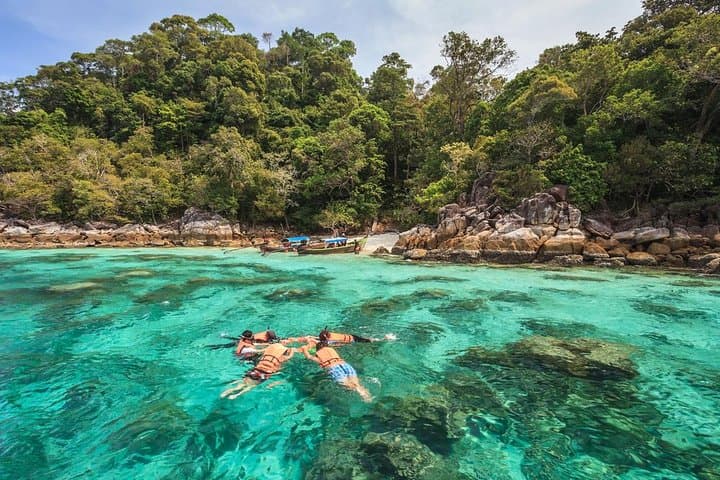
On Koh Tan the reef is intimate rather than epic: ankle-to-chest-deep gardens at low tide, sudden channels where brown-black coral gives way to soft fans. Local guides emphasize etiquette—no touching coral, no chasing turtles—both to protect fragile habitat and to let you see fish behave naturally. Lunch is Thai-style and informal: grilled fish, rice, papaya salad and shade under a palm canopy, where fishermen still mend nets and children run between rocks.
Practicalities frame the pleasure. Pickup from hotels in Bo Phut and Chaweng is usually included—confirm the time the evening before. The tour runs about seven hours (420 minutes) and is suitable for most fitness levels; snorkeling requires only basic swimming ability. Operators supply masks, snorkels, and life jackets, but bring reef-safe sunscreen and a lightweight towel. The sea can swing from glassy to choppy; if you’re prone to seasickness, an over-the-counter remedy an hour before departure helps.
Timing matters: plan this for a calm-weather day. December through February deliver the clearest water and coolest breezes. Rainy season (September–November) brings rougher seas and reduced visibility. Respect the islands—take any trash back to the mainland, avoid stepping on coral, and consider tipping guides who maintain gear and safety.
By day’s end you return to Koh Samui with a sunburn line and a small coral-studded memory: a short, well-paced cruise that stitches together Samui’s beaches, rocks, and reefs into an approachable introduction to the Gulf of Thailand.
easy.
7 hours.
Suitable for most travelers; basic swimming ability recommended for snorkeling
Yes—masks, snorkels, and life jackets are provided; you may bring your own if you prefer.
No—life jackets are available and basic swimming ability is sufficient for shallow reef areas.
Yes—the tour includes a Thai-style lunch and soft drinks served on Koh Tan.
Children are welcome; operators recommend close supervision and life jackets for younger swimmers.
The operator may cancel for bad weather or insufficient passengers; full refunds are offered if the tour is canceled.
Pickup from hotels in Bo Phut, Chaweng, Chaweng Noi and nearby areas is included; external pickups may incur extra charges.
Koh Samui’s economy shifted from coconuts and tin trade to tourism in the late 20th century; fishing villages you pass retain older maritime customs.
Coral reefs are sensitive—use reef-safe sunscreen, avoid touching coral, and follow guides’ directions to minimize impact.
Tour East Thailand operates guided outdoor trips and adventures with an emphasis on safety, stewardship, and memorable experiences.
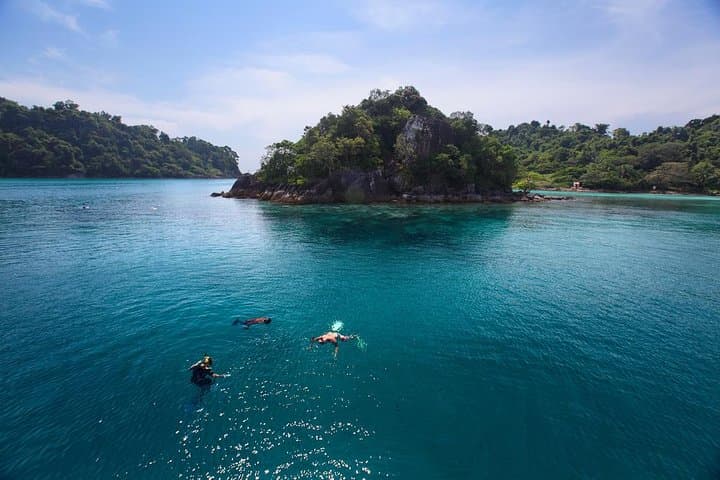
A low-slung longtail cuts a wake off Big Buddha Beach as the mainland of Koh Samui slides behind you—the island’s crescent of sands and palms shrinking into a horizon of blue. The morning air tastes of salt and diesel; guides pass out snorkel masks and paper towels while the boat’s engine finds a steady rhythm. Over seven hours you’ll skim Chaweng’s bright coast, sight Grandfather and Grandmother rock, and anchor on Koh Tan—called Green Peace Island—for lunch, snorkeling, and a stretch of real quiet.
A low-slung longtail cuts a wake off Big Buddha Beach as the mainland of Koh Samui slides behind you—the island’s crescent of sands and palms shrinking into a horizon of blue. The morning air tastes of salt and diesel; guides pass out snorkel masks and paper towels while the boat’s engine finds a steady rhythm. Over seven hours you’ll skim Chaweng’s bright coast, sight Grandfather and Grandmother rock, and anchor on Koh Tan—called Green Peace Island—for lunch, snorkeling, and a stretch of real quiet.
Koh Samui is younger to tourism but older to maritime history: a 19th-century economy shaped by coconut groves, fishing, and seasonal trade with Chinese and Malay sailors. The islands you pass—Tong Sai, Cheong Mon, Lamai—reflect that layered past. Geologically, Samui and its satellite islets are gently folded granite capped with coral limestone; nearshore reefs drop quickly to pockets of living coral where reef fish congregate.
On Koh Tan the reef is intimate rather than epic: ankle-to-chest-deep gardens at low tide, sudden channels where brown-black coral gives way to soft fans. Local guides emphasize etiquette—no touching coral, no chasing turtles—both to protect fragile habitat and to let you see fish behave naturally. Lunch is Thai-style and informal: grilled fish, rice, papaya salad and shade under a palm canopy, where fishermen still mend nets and children run between rocks.
Practicalities frame the pleasure. Pickup from hotels in Bo Phut and Chaweng is usually included—confirm the time the evening before. The tour runs about seven hours (420 minutes) and is suitable for most fitness levels; snorkeling requires only basic swimming ability. Operators supply masks, snorkels, and life jackets, but bring reef-safe sunscreen and a lightweight towel. The sea can swing from glassy to choppy; if you’re prone to seasickness, an over-the-counter remedy an hour before departure helps.
Timing matters: plan this for a calm-weather day. December through February deliver the clearest water and coolest breezes. Rainy season (September–November) brings rougher seas and reduced visibility. Respect the islands—take any trash back to the mainland, avoid stepping on coral, and consider tipping guides who maintain gear and safety.
By day’s end you return to Koh Samui with a sunburn line and a small coral-studded memory: a short, well-paced cruise that stitches together Samui’s beaches, rocks, and reefs into an approachable introduction to the Gulf of Thailand.