THE ADVENTURE COLLECTIVE® · Independent discovery and booking for outdoor travel

In four hours on Koh Samui you can move from gilded temple courtyards to jungle-waterfall dips and cliff-top panoramas. This half-day loop stitches cultural insight with coastal scenery—ideal for travelers short on time but keen on essentials.
In four hours on Koh Samui you can move from gilded temple courtyards to jungle-waterfall dips and cliff-top panoramas. This half-day loop stitches cultural insight with coastal scenery—ideal for travelers short on time but keen on essentials.
You step out of the van and the island breathes differently: warm salt air, a chorus of insects, and a skyline punctuated by a gilded silhouette—Big Buddha watching over the northern shore. The guide folds a map into a palm and points east; over the next few hours the island’s contrasts arrive in quick succession: shrine courtyards lined with incense smoke, a jungle track that sings with runoff to the Na Muang falls, and a coastal bluff that opens to a patient sea.
Verified experiences and guided adventures in the surrounding area.
Operated by I Asia Thailand · Chaweng, Surat Thani Province
You step out of the van and the island breathes differently: warm salt air, a chorus of insects, and a skyline punctuated by a gilded silhouette—Big Buddha watching over the northern shore. The guide folds a map into a palm and points east; over the next few hours the island’s contrasts arrive in quick succession: shrine courtyards lined with incense smoke, a jungle track that sings with runoff to the Na Muang falls, and a coastal bluff that opens to a patient sea.
Koh Samui’s landmarks are recent chapters in a long story. Big Buddha—Wat Phra Yai—dates to the late 20th century but sits atop older currents of Buddhist practice and Chinese-influenced iconography that shaped the island’s temples. The Grandfather and Grandmother Rocks (Hin Ta & Hin Yai) are geological mischief—eroded granite and lava that locals have turned into folklore and roadside humor. Na Muang, dropping in two tiers from the interior ridge, reflects the island’s volcanic substrate and the slow work of monsoon water carving channels through porous rock.
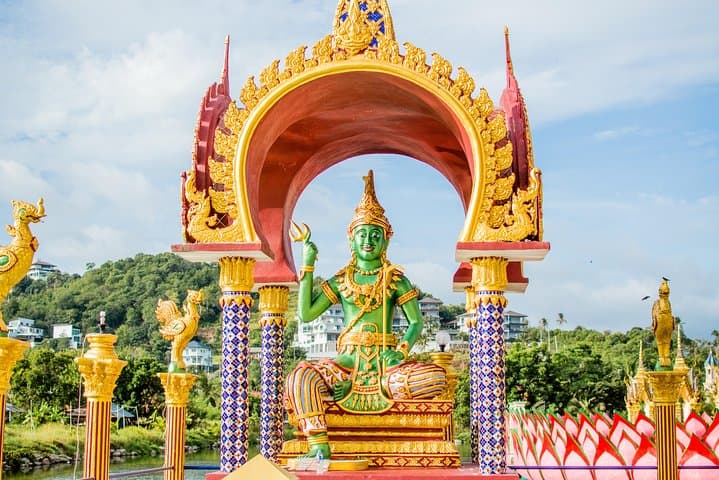
Culturally, Samui is a meeting point: Thai, Chinese, and Muslim fishing communities have traded goods and customs for generations. Wat Plai Laem’s multi-armed Guanyin points to the island’s Chinese-Thai devotion; the fish-filled temple lake invites quiet interaction where donations become feed for voracious carp.
Practical rhythm matters on a half-day tour. Start early to dodge the hottest hours and the busiest coaches; morning light flatters the Big Buddha’s gold leaf and keeps the temple cool. Wear modest clothing when entering shrines—knees and shoulders covered—and remove shoes at temple entrances. The Na Muang stop is short but rewarding: a quick scramble on damp stone will earn you a dip in a shaded pool, so bring swimwear and a towel.
Expect short walks rather than long hikes, uneven steps in temple compounds, and curbside stalls selling fruit and iced coconut. Hydration is non-negotiable—carry at least 1 L per person for the morning and more in the hot season. A lightweight rain jacket is useful from May to October when brief, hard showers can interrupt the route.
Photography is straightforward: wide-angle shots from the Lad Koh viewpoint capture the coastline sweep; detail work at Wat Plai Laem reveals lacquered statue textures and the fish-feeding rituals. Keep an eye on time—this is a curated loop designed to touch Samui’s signature sights without stretching into a full-day itinerary.
By the tour’s end you’ll have touched three aspects of Samui—religion, geology, and coastal life—each offering a compact but vivid sense of the island and the practical cues to make the most of it.
easy.
4–5 hours.
Suitable for most fitness levels—requires short walks, stair climbing at temples and a brief scramble at the waterfall
The itinerary is planned as a half-day loop, approximately 4–5 hours including hotel pickup and drop-off.
Access to most temples is free; Wat Plai Laem may request a small donation for upkeep.
Yes—there’s a pool suitable for a quick swim; bring swimwear and expect basic changing options.
Yes—this activity is family-friendly; infants ride on laps and strollers may be limited on uneven paths.
Yes—pickup from most Koh Samui hotels is offered; be ready in the lobby about 15 minutes before your scheduled pickup time.
Short tropical showers usually won’t cancel the tour; the supplier may adjust the route for safety or visibility.
Koh Samui’s modern tourist identity grew in the late 20th century, but temples like Wat Plai Laem show deeper Chinese-Thai devotional ties that shaped local customs.
Respect reef and coastal environments by avoiding sunscreen with oxybenzone when swimming, and follow marked paths at waterfalls to reduce erosion and protect native plants.
I Asia Thailand operates guided outdoor trips and adventures with an emphasis on safety, stewardship, and memorable experiences.
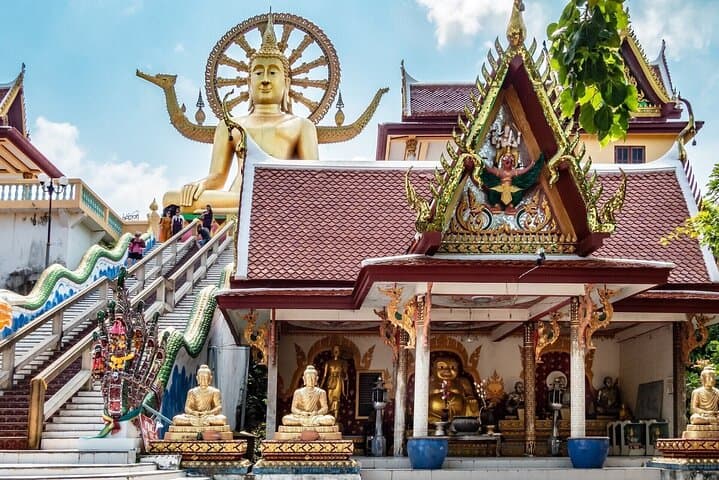
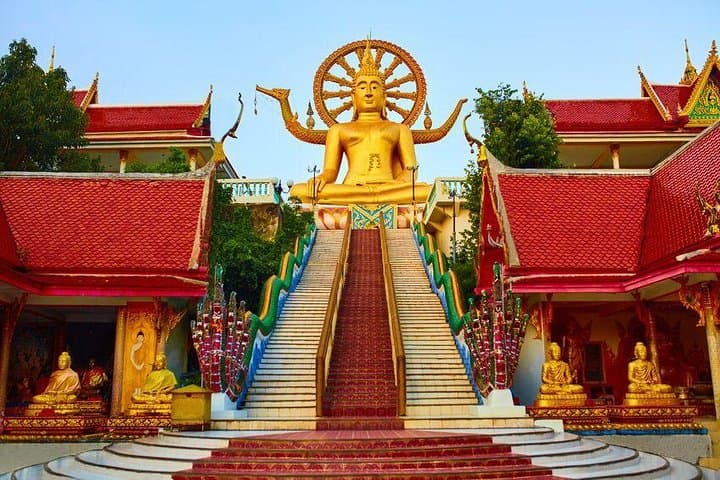
You step out of the van and the island breathes differently: warm salt air, a chorus of insects, and a skyline punctuated by a gilded silhouette—Big Buddha watching over the northern shore. The guide folds a map into a palm and points east; over the next few hours the island’s contrasts arrive in quick succession: shrine courtyards lined with incense smoke, a jungle track that sings with runoff to the Na Muang falls, and a coastal bluff that opens to a patient sea.
You step out of the van and the island breathes differently: warm salt air, a chorus of insects, and a skyline punctuated by a gilded silhouette—Big Buddha watching over the northern shore. The guide folds a map into a palm and points east; over the next few hours the island’s contrasts arrive in quick succession: shrine courtyards lined with incense smoke, a jungle track that sings with runoff to the Na Muang falls, and a coastal bluff that opens to a patient sea.
Koh Samui’s landmarks are recent chapters in a long story. Big Buddha—Wat Phra Yai—dates to the late 20th century but sits atop older currents of Buddhist practice and Chinese-influenced iconography that shaped the island’s temples. The Grandfather and Grandmother Rocks (Hin Ta & Hin Yai) are geological mischief—eroded granite and lava that locals have turned into folklore and roadside humor. Na Muang, dropping in two tiers from the interior ridge, reflects the island’s volcanic substrate and the slow work of monsoon water carving channels through porous rock.
Culturally, Samui is a meeting point: Thai, Chinese, and Muslim fishing communities have traded goods and customs for generations. Wat Plai Laem’s multi-armed Guanyin points to the island’s Chinese-Thai devotion; the fish-filled temple lake invites quiet interaction where donations become feed for voracious carp.
Practical rhythm matters on a half-day tour. Start early to dodge the hottest hours and the busiest coaches; morning light flatters the Big Buddha’s gold leaf and keeps the temple cool. Wear modest clothing when entering shrines—knees and shoulders covered—and remove shoes at temple entrances. The Na Muang stop is short but rewarding: a quick scramble on damp stone will earn you a dip in a shaded pool, so bring swimwear and a towel.
Expect short walks rather than long hikes, uneven steps in temple compounds, and curbside stalls selling fruit and iced coconut. Hydration is non-negotiable—carry at least 1 L per person for the morning and more in the hot season. A lightweight rain jacket is useful from May to October when brief, hard showers can interrupt the route.
Photography is straightforward: wide-angle shots from the Lad Koh viewpoint capture the coastline sweep; detail work at Wat Plai Laem reveals lacquered statue textures and the fish-feeding rituals. Keep an eye on time—this is a curated loop designed to touch Samui’s signature sights without stretching into a full-day itinerary.
By the tour’s end you’ll have touched three aspects of Samui—religion, geology, and coastal life—each offering a compact but vivid sense of the island and the practical cues to make the most of it.