THE ADVENTURE COLLECTIVE® · Independent discovery and booking for outdoor travel

A long day of history and vistas: travel from Siem Reap to the remote Koh Ker pyramid and the cliffside Preah Vihear Temple. Expect steep stone steps, laterite paths, and wide plains views — this private tour packs both archaeology and landscape into one full day.
A long day of history and vistas: travel from Siem Reap to the remote Koh Ker pyramid and the cliffside Preah Vihear Temple. Expect steep stone steps, laterite paths, and wide plains views — this private tour packs both archaeology and landscape into one full day.
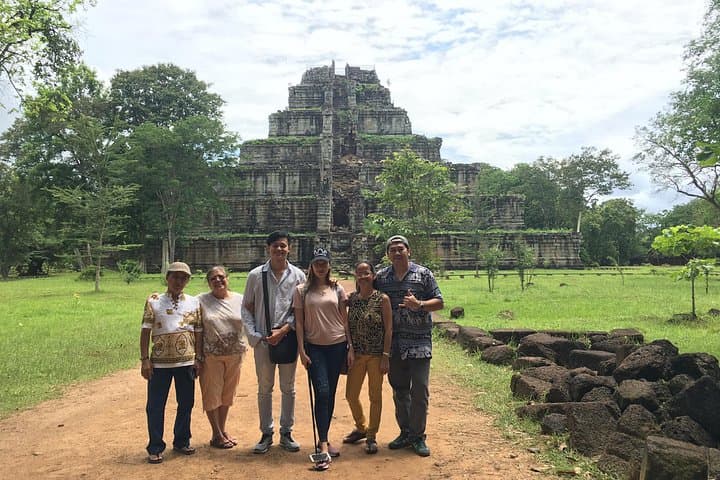
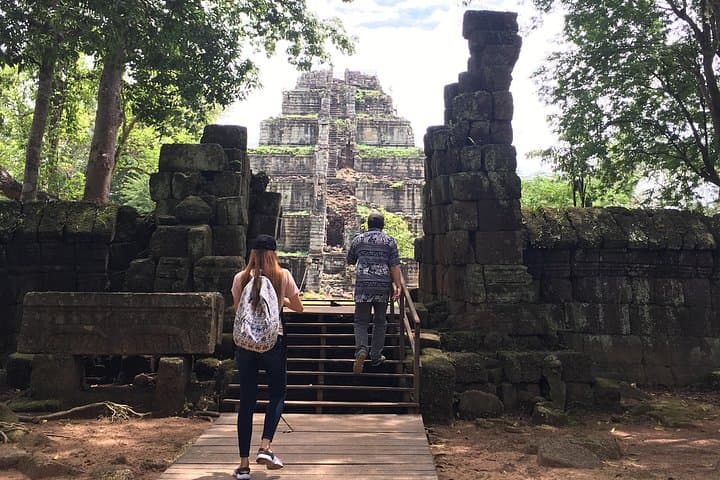
You arrive before dawn on a long stretch of countryside road; the bus hums and the landscape loosens from rice paddies into scrub and scattered forest. By midmorning the silhouette of Koh Ker rises — not a hill but a seven‑tiered sandstone stupa that seems to dare you to climb its stepped terraces and claim the view.
Verified experiences and guided adventures in the surrounding area.
Operated by Day Trip Cambodia · Siem Reap, Siem Reap Province
You arrive before dawn on a long stretch of countryside road; the bus hums and the landscape loosens from rice paddies into scrub and scattered forest. By midmorning the silhouette of Koh Ker rises — not a hill but a seven‑tiered sandstone stupa that seems to dare you to climb its stepped terraces and claim the view.
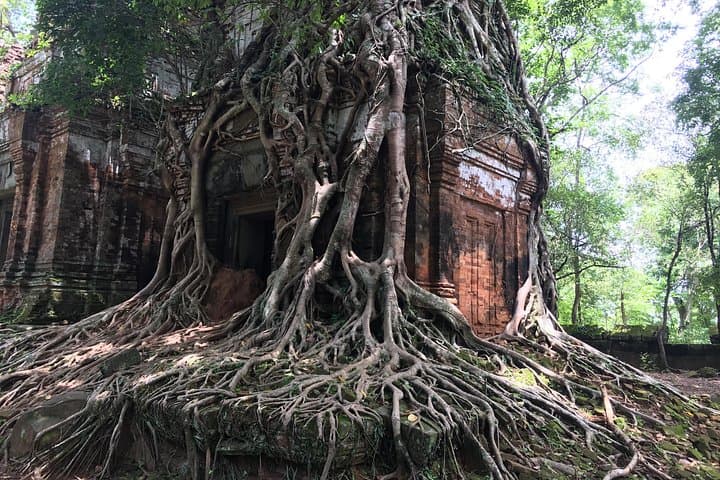
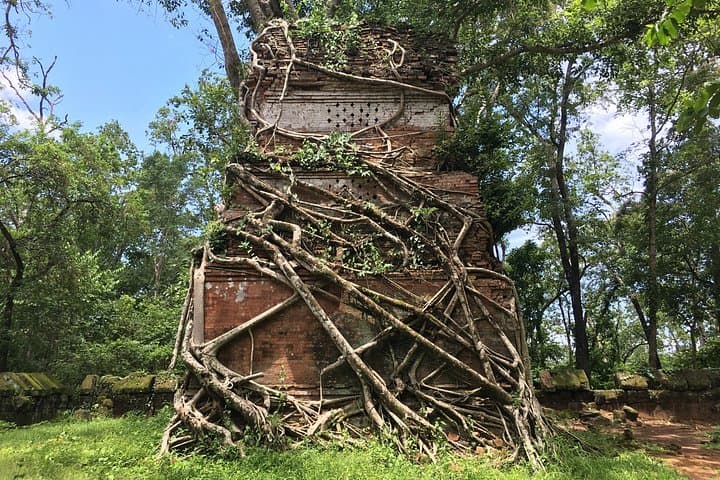
Koh Ker was briefly the Khmer capital in the 10th century, an experimental pulse of temple architecture marked by laterite and carved sandstone. The Prasat Pram complex and nearby ruined gopuras show the shift from riverine Angkor toward more remote, plateau sites. Preah Vihear sits centuries later on the Dangrek escarpment, a ridge-temple dedicated to Shiva that crowns a plateau and looks out over the broad Cambodian plain.
Expect uneven laterite paths, steep flights of stone steps (Koh Ker’s 55-step ascent), and shaded courtyards punctuated by garuda and lingam sculptures. The geology changes from lowland alluvium to sandstone outcrops; the wind on Preah Vihear’s terraces carries a wide, sun-baked horizon.
Practically: this is a full‑day, private tour with air‑conditioned transfer and a local English guide. Wear sturdy shoes, sun protection, and bring at least 1.5–2 liters of water; there are limited facilities at remote ruins. Mornings are cooler and quieter; late afternoons bring heat and dust. Respect barriers and active conservation work, and allow time for the drive back to Siem Reap after a long day of climbing and photography.
moderate.
9–12 hours.
Suitable for travelers in average fitness — includes sustained walking, uneven ground, and flights of stairs.
Typical private excursions run 9–12 hours round trip, with about 2–3 hours driving each way depending on conditions.
Confirm with the operator — some tours include admissions, but many expect guests to pay temple entrance fees on site.
Preah Vihear is a well-visited heritage site; follow guide instructions and official access points. Check current travel advisories before travel.
Koh Ker and Preah Vihear have steep steps and uneven terrain; they are challenging for those with limited mobility and require supervision for young children.
Koh Ker briefly served as the Khmer capital in the 10th century and experimented with multi-tiered temple pyramids; Preah Vihear later became a major hilltop shrine devoted to Shiva.
Both complexes face wear from climate and visitor traffic; support local guides and adhere to marked paths to reduce erosion and protect carvings.
Day Trip Cambodia operates guided outdoor trips and adventures with an emphasis on safety, stewardship, and memorable experiences.
You arrive before dawn on a long stretch of countryside road; the bus hums and the landscape loosens from rice paddies into scrub and scattered forest. By midmorning the silhouette of Koh Ker rises — not a hill but a seven‑tiered sandstone stupa that seems to dare you to climb its stepped terraces and claim the view.
You arrive before dawn on a long stretch of countryside road; the bus hums and the landscape loosens from rice paddies into scrub and scattered forest. By midmorning the silhouette of Koh Ker rises — not a hill but a seven‑tiered sandstone stupa that seems to dare you to climb its stepped terraces and claim the view.
Koh Ker was briefly the Khmer capital in the 10th century, an experimental pulse of temple architecture marked by laterite and carved sandstone. The Prasat Pram complex and nearby ruined gopuras show the shift from riverine Angkor toward more remote, plateau sites. Preah Vihear sits centuries later on the Dangrek escarpment, a ridge-temple dedicated to Shiva that crowns a plateau and looks out over the broad Cambodian plain.
Expect uneven laterite paths, steep flights of stone steps (Koh Ker’s 55-step ascent), and shaded courtyards punctuated by garuda and lingam sculptures. The geology changes from lowland alluvium to sandstone outcrops; the wind on Preah Vihear’s terraces carries a wide, sun-baked horizon.
Practically: this is a full‑day, private tour with air‑conditioned transfer and a local English guide. Wear sturdy shoes, sun protection, and bring at least 1.5–2 liters of water; there are limited facilities at remote ruins. Mornings are cooler and quieter; late afternoons bring heat and dust. Respect barriers and active conservation work, and allow time for the drive back to Siem Reap after a long day of climbing and photography.