THE ADVENTURE COLLECTIVE® · Independent discovery and booking for outdoor travel

Spend a long, varied day exploring Phnom Kulen’s waterfalls and river carvings, climb the pyramid at Koh Ker, and wander the overgrown galleries of Beng Mealea. This full‑day loop blends nature, Khmer history, and moderate walking across uneven terrain.
Spend a long, varied day exploring Phnom Kulen’s waterfalls and river carvings, climb the pyramid at Koh Ker, and wander the overgrown galleries of Beng Mealea. This full‑day loop blends nature, Khmer history, and moderate walking across uneven terrain.
Morning light slices through the humidity as the van leaves Siem Reap and the flat rice plains give way to the first foothills of Kulen Mountain. By the time you reach the park, the air smells of wet stone and forest; water thunders just beyond a tree line and carved lingas glint on the riverbed where monks once blessed the currents.
Verified experiences and guided adventures in the surrounding area.
Operated by Angkor Buddy Tour · Siem Reap, Siem Reap Province
Morning light slices through the humidity as the van leaves Siem Reap and the flat rice plains give way to the first foothills of Kulen Mountain. By the time you reach the park, the air smells of wet stone and forest; water thunders just beyond a tree line and carved lingas glint on the riverbed where monks once blessed the currents.
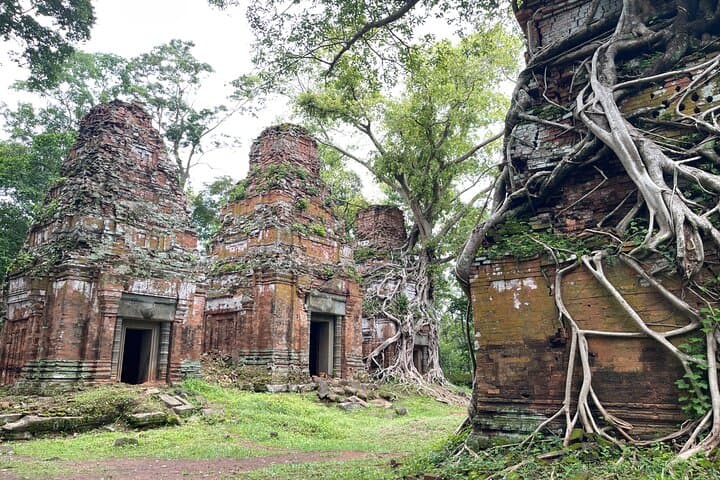
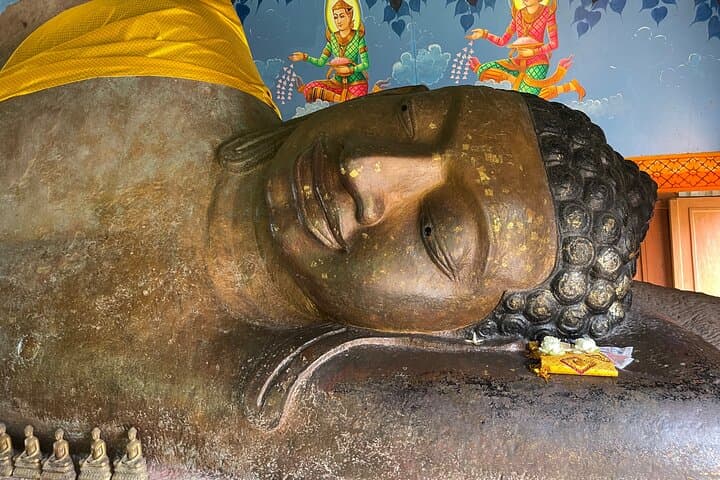
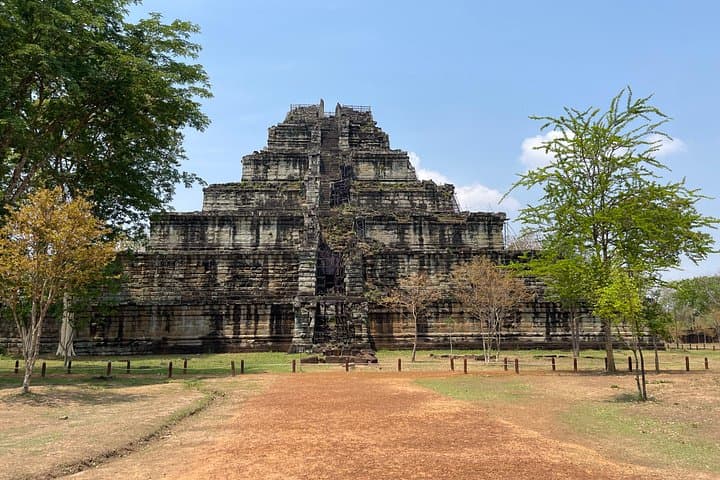
Phnom Kulen is both a geological ridge of uplifted sandstone and a cradle of Khmer devotion — the River of a Thousand Lingas and the reclining Preah Ang Thom recall early Angkorian rituals. Later the route turns to Koh Ker, the 10th‑century capital crowned by the seven-tiered Prasat Thom pyramid, whose steep terraces offer broad views of lowland scrub and temple fragments. The final act is Beng Mealea, an early 12th‑century complex left largely unrestored; roots and toppled galleries make each corridor a small excavation and a quiet lesson in how rainforest reclaims stone.
Expect a long day: roughly 12–13 hours total with up to two hours’ driving to Kulen, then point-to-point transfers between sites. Walking consists of short hikes and uneven temple scrambling (15–60 minutes at most sites) with modest elevation changes at Kulen’s ridge (~100–200 m). Bring sun protection and sturdy soles for wet rock and loose steps, and plan for limited facilities away from Siem Reap. Respect APSARA rules (no drones without permission) and the dress code at sacred sites. With preparation, this circuit delivers a clear mix of nature, history, and raw archaeological atmosphere in one immersive day.
moderate.
12–13 hours.
Suitable for travelers who can manage a full day of walking on uneven ground and short temple scrambles; basic stamina required for long transfers.
The experience is a long day—expect about 12–13 hours including travel from Siem Reap, site visits, and return.
Entrance fees are not always pre-included; the guide can advise you where to buy tickets (cash or card accepted at main checkpoints).
Swimming is common at designated waterfall pools but avoid swimming near sacred carvings and observe local guidance and seasonal safety warnings.
Yes, children are welcome but must be supervised; the day is long and some parts require careful footing on loose stone.
Koh Ker briefly served as a 10th‑century Khmer capital and Prasat Thom’s pyramid marks that imperial experiment; Phnom Kulen contains early Angkorian river carvings tied to religious rites.
Sites are managed under APSARA and local park authorities; stick to paths, avoid removing artifacts, and minimize single‑use plastic to reduce impact.
Angkor Buddy Tour operates guided outdoor trips and adventures with an emphasis on safety, stewardship, and memorable experiences.
Morning light slices through the humidity as the van leaves Siem Reap and the flat rice plains give way to the first foothills of Kulen Mountain. By the time you reach the park, the air smells of wet stone and forest; water thunders just beyond a tree line and carved lingas glint on the riverbed where monks once blessed the currents.
Morning light slices through the humidity as the van leaves Siem Reap and the flat rice plains give way to the first foothills of Kulen Mountain. By the time you reach the park, the air smells of wet stone and forest; water thunders just beyond a tree line and carved lingas glint on the riverbed where monks once blessed the currents.
Phnom Kulen is both a geological ridge of uplifted sandstone and a cradle of Khmer devotion — the River of a Thousand Lingas and the reclining Preah Ang Thom recall early Angkorian rituals. Later the route turns to Koh Ker, the 10th‑century capital crowned by the seven-tiered Prasat Thom pyramid, whose steep terraces offer broad views of lowland scrub and temple fragments. The final act is Beng Mealea, an early 12th‑century complex left largely unrestored; roots and toppled galleries make each corridor a small excavation and a quiet lesson in how rainforest reclaims stone.
Expect a long day: roughly 12–13 hours total with up to two hours’ driving to Kulen, then point-to-point transfers between sites. Walking consists of short hikes and uneven temple scrambling (15–60 minutes at most sites) with modest elevation changes at Kulen’s ridge (~100–200 m). Bring sun protection and sturdy soles for wet rock and loose steps, and plan for limited facilities away from Siem Reap. Respect APSARA rules (no drones without permission) and the dress code at sacred sites. With preparation, this circuit delivers a clear mix of nature, history, and raw archaeological atmosphere in one immersive day.