THE ADVENTURE COLLECTIVE® · Independent discovery and booking for outdoor travel

Escape Angkor's crowds for a 6–7 hour loop to Koh Ker and Bueng Mealea, two outlying temple complexes where pyramidal towers and vine-choked galleries offer quieter, more rugged encounters with Khmer history. Read on for what to expect and how to prepare.
Escape Angkor's crowds for a 6–7 hour loop to Koh Ker and Bueng Mealea, two outlying temple complexes where pyramidal towers and vine-choked galleries offer quieter, more rugged encounters with Khmer history. Read on for what to expect and how to prepare.
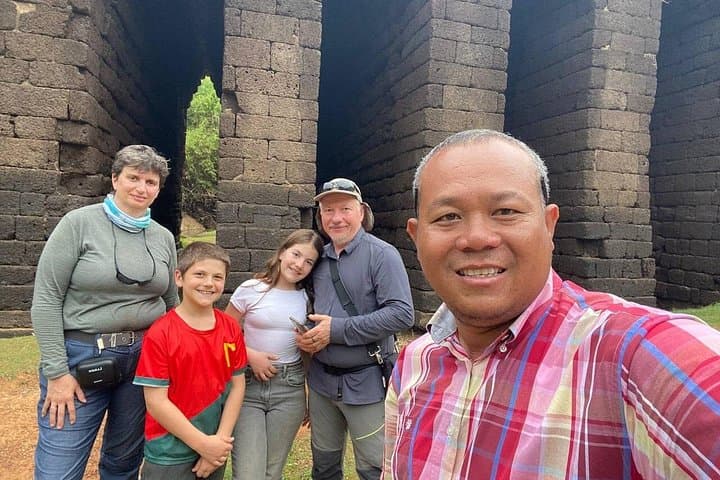
You pull away from Siem Reap as the road opens into rice paddies and low hills, the driver pointing toward a distant stone pyramid that rises from the treeline. By mid-morning the air smells of warm earth and cut grass; temple stones loom through vines, their carved faces half-hidden by shadow. Koh Ker's Prasat Thom imposes with its stepped pyramid silhouette, a clear break from the classic Angkor profile, while Bueng Mealea answers with collapsed galleries and tree roots that have learned to pry apart sandstone blocks.
Verified experiences and guided adventures in the surrounding area.
Operated by Hak Transport Service Cambodia · Siem Reap, Siem Reap Province
You pull away from Siem Reap as the road opens into rice paddies and low hills, the driver pointing toward a distant stone pyramid that rises from the treeline. By mid-morning the air smells of warm earth and cut grass; temple stones loom through vines, their carved faces half-hidden by shadow. Koh Ker's Prasat Thom imposes with its stepped pyramid silhouette, a clear break from the classic Angkor profile, while Bueng Mealea answers with collapsed galleries and tree roots that have learned to pry apart sandstone blocks.
Koh Ker was a 10th-century capital built under King Jayavarman IV; its laterite and sandstone construction and unusual layout reflect a brief, bold moment in Khmer history. Bueng Mealea, slightly later, reads like a large, less-restored Angkor — long causeways, bas-reliefs, and a reservoir edge that hints at older water-management techniques. Geologically the sites sit on sandstone beds with laterite foundations; expect uneven stone surfaces, loose blocks, and damp moss in shaded corridors.
Culturally this route threads small villages where market life and modern Cambodia brush against ancient ruins. Practicalities: the tour runs about 6–7 hours door-to-door with an English-speaking driver, cold water and towels provided, and private transport suited to most travelers. Wear sturdy shoes for short climbs and uneven ground, bring sun protection and insect repellent, and plan to move deliberately through shadowed galleries. Entrances may be paid locally and wheelchair access is limited on temple grounds despite vehicle accessibility. The day rewards those seeking quieter temples and a tangible sense of history reclaimed by the jungle.
easy.
6–7 hours.
Suitable for most fitness levels; requires short periods of walking on uneven ground and low climbs.
Admission is often not included; confirm with the operator before booking and be prepared to pay local site fees in cash if required.
Yes — this is a private door-to-door tour with pickup and drop-off in Siem Reap, but confirm your exact pickup point when booking.
Vehicles are accessible, but temple grounds have uneven surfaces and steps; some areas will be difficult for wheelchairs despite roadside access.
Expect short to moderate walks around each site—typically 15–45 minutes of on-foot exploration at each temple, over uneven terrain.
Koh Ker served briefly as the Khmer capital in the 10th century under Jayavarman IV; Bueng Mealea dates to the early 12th century and reflects the same monumental sandstone building tradition as Angkor.
Visitor numbers are relatively low but impact accumulates; stick to paths, avoid climbing on fragile carvings, and support local guides and vendors to ensure tourism benefits the community.
Hak Transport Service Cambodia operates guided outdoor trips and adventures with an emphasis on safety, stewardship, and memorable experiences.
You pull away from Siem Reap as the road opens into rice paddies and low hills, the driver pointing toward a distant stone pyramid that rises from the treeline. By mid-morning the air smells of warm earth and cut grass; temple stones loom through vines, their carved faces half-hidden by shadow. Koh Ker's Prasat Thom imposes with its stepped pyramid silhouette, a clear break from the classic Angkor profile, while Bueng Mealea answers with collapsed galleries and tree roots that have learned to pry apart sandstone blocks.
You pull away from Siem Reap as the road opens into rice paddies and low hills, the driver pointing toward a distant stone pyramid that rises from the treeline. By mid-morning the air smells of warm earth and cut grass; temple stones loom through vines, their carved faces half-hidden by shadow. Koh Ker's Prasat Thom imposes with its stepped pyramid silhouette, a clear break from the classic Angkor profile, while Bueng Mealea answers with collapsed galleries and tree roots that have learned to pry apart sandstone blocks.
Koh Ker was a 10th-century capital built under King Jayavarman IV; its laterite and sandstone construction and unusual layout reflect a brief, bold moment in Khmer history. Bueng Mealea, slightly later, reads like a large, less-restored Angkor — long causeways, bas-reliefs, and a reservoir edge that hints at older water-management techniques. Geologically the sites sit on sandstone beds with laterite foundations; expect uneven stone surfaces, loose blocks, and damp moss in shaded corridors.
Culturally this route threads small villages where market life and modern Cambodia brush against ancient ruins. Practicalities: the tour runs about 6–7 hours door-to-door with an English-speaking driver, cold water and towels provided, and private transport suited to most travelers. Wear sturdy shoes for short climbs and uneven ground, bring sun protection and insect repellent, and plan to move deliberately through shadowed galleries. Entrances may be paid locally and wheelchair access is limited on temple grounds despite vehicle accessibility. The day rewards those seeking quieter temples and a tangible sense of history reclaimed by the jungle.