THE ADVENTURE COLLECTIVE® · Independent discovery and booking for outdoor travel

Explore two of Cambodia’s most atmospheric temple complexes on a full-day small-group tour from Siem Reap. See Koh Ker’s massive monoliths and wander the jungle-entwined ruins of Beng Mealea, with local context and practical logistics handled for you.
Explore two of Cambodia’s most atmospheric temple complexes on a full-day small-group tour from Siem Reap. See Koh Ker’s massive monoliths and wander the jungle-entwined ruins of Beng Mealea, with local context and practical logistics handled for you.
You pull away from Siem Reap at dawn, the road easing into a ribbon of rice paddies and small villages. After an hour or two the trees thicken and stone silhouettes rise from the jungle: Koh Ker’s solitary prangs puncture the sky, monolithic blocks stacked with an almost reckless scale. Later, at Beng Mealea, roots and vines thread through collapsed galleries, the jungle actively reclaiming carved lintels and doorways.
Verified experiences and guided adventures in the surrounding area.
Operated by SRL Travel Cambodia · Siem Reap, Siem Reap Province
You pull away from Siem Reap at dawn, the road easing into a ribbon of rice paddies and small villages. After an hour or two the trees thicken and stone silhouettes rise from the jungle: Koh Ker’s solitary prangs puncture the sky, monolithic blocks stacked with an almost reckless scale. Later, at Beng Mealea, roots and vines thread through collapsed galleries, the jungle actively reclaiming carved lintels and doorways.
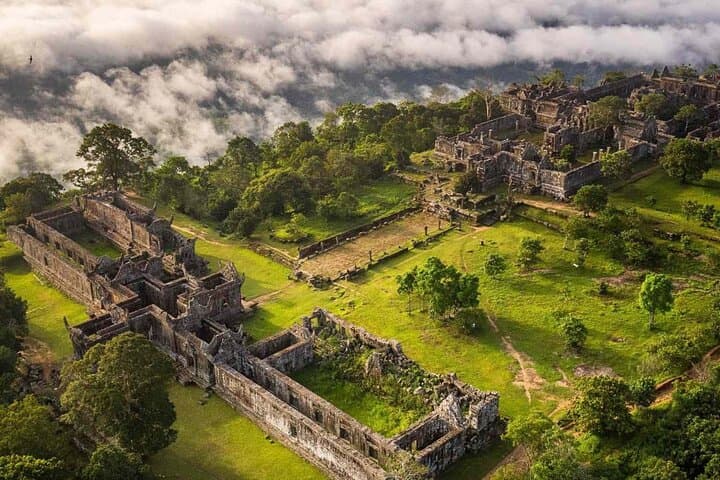
Koh Ker was Cambodia’s short-lived capital (928–944 CE) under Jayavarman IV, notable for unusually large monolithic construction and a non-standard urban plan. Beng Mealea dates to the 12th century—built in Suryavarman II’s era and reshaped by Jayavarman VII—and sits along the ancient Royal Road east of Angkor. The geology here is sandstone built atop laterite foundations; over centuries the stones have weathered, split, and become canvases for moss and ferns.
You’ll move between open courtyards and narrow corridors, where sunlight becomes a physical thing—daring you into deeper shadows—and breezes push out humid air. Local villages offer glimpses of rural life: ox-cart paths, temple markets, and rice fields framed against the Kulen foothills.
Practical guidance: this is a full 8–9 hour day with long drives between sites; wear sturdy, closed-toe shoes for uneven ground, bring water and sun protection, and plan to move at a measured pace through unstable ruins. Follow your guide’s instructions on where to step and avoid touching fragile carvings. Expect vehicle pickup in Siem Reap between 7:30–8:30 AM and return around 5:00 PM.
easy.
8–9 hours.
Suitable for travelers in normal physical condition; involves multiple short walks on uneven terrain and some stair climbs.
The tour lasts about 8–9 hours; pickup from Siem Reap is generally between 7:30–8:30 AM with return around 5:00 PM.
Admission is typically not included in the base tour price; expect to pay national park or temple entry fees on-site—bring cash (USD often accepted).
The operator lists it as suitable for all fitness levels and wheelchair accessible transport may be available, but temple grounds have uneven surfaces and stairs—check with the supplier about individual accessibility needs.
Photography is allowed in most areas, but climbing on fragile carvings is discouraged and often prohibited; follow guide directions to protect the sites.
Koh Ker served as the Khmer capital under Jayavarman IV (928–944 CE) and is notable for large monolithic construction; Beng Mealea was built in the 12th century and sits along the ancient Royal Road east of Angkor.
Both sites face gradual decay from vegetation, weathering and visitor pressure—stay on marked paths, avoid touching carvings, and minimize single-use plastics to lessen impact.
SRL Travel Cambodia operates guided outdoor trips and adventures with an emphasis on safety, stewardship, and memorable experiences.
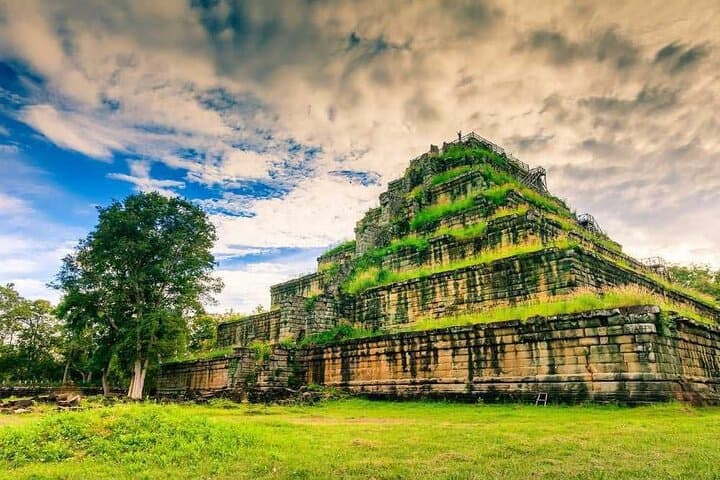
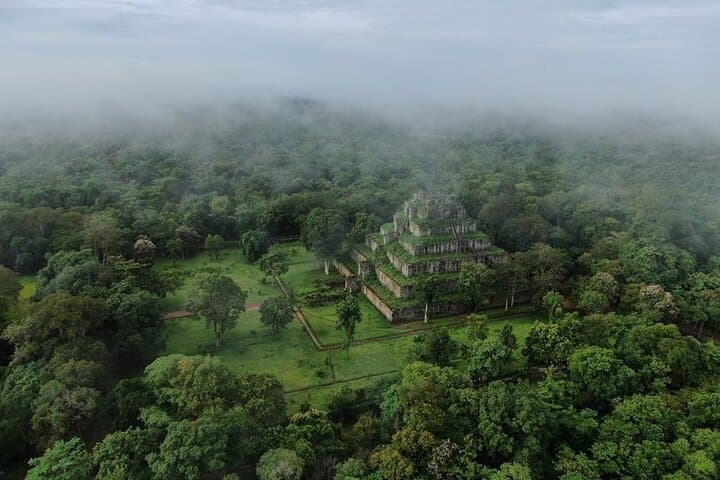
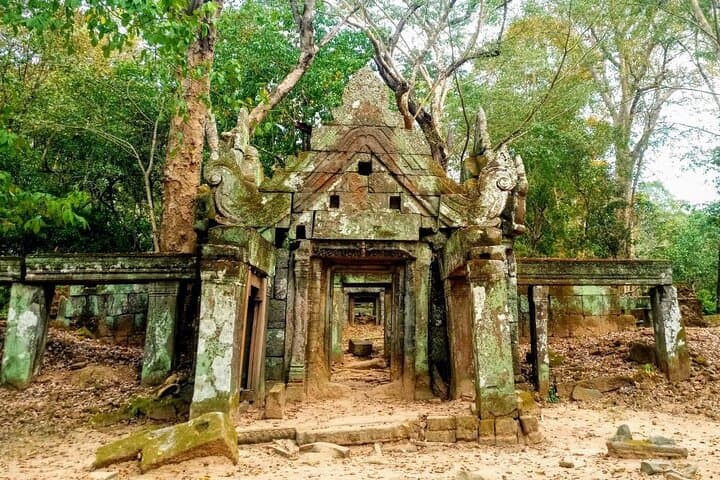
You pull away from Siem Reap at dawn, the road easing into a ribbon of rice paddies and small villages. After an hour or two the trees thicken and stone silhouettes rise from the jungle: Koh Ker’s solitary prangs puncture the sky, monolithic blocks stacked with an almost reckless scale. Later, at Beng Mealea, roots and vines thread through collapsed galleries, the jungle actively reclaiming carved lintels and doorways.
You pull away from Siem Reap at dawn, the road easing into a ribbon of rice paddies and small villages. After an hour or two the trees thicken and stone silhouettes rise from the jungle: Koh Ker’s solitary prangs puncture the sky, monolithic blocks stacked with an almost reckless scale. Later, at Beng Mealea, roots and vines thread through collapsed galleries, the jungle actively reclaiming carved lintels and doorways.
Koh Ker was Cambodia’s short-lived capital (928–944 CE) under Jayavarman IV, notable for unusually large monolithic construction and a non-standard urban plan. Beng Mealea dates to the 12th century—built in Suryavarman II’s era and reshaped by Jayavarman VII—and sits along the ancient Royal Road east of Angkor. The geology here is sandstone built atop laterite foundations; over centuries the stones have weathered, split, and become canvases for moss and ferns.
You’ll move between open courtyards and narrow corridors, where sunlight becomes a physical thing—daring you into deeper shadows—and breezes push out humid air. Local villages offer glimpses of rural life: ox-cart paths, temple markets, and rice fields framed against the Kulen foothills.
Practical guidance: this is a full 8–9 hour day with long drives between sites; wear sturdy, closed-toe shoes for uneven ground, bring water and sun protection, and plan to move at a measured pace through unstable ruins. Follow your guide’s instructions on where to step and avoid touching fragile carvings. Expect vehicle pickup in Siem Reap between 7:30–8:30 AM and return around 5:00 PM.