THE ADVENTURE COLLECTIVE® · Independent discovery and booking for outdoor travel

This full-day tour takes travelers from Siem Reap to two very different outlying Angkorian sites: the pyramid city of Koh Ker and the jungle-filled, atmospheric Beng Mealea. Expect a long but rewarding day of climbing, close-up archaeology and overgrown galleries.
This full-day tour takes travelers from Siem Reap to two very different outlying Angkorian sites: the pyramid city of Koh Ker and the jungle-filled, atmospheric Beng Mealea. Expect a long but rewarding day of climbing, close-up archaeology and overgrown galleries.
You arrive before dawn on National Road 6, the car moving through lowland rice paddies while the jungle beyond the shoulder darkens into silhouette. By midmorning the seven-tiered pyramid of Prasat Thom at Koh Ker looms up out of the trees — its sun-baked stone daring you to climb the single central stair and take in the wide, quiet sweep of ruined sanctuaries.
Verified experiences and guided adventures in the surrounding area.
Operated by Cambodia Golden Tours · Siem Reap, Siem Reap Province
You arrive before dawn on National Road 6, the car moving through lowland rice paddies while the jungle beyond the shoulder darkens into silhouette. By midmorning the seven-tiered pyramid of Prasat Thom at Koh Ker looms up out of the trees — its sun-baked stone daring you to climb the single central stair and take in the wide, quiet sweep of ruined sanctuaries.
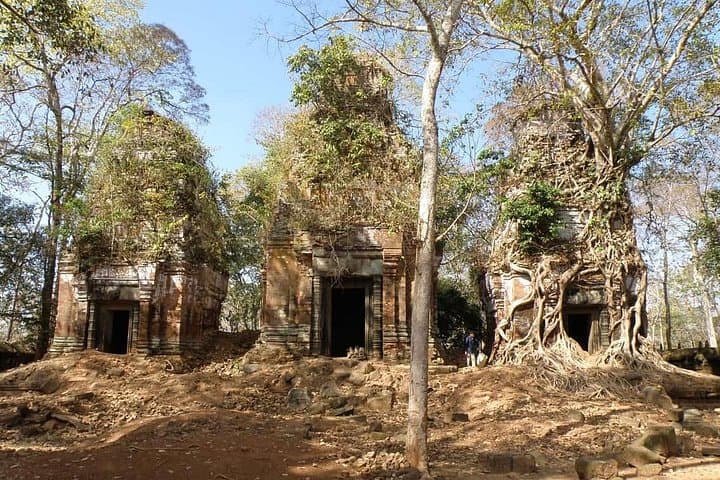
Koh Ker was briefly the Khmer capital (928–944 AD) and the site’s geometry and brickwork reflect an experimental moment in Angkorian architecture. Nearby Prasat Pram, Prasat Damrei and Prasat Krahom offer contrasting materials — brick, laterite, sandstone — and show how builders adapted to local geology and ritual needs. Later in the day Beng Mealea answers with a different mood: collapsed galleries, root-entwined lintels and long causeways that feel less curated and more wild.
Expect cultural cross-currents: local villagers maintain small shrines and ticket revenues feed ongoing conservation. The walking is uneven — stepped pyramids, loose brick paths, occasional wet soil after rains — but routes between monuments are short.
Practical guidance: plan for a long day (early start, late return), bring at least 2 liters of water, sturdy shoes with grip, sun protection and modest clothing for temple etiquette. If visiting in the wet season, a compact rain shell and insect repellent make a big difference. Follow your guide’s instructions around fragile sculptures and restricted stairways to protect both the monuments and yourself.
moderate.
10–12 hours.
Light to moderate fitness; able to walk uneven temple grounds and climb short steep stairways
Koh Ker is about 120 km from Siem Reap; plan on roughly 2.5–3.5 hours each way depending on traffic and road conditions.
Koh Ker requires a separate ticket (approximately US$10); confirm with your operator whether site fees are included in the tour price.
The tour involves uneven steps and limited handrails; it is suitable for children used to hiking but may be difficult for those with significant mobility limitations.
Yes; this is a full-day itinerary designed to visit Koh Ker in the morning and Beng Mealea later, but expect a long day with extended driving between sites.
Koh Ker served as Cambodia’s capital for a brief, intense period (928–944 AD) under Jayavarman IV; Beng Mealea is a large 12th-century temple built around the same era as Angkor Wat and shows similar stylistic features.
Sites suffer from vegetation pressure and visitor wear — stick to designated paths, avoid removing fragments and support local conservation through guided visits and ticket purchases.
Cambodia Golden Tours operates guided outdoor trips and adventures with an emphasis on safety, stewardship, and memorable experiences.
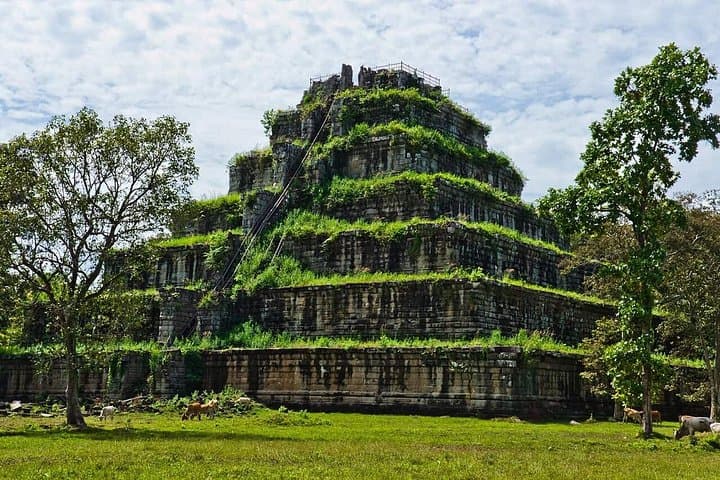
You arrive before dawn on National Road 6, the car moving through lowland rice paddies while the jungle beyond the shoulder darkens into silhouette. By midmorning the seven-tiered pyramid of Prasat Thom at Koh Ker looms up out of the trees — its sun-baked stone daring you to climb the single central stair and take in the wide, quiet sweep of ruined sanctuaries.
You arrive before dawn on National Road 6, the car moving through lowland rice paddies while the jungle beyond the shoulder darkens into silhouette. By midmorning the seven-tiered pyramid of Prasat Thom at Koh Ker looms up out of the trees — its sun-baked stone daring you to climb the single central stair and take in the wide, quiet sweep of ruined sanctuaries.
Koh Ker was briefly the Khmer capital (928–944 AD) and the site’s geometry and brickwork reflect an experimental moment in Angkorian architecture. Nearby Prasat Pram, Prasat Damrei and Prasat Krahom offer contrasting materials — brick, laterite, sandstone — and show how builders adapted to local geology and ritual needs. Later in the day Beng Mealea answers with a different mood: collapsed galleries, root-entwined lintels and long causeways that feel less curated and more wild.
Expect cultural cross-currents: local villagers maintain small shrines and ticket revenues feed ongoing conservation. The walking is uneven — stepped pyramids, loose brick paths, occasional wet soil after rains — but routes between monuments are short.
Practical guidance: plan for a long day (early start, late return), bring at least 2 liters of water, sturdy shoes with grip, sun protection and modest clothing for temple etiquette. If visiting in the wet season, a compact rain shell and insect repellent make a big difference. Follow your guide’s instructions around fragile sculptures and restricted stairways to protect both the monuments and yourself.