THE ADVENTURE COLLECTIVE® · Independent discovery and booking for outdoor travel

An 8–10 hour private loop from Siem Reap that pairs Koh Ker’s seven-tiered Prasat Thom with the jungle-engulfed Beng Mealea. Expect rural roads, uneven temple ruins, and a full day of exploration off the usual Angkor circuit.
An 8–10 hour private loop from Siem Reap that pairs Koh Ker’s seven-tiered Prasat Thom with the jungle-engulfed Beng Mealea. Expect rural roads, uneven temple ruins, and a full day of exploration off the usual Angkor circuit.
You step out of Siem Reap’s morning haze into a ribbon of red clay road and rice paddies that slide past like pages of a rural life you rarely see on the main Angkor circuit.
Verified experiences and guided adventures in the surrounding area.
Operated by Siem Reap Guide · Siem Reap, Siem Reap Province
You step out of Siem Reap’s morning haze into a ribbon of red clay road and rice paddies that slide past like pages of a rural life you rarely see on the main Angkor circuit.
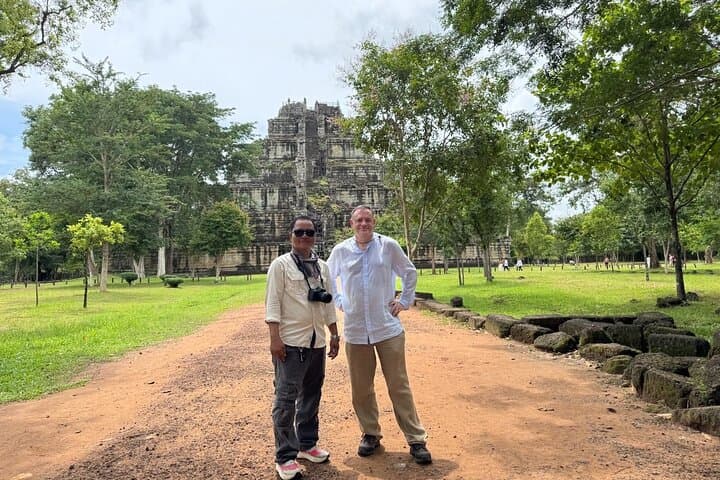
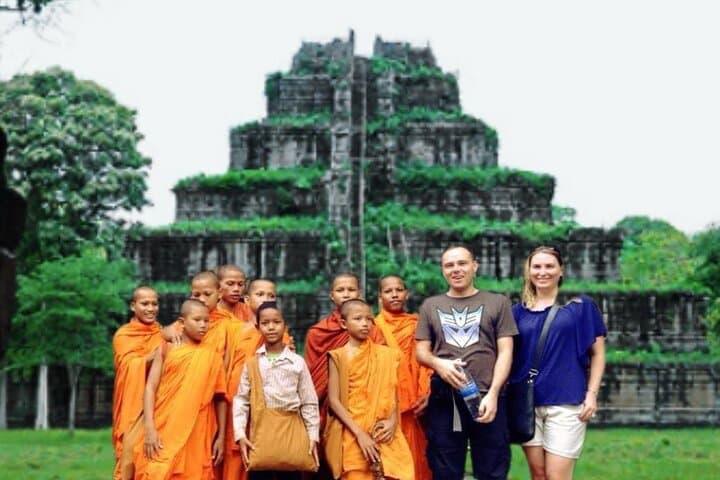
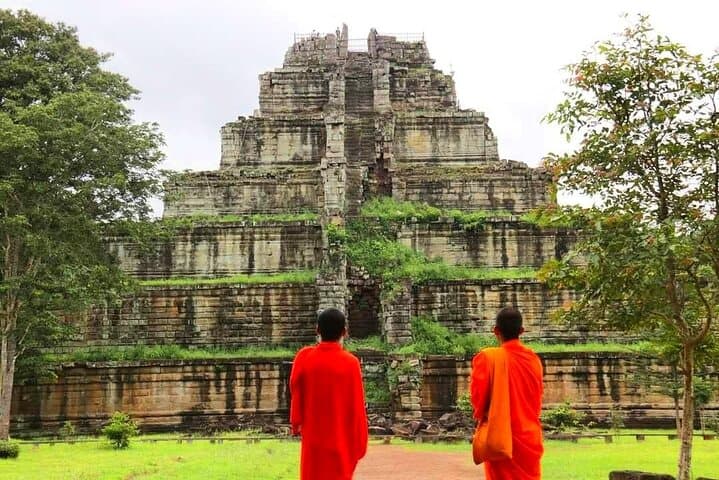
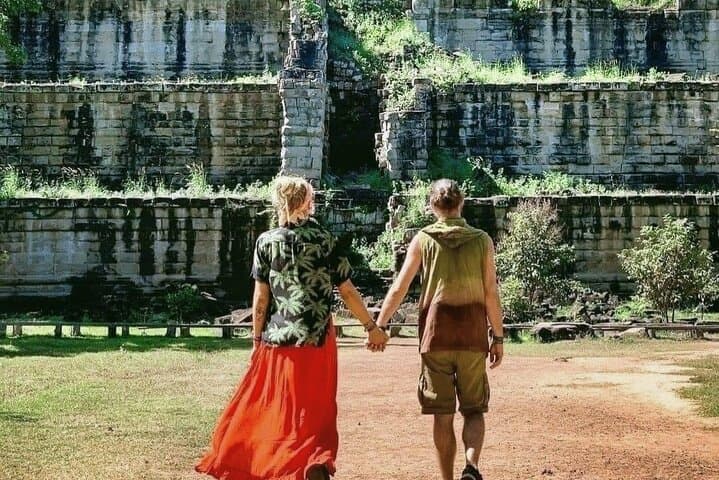
After an hour the trees close in, and Prasat Thom’s seven-tiered pyramid rises from flat forest — a sharp, geometric summit that once anchored a short-lived 10th-century Khmer capital. The site’s stone blocks are dry and sun-warmed; insects hum; local vendors sell chilled drinks at the edge of the compound.
Beng Mealea comes later in the day, a 12th-century temple swallowed by vines and roots. It feels less curated than Angkor Wat: collapsed galleries, fallen lintels, and shafts of light that give the ruin a cinematic, exploratory quality. Geologically the area sits on flat alluvial plains; the sandstone blocks weather quickly here, which is why careful footwork matters.
Culturally you’ll pass small villages, roadside shrines, and lacquerware stalls; guides often point out rice-farming rhythms and Khmer-era masonry techniques. Conservation is visible — parts of both sites are stabilized but fragile, so staying on paths and following guides helps preserve them.
Practical guide: this private, air‑conditioned day runs about 8–10 hours with hotel pickup. Entrance fees are not included; bring cash, wear sturdy shoes for uneven stone and jungle trails, and pack insect repellent, sun protection, and a light rain layer in wet months. The itinerary fits travelers in moderate fitness; expect short climbs and root-strewn paths. Start early to beat heat and to make the most of both sites before late-afternoon traffic returns to Siem Reap.
moderate.
8–10 hours.
Moderate—able to walk uneven terrain, climb short flights of steps, and spend a full day out of doors.
The private day tour runs approximately 8–10 hours (480–600 minutes), including travel time from Siem Reap and stops at both sites.
Admission fees are not included in the tour price; plan to pay entrance tickets on arrival—carry local currency.
The operator lists wheelchair-accessible transportation and some accessible areas, but many temple ruins have uneven ground and steps; check ahead for specific accessibility needs.
Cold bottled water and wipes are included by the tour operator, but it’s wise to carry an extra reusable bottle for the long day.
Koh Ker was briefly the Khmer capital in the 10th century and is dominated by the seven-tiered Prasat Thom pyramid; Beng Mealea is a 12th-century temple complex now largely overgrown by forest.
Both sites are fragile; visitors should avoid climbing unstable masonry, follow marked paths, and support licensed guides who promote responsible tourism.
Siem Reap Guide operates guided outdoor trips and adventures with an emphasis on safety, stewardship, and memorable experiences.
You step out of Siem Reap’s morning haze into a ribbon of red clay road and rice paddies that slide past like pages of a rural life you rarely see on the main Angkor circuit.
You step out of Siem Reap’s morning haze into a ribbon of red clay road and rice paddies that slide past like pages of a rural life you rarely see on the main Angkor circuit.
After an hour the trees close in, and Prasat Thom’s seven-tiered pyramid rises from flat forest — a sharp, geometric summit that once anchored a short-lived 10th-century Khmer capital. The site’s stone blocks are dry and sun-warmed; insects hum; local vendors sell chilled drinks at the edge of the compound.
Beng Mealea comes later in the day, a 12th-century temple swallowed by vines and roots. It feels less curated than Angkor Wat: collapsed galleries, fallen lintels, and shafts of light that give the ruin a cinematic, exploratory quality. Geologically the area sits on flat alluvial plains; the sandstone blocks weather quickly here, which is why careful footwork matters.
Culturally you’ll pass small villages, roadside shrines, and lacquerware stalls; guides often point out rice-farming rhythms and Khmer-era masonry techniques. Conservation is visible — parts of both sites are stabilized but fragile, so staying on paths and following guides helps preserve them.
Practical guide: this private, air‑conditioned day runs about 8–10 hours with hotel pickup. Entrance fees are not included; bring cash, wear sturdy shoes for uneven stone and jungle trails, and pack insect repellent, sun protection, and a light rain layer in wet months. The itinerary fits travelers in moderate fitness; expect short climbs and root-strewn paths. Start early to beat heat and to make the most of both sites before late-afternoon traffic returns to Siem Reap.