
Koh Ker and Beng Mealea Day Tour from Siem Reap — Pyramid Temple & Jungle Ruins
A full-day private trip east of Siem Reap that pairs the rare pyramid temple of Koh Ker with the overgrown, cinematic ruins of Beng Mealea. Expect dusty roads, steep stone steps, and mossy galleries that reward early starts and steady footing.
An Adventure In Siem Reap.
A full-day private trip east of Siem Reap that pairs the rare pyramid temple of Koh Ker with the overgrown, cinematic ruins of Beng Mealea. Expect dusty roads, steep stone steps, and mossy galleries that reward early starts and steady footing.
Read the full experience
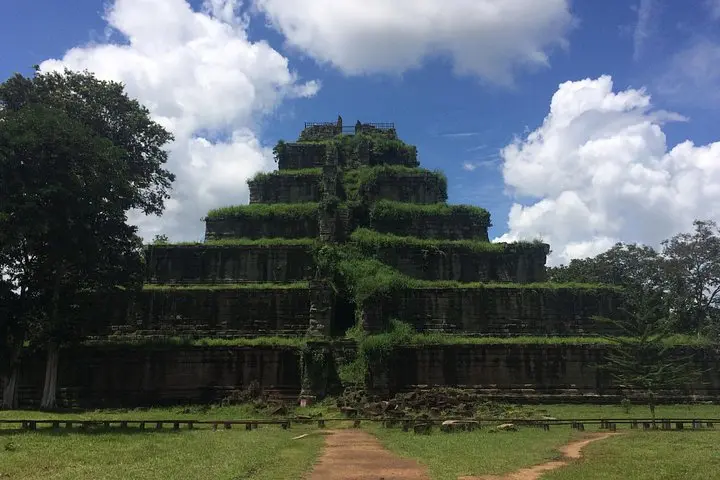
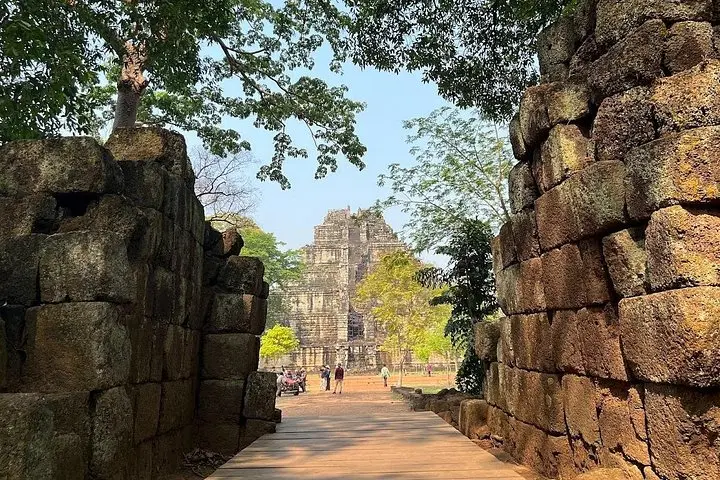
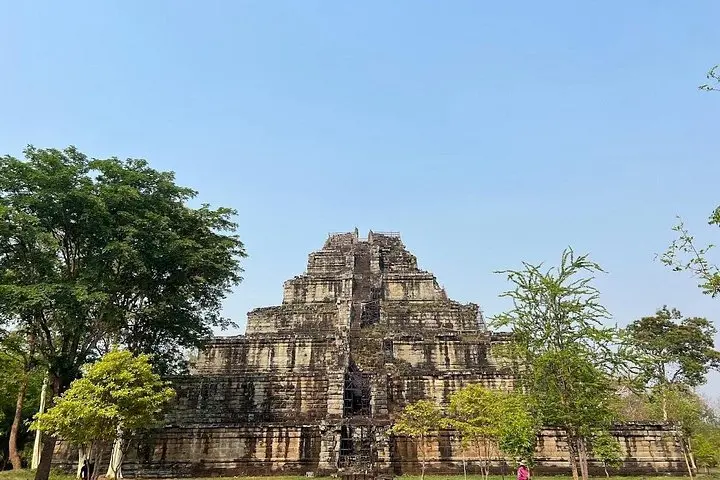
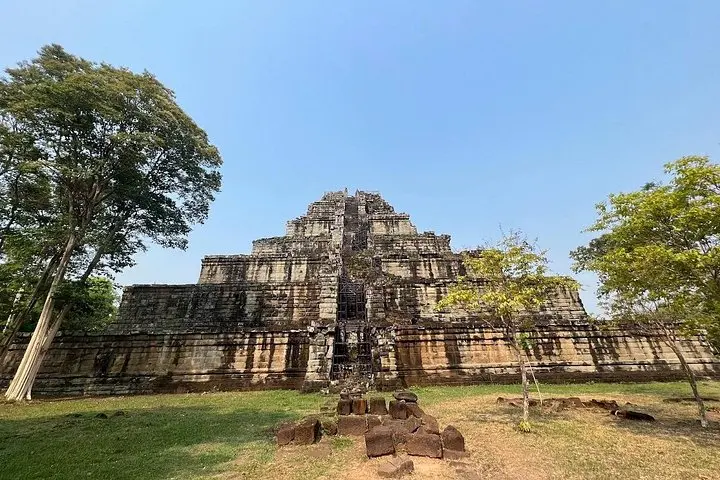
You leave Siem Reap before the sun has burned through the heat — a long ribbon of road carrying you east into low forest, then red dust giving way to tracks into ancient stone. At Koh Ker the air narrows into stair-stepped sandstone; the pyramid of Prasat Thom rises abrupt and geometric, stones smoking with age and lichens daring you to climb its terraces. Later, Beng Mealea arrives like a half-remembered city: collapsed galleries, tree roots threading through lintels, moss turning faces an emerald green.
You leave Siem Reap before the sun has burned through the heat — a long ribbon of road carrying you east into low forest, then red dust giving way to tracks into ancient stone. At Koh Ker the air narrows into stair-stepped sandstone; the pyramid of Prasat Thom rises abrupt and geometric, stones smoking with age and lichens daring you to climb its terraces. Later, Beng Mealea arrives like a half-remembered city: collapsed galleries, tree roots threading through lintels, moss turning faces an emerald green.
Koh Ker was briefly the Khmer capital in the 10th century under Jayavarman IV; its pyramid form is rare in Cambodia. Beng Mealea, contemporary with Angkor Wat in plan, shows what temples look like when nature is allowed to lead — laterite and sandstone cracked, galleries swallowed by fig roots.
Expect uneven terrain, loose blocks and short climbs rather than long technical ascents. Local villages along the route offer simple snacks and a glimpse of daily rural life; many guides will explain how Hindu and Buddhist iconography coexist on the carved lintels. The geology is straightforward sandstone over laterite foundations — fragile where moss and rain have softened joints.
Practical edge: plan 6–7 hours, bring at least 2 liters of water, sturdy shoes with good grip, and insect protection. Purchases and temple admissions are typically paid on-site; current entry fees are not always included in private tours. Respect ongoing conservation work by staying on established paths and following your guide’s directions — these ruins are stable when treated with care, but they give way quickly under complacency.
Frequently asked questions
No — this tour’s listing indicates admissions are not included. Bring cash to purchase any required ticket at the sites or confirm payment arrangements with your operator in advance.
Expect roughly 2–2.5 hours to Koh Ker from Siem Reap by private transport; Beng Mealea is nearer to Angkor but still a long day when both sites are paired, making the full excursion 6–7 hours.
Not ideal for those with mobility limitations or very young children due to uneven ground, short climbs and no guaranteed wheelchair access; moderate fitness is recommended.
Guides usually allow limited independent exploration but will instruct you where climbing is unsafe or where archaeology is sensitive; follow their directions for both safety and conservation.
About This Experience
Discover Cambodia operates guided outdoor trips and adventures with an emphasis on safety, stewardship, and memorable experiences.
Adventure tips
Recommended gear
- Sturdy hiking shoes: Protects your ankles and provides grip on sandstone and laterite surfaces.
- Lightweight rain jacket: Rain can arrive suddenly in the wet season; a packable shell keeps you dry without overheating.
- Insect repellent and sunscreen: Mosquitoes are common at dawn/dusk and sun exposure on exposed terraces is strong.
- Cash (local currency): Small vendors, tips, and sometimes local admission points accept only cash.
Photos of the experience
Related adventures & guides
Read the full experience
You leave Siem Reap before the sun has burned through the heat — a long ribbon of road carrying you east into low forest, then red dust giving way to tracks into ancient stone. At Koh Ker the air narrows into stair-stepped sandstone; the pyramid of Prasat Thom rises abrupt and geometric, stones smoking with age and lichens daring you to climb its terraces. Later, Beng Mealea arrives like a half-remembered city: collapsed galleries, tree roots threading through lintels, moss turning faces an emerald green.
You leave Siem Reap before the sun has burned through the heat — a long ribbon of road carrying you east into low forest, then red dust giving way to tracks into ancient stone. At Koh Ker the air narrows into stair-stepped sandstone; the pyramid of Prasat Thom rises abrupt and geometric, stones smoking with age and lichens daring you to climb its terraces. Later, Beng Mealea arrives like a half-remembered city: collapsed galleries, tree roots threading through lintels, moss turning faces an emerald green.
Koh Ker was briefly the Khmer capital in the 10th century under Jayavarman IV; its pyramid form is rare in Cambodia. Beng Mealea, contemporary with Angkor Wat in plan, shows what temples look like when nature is allowed to lead — laterite and sandstone cracked, galleries swallowed by fig roots.
Expect uneven terrain, loose blocks and short climbs rather than long technical ascents. Local villages along the route offer simple snacks and a glimpse of daily rural life; many guides will explain how Hindu and Buddhist iconography coexist on the carved lintels. The geology is straightforward sandstone over laterite foundations — fragile where moss and rain have softened joints.
Practical edge: plan 6–7 hours, bring at least 2 liters of water, sturdy shoes with good grip, and insect protection. Purchases and temple admissions are typically paid on-site; current entry fees are not always included in private tours. Respect ongoing conservation work by staying on established paths and following your guide’s directions — these ruins are stable when treated with care, but they give way quickly under complacency.
Make a day of it nearby.
Verified experiences and guided adventures in the surrounding area.