THE ADVENTURE COLLECTIVE® · Independent discovery and booking for outdoor travel

Escape Kochi for a full day in the highlands: sweeping tea estates, spice gardens, classic waterfalls and a tea museum. This private guided transfer squeezes Munnar’s highlights into one well-paced day with hotel pickup.
Escape Kochi for a full day in the highlands: sweeping tea estates, spice gardens, classic waterfalls and a tea museum. This private guided transfer squeezes Munnar’s highlights into one well-paced day with hotel pickup.
The road climbs out of Kochi’s humid bustle and the air sharpens with pine and wet earth as you push into the Western Ghats. By midmorning the car threads narrow hairpins and the world opens into layered hills of neatly clipped tea bushes that ripple like low green waves. Waterfalls loom off the road in sudden curtains, and spice gardens punctuate the slope with citrus trees, cardamom and pepper vines that fill the air.
Verified experiences and guided adventures in the surrounding area.
Operated by Biju's Tours · Munnar, Kerala
The road climbs out of Kochi’s humid bustle and the air sharpens with pine and wet earth as you push into the Western Ghats. By midmorning the car threads narrow hairpins and the world opens into layered hills of neatly clipped tea bushes that ripple like low green waves. Waterfalls loom off the road in sudden curtains, and spice gardens punctuate the slope with citrus trees, cardamom and pepper vines that fill the air.
Munnar sits at roughly 1,600 m and was developed in the late 19th century as a retreat for British planters — its legacy is the patchwork of tea estates and the small colonial-era bungalows and museums that interpret that history. Geologically the Ghats are ancient crystalline rock, weathered into deep valleys that catch heavy monsoon rains, which feed rivers and dams higher on the ridge.
Locally, tea and spice cultivation drive the economy; plantation workers, many from nearby tribal communities, shape the landscape you’ll be moving through. Expect short walks through leveled plantation trails, museum visits explaining orthodox tea processing, and photo stops at peaks and dams.
Practical guidance: this is a long day—roughly 12–14 hours round trip from Kochi—so plan for early pickup, bring layered clothing for cool highland mornings, and carry water and snacks. Roads are paved but winding; motion-sick travelers should prepare accordingly. Entry fees for museums are usually modest and guide time maximizes stops, especially when water levels make waterfalls most dramatic (post-monsoon). The tour balances scenic drives with light on-foot exploration — ideal for travelers wanting a concentrated introduction to Munnar’s landscape in a single day.
moderate.
12–14 hours.
Suitable for travelers of average fitness; involves short, easy walks and long periods in a vehicle.
Expect roughly 3.5–4.5 hours each way depending on traffic and stops; the full day tour is about 12–14 hours total.
Standard tours typically exclude small local entrance fees for museums or certain parks—confirm with the operator before travel.
Yes; the tour is physically easy with short walks, but the long drive and altitude change may be tiring—check health restrictions if needed.
October to February offers the coolest, clearest weather; avoid the heavy monsoon months if you want dry trails and unobstructed views.
Munnar’s modern landscape was shaped by late 19th-century British planters who established large tea estates and infrastructure for tea processing.
Plantation expansion and tourism pressure can strain local water resources and habitats; stick to paths, minimize waste, and choose operators who support local communities.
Biju's Tours operates guided outdoor trips and adventures with an emphasis on safety, stewardship, and memorable experiences.
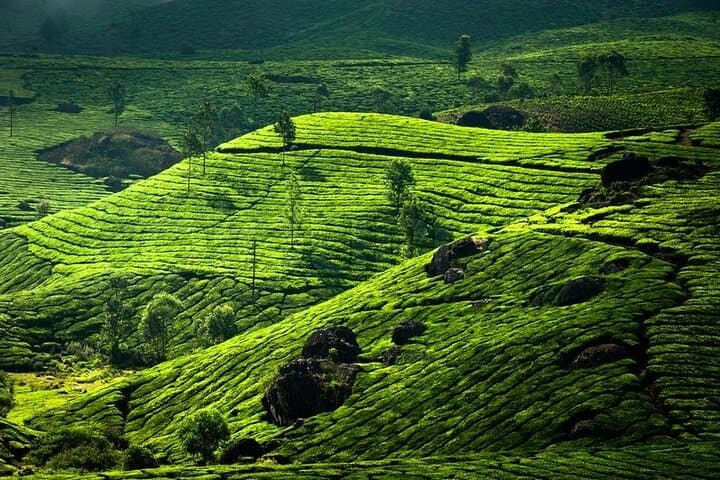



The road climbs out of Kochi’s humid bustle and the air sharpens with pine and wet earth as you push into the Western Ghats. By midmorning the car threads narrow hairpins and the world opens into layered hills of neatly clipped tea bushes that ripple like low green waves. Waterfalls loom off the road in sudden curtains, and spice gardens punctuate the slope with citrus trees, cardamom and pepper vines that fill the air.
The road climbs out of Kochi’s humid bustle and the air sharpens with pine and wet earth as you push into the Western Ghats. By midmorning the car threads narrow hairpins and the world opens into layered hills of neatly clipped tea bushes that ripple like low green waves. Waterfalls loom off the road in sudden curtains, and spice gardens punctuate the slope with citrus trees, cardamom and pepper vines that fill the air.
Munnar sits at roughly 1,600 m and was developed in the late 19th century as a retreat for British planters — its legacy is the patchwork of tea estates and the small colonial-era bungalows and museums that interpret that history. Geologically the Ghats are ancient crystalline rock, weathered into deep valleys that catch heavy monsoon rains, which feed rivers and dams higher on the ridge.
Locally, tea and spice cultivation drive the economy; plantation workers, many from nearby tribal communities, shape the landscape you’ll be moving through. Expect short walks through leveled plantation trails, museum visits explaining orthodox tea processing, and photo stops at peaks and dams.
Practical guidance: this is a long day—roughly 12–14 hours round trip from Kochi—so plan for early pickup, bring layered clothing for cool highland mornings, and carry water and snacks. Roads are paved but winding; motion-sick travelers should prepare accordingly. Entry fees for museums are usually modest and guide time maximizes stops, especially when water levels make waterfalls most dramatic (post-monsoon). The tour balances scenic drives with light on-foot exploration — ideal for travelers wanting a concentrated introduction to Munnar’s landscape in a single day.