THE ADVENTURE COLLECTIVE® · Independent discovery and booking for outdoor travel

Spend an hour under Oahu’s western sky with high-powered telescopes and a NASA-affiliated host at the Four Seasons Ko Olina. Expect planetary detail, star navigation stories, and practical guidance for timing and travel.
Spend an hour under Oahu’s western sky with high-powered telescopes and a NASA-affiliated host at the Four Seasons Ko Olina. Expect planetary detail, star navigation stories, and practical guidance for timing and travel.
The evening opens with surf hush and a cooling trade wind as the rooftop court above the Four Seasons parking lot turns into a theater for the sky. Under a wide Pacific canopy, a small group gathers around a large computerized telescope; the Moon’s craters and Saturn’s rings slide into view like pages of a live atlas. The host guides eyes and instruments, and the sky answers—planets reveal bands and cloud belts, distant nebulae glow faintly, and star clusters resolve into pinpricks that feel near enough to touch.
Verified experiences and guided adventures in the surrounding area.
Operated by Stars Above Hawaii · Kapolei, Hawaii
The evening opens with surf hush and a cooling trade wind as the rooftop court above the Four Seasons parking lot turns into a theater for the sky. Under a wide Pacific canopy, a small group gathers around a large computerized telescope; the Moon’s craters and Saturn’s rings slide into view like pages of a live atlas. The host guides eyes and instruments, and the sky answers—planets reveal bands and cloud belts, distant nebulae glow faintly, and star clusters resolve into pinpricks that feel near enough to touch.
Hawaii’s star lore runs deep: Polynesian navigators read these same stars to cross oceans, and modern observers use dark sites like Ko Olina to compare traditional star lines with astrophysical discoveries. Geologically, the island’s volcanic origin means low-elevation west Oahu offers clearer western horizons at evening, reducing light scatter from central Honolulu. Cultural context is woven into the show—expect references to Hawaiian navigation and myth alongside NASA-level science.
Practically, shows are hour-long, hosted by a NASA ambassador and held on the hotel’s ocean-facing lawn or 6th-floor spa tennis court. Views vary with season and cloud cover; operators monitor conditions and will cancel if visibility is poor. Arrive early to catch sunset, and expect a small, focused group rather than a public planetarium crowd. Dress smart-casual with a light layer, bring a camera with low-light capability or a tripod, and silence devices to preserve the shared experience. For travelers based in Waikiki, factor roughly 45 minutes drive time. The experience rewards curiosity—this is observational astronomy with local stories and high-powered optics bringing distant light into sharp, immediate focus.
easy.
1 hour.
Suitable for all fitness levels; minimal walking and mostly standing
Shows are weather-dependent; the operator will notify guests by text or phone and cancel for a full refund if visibility is poor.
Yes—the rooftop tennis court and lawn viewing areas are wheelchair accessible, though organizers do not provide wheelchairs.
Parking options range from self-park to valet; meet at the Spa entrance on the first floor to be escorted to the rooftop court or ocean lawn.
This show is for ages 13 and up, so plan accordingly for family bookings.
Polynesian navigators used the same star paths visible from Ko Olina to sail between islands centuries ago; contemporary shows connect those practices with modern astronomy.
Light pollution affects night sky visibility—shows are kept small and low-impact, and organizers encourage guests to minimize use of bright lights to protect night vision and local wildlife.
Stars Above Hawaii operates guided outdoor trips and adventures with an emphasis on safety, stewardship, and memorable experiences.
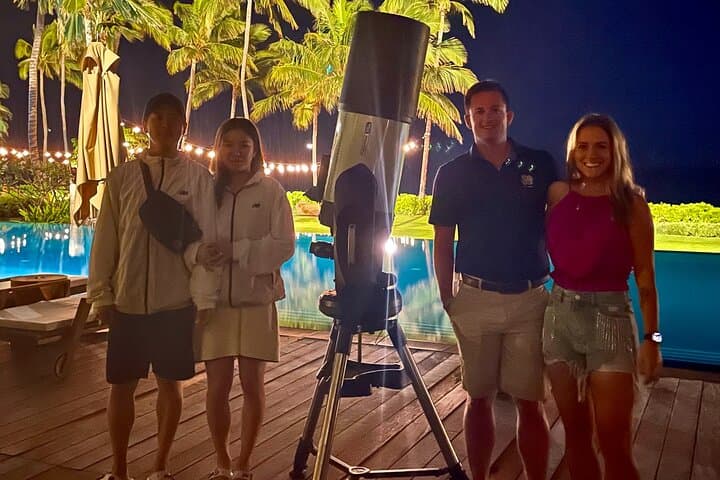
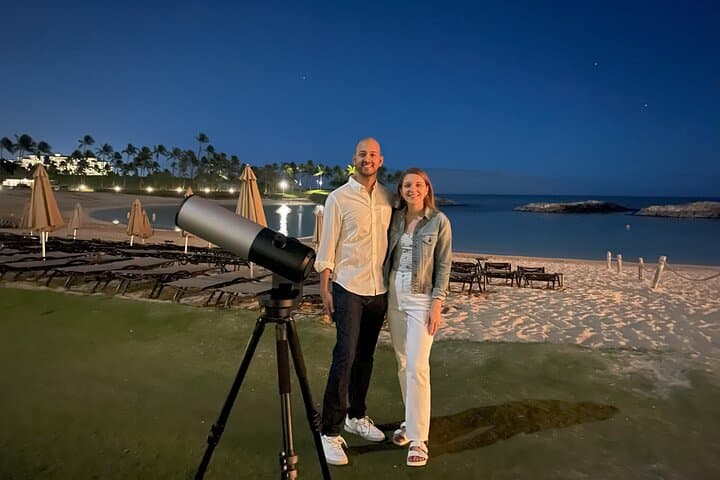
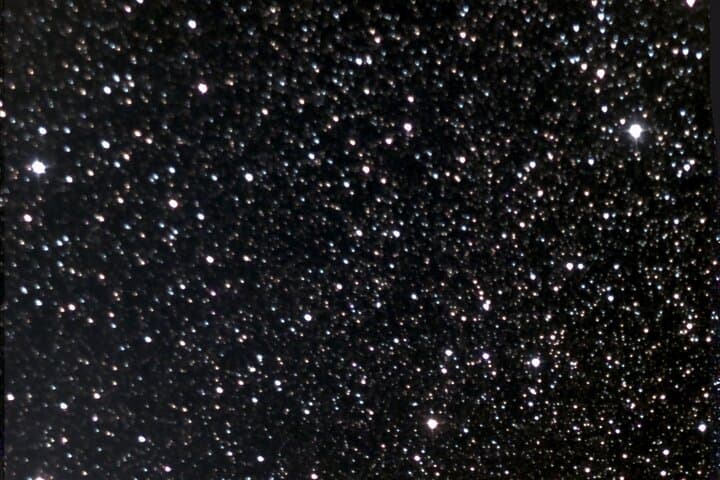
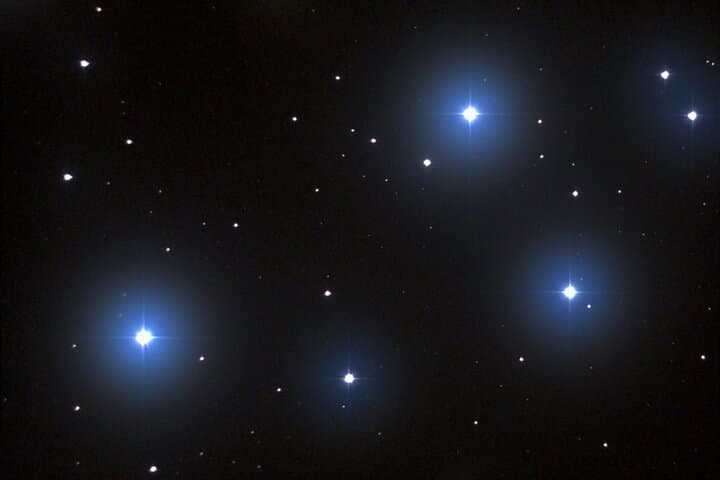
The evening opens with surf hush and a cooling trade wind as the rooftop court above the Four Seasons parking lot turns into a theater for the sky. Under a wide Pacific canopy, a small group gathers around a large computerized telescope; the Moon’s craters and Saturn’s rings slide into view like pages of a live atlas. The host guides eyes and instruments, and the sky answers—planets reveal bands and cloud belts, distant nebulae glow faintly, and star clusters resolve into pinpricks that feel near enough to touch.
The evening opens with surf hush and a cooling trade wind as the rooftop court above the Four Seasons parking lot turns into a theater for the sky. Under a wide Pacific canopy, a small group gathers around a large computerized telescope; the Moon’s craters and Saturn’s rings slide into view like pages of a live atlas. The host guides eyes and instruments, and the sky answers—planets reveal bands and cloud belts, distant nebulae glow faintly, and star clusters resolve into pinpricks that feel near enough to touch.
Hawaii’s star lore runs deep: Polynesian navigators read these same stars to cross oceans, and modern observers use dark sites like Ko Olina to compare traditional star lines with astrophysical discoveries. Geologically, the island’s volcanic origin means low-elevation west Oahu offers clearer western horizons at evening, reducing light scatter from central Honolulu. Cultural context is woven into the show—expect references to Hawaiian navigation and myth alongside NASA-level science.
Practically, shows are hour-long, hosted by a NASA ambassador and held on the hotel’s ocean-facing lawn or 6th-floor spa tennis court. Views vary with season and cloud cover; operators monitor conditions and will cancel if visibility is poor. Arrive early to catch sunset, and expect a small, focused group rather than a public planetarium crowd. Dress smart-casual with a light layer, bring a camera with low-light capability or a tripod, and silence devices to preserve the shared experience. For travelers based in Waikiki, factor roughly 45 minutes drive time. The experience rewards curiosity—this is observational astronomy with local stories and high-powered optics bringing distant light into sharp, immediate focus.