THE ADVENTURE COLLECTIVE® · Independent discovery and booking for outdoor travel

Trace Bronze Age footsteps at Knossos, then harvest herbs and cook on a hearth in a private Minoan-themed class. This luxury family experience blends archaeology, hands-on cuisine, and local produce for a full-day cultural adventure.
Trace Bronze Age footsteps at Knossos, then harvest herbs and cook on a hearth in a private Minoan-themed class. This luxury family experience blends archaeology, hands-on cuisine, and local produce for a full-day cultural adventure.
Stand at the scarred stone threshold of Knossos and the sun pushes across red-and-ochre fresco fragments, as if nudging myths back into motion. The guide moves between columns and corridors, describing concentric rooms where the Minoans ran complex palatial administrations 3,700 years ago. Later, outside the bustle of Heraklion, olive trees shade a small plot where participants harvest herbs and vegetables before cooking on a hearth fired in ceramic pots—an earthy, hands-on echo of Bronze Age kitchens.
Verified experiences and guided adventures in the surrounding area.
Operated by Elissos Travelling Philosophy · Heraklion, Crete
Stand at the scarred stone threshold of Knossos and the sun pushes across red-and-ochre fresco fragments, as if nudging myths back into motion. The guide moves between columns and corridors, describing concentric rooms where the Minoans ran complex palatial administrations 3,700 years ago. Later, outside the bustle of Heraklion, olive trees shade a small plot where participants harvest herbs and vegetables before cooking on a hearth fired in ceramic pots—an earthy, hands-on echo of Bronze Age kitchens.
Knossos sits on a limestone rise above the north coast of Crete; its layout reflects a society that prized trade, ritual and maritime skill. Sir Arthur Evans’ early 20th-century excavations revealed painted walls and storage magazines, though debate continues about reconstruction choices. The cooking class draws on archaeological foodways—local barley, legumes, capers, wild greens and seafood—interpreting fragments of pottery and Linear A-era evidence into flavors you can taste.
Expect uneven stone floors at the palace and a mix of indoor shade and open-air cooking stations at the culinary venue. Practicalities: bring sun protection, comfortable closed-toe shoes for the site, and a small daypack for water and a camera. The program suits families and first-time visitors curious about history who want a tactile connection to place—picking ingredients, stirring a pot, sitting down to a three-course meal inspired by the island’s land and sea.
Timing and temperament matter: mornings are cooler and quieter at Knossos; the cooking session rewards patience and curiosity. Leave space in your day for Heraklion’s archaeological museum, which puts the palace finds into clearer context.
easy.
5–6 hours.
Light walking on uneven ground; suitable for families and those with moderate mobility
Yes—it's designed as a family-friendly private experience, though young children should be supervised around the cooking hearth and uneven stone at Knossos.
No; a mobile ticket is accepted but have ID ready as this is a private guided booking.
Hosts can adapt recipes if notified at booking; severe allergies should be reported in advance for accommodation planning.
Photography is generally allowed in outdoor and open areas; follow guide instructions in protected or sensitive sections and respect signage.
Knossos was the ceremonial and political center of the Minoan civilization; excavations by Sir Arthur Evans in the early 1900s revealed painted frescoes and complex multistory structures.
Stick to marked paths at Knossos to protect fragile archaeology; supporting small local food producers helps sustain traditional farming practices.
Elissos Travelling Philosophy operates guided outdoor trips and adventures with an emphasis on safety, stewardship, and memorable experiences.


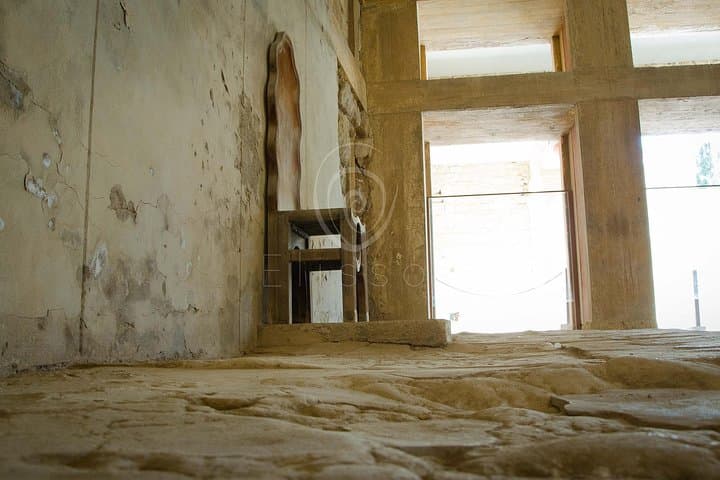
Stand at the scarred stone threshold of Knossos and the sun pushes across red-and-ochre fresco fragments, as if nudging myths back into motion. The guide moves between columns and corridors, describing concentric rooms where the Minoans ran complex palatial administrations 3,700 years ago. Later, outside the bustle of Heraklion, olive trees shade a small plot where participants harvest herbs and vegetables before cooking on a hearth fired in ceramic pots—an earthy, hands-on echo of Bronze Age kitchens.
Stand at the scarred stone threshold of Knossos and the sun pushes across red-and-ochre fresco fragments, as if nudging myths back into motion. The guide moves between columns and corridors, describing concentric rooms where the Minoans ran complex palatial administrations 3,700 years ago. Later, outside the bustle of Heraklion, olive trees shade a small plot where participants harvest herbs and vegetables before cooking on a hearth fired in ceramic pots—an earthy, hands-on echo of Bronze Age kitchens.
Knossos sits on a limestone rise above the north coast of Crete; its layout reflects a society that prized trade, ritual and maritime skill. Sir Arthur Evans’ early 20th-century excavations revealed painted walls and storage magazines, though debate continues about reconstruction choices. The cooking class draws on archaeological foodways—local barley, legumes, capers, wild greens and seafood—interpreting fragments of pottery and Linear A-era evidence into flavors you can taste.
Expect uneven stone floors at the palace and a mix of indoor shade and open-air cooking stations at the culinary venue. Practicalities: bring sun protection, comfortable closed-toe shoes for the site, and a small daypack for water and a camera. The program suits families and first-time visitors curious about history who want a tactile connection to place—picking ingredients, stirring a pot, sitting down to a three-course meal inspired by the island’s land and sea.
Timing and temperament matter: mornings are cooler and quieter at Knossos; the cooking session rewards patience and curiosity. Leave space in your day for Heraklion’s archaeological museum, which puts the palace finds into clearer context.