THE ADVENTURE COLLECTIVE® · Independent discovery and booking for outdoor travel

Spend a full day from Heraklion exploring Knossos’s Bronze Age palace, then drive into the high, wind-swept Lasithi Plateau to visit traditional windmills and the historic Monastery of Kera Kardiotissa. This guided tour blends archaeology, mountain panoramas, and local craft stops.
Spend a full day from Heraklion exploring Knossos’s Bronze Age palace, then drive into the high, wind-swept Lasithi Plateau to visit traditional windmills and the historic Monastery of Kera Kardiotissa. This guided tour blends archaeology, mountain panoramas, and local craft stops.
A morning bus peels away from Heraklion’s harbor, and by the time the air smells of scrub and warm stone you are standing before the low, weathered walls of Knossos. Sunlight picks out red and ochre paint on reconstructed columns while guide commentary threads myth and archaeology—Minos, the labyrinth, and the practical politics of a Bronze Age palace—into a clear picture of early Mediterranean urban life.
Verified experiences and guided adventures in the surrounding area.
Operated by Status MLB Travel Agency · Heraklion, Crete
A morning bus peels away from Heraklion’s harbor, and by the time the air smells of scrub and warm stone you are standing before the low, weathered walls of Knossos. Sunlight picks out red and ochre paint on reconstructed columns while guide commentary threads myth and archaeology—Minos, the labyrinth, and the practical politics of a Bronze Age palace—into a clear picture of early Mediterranean urban life.
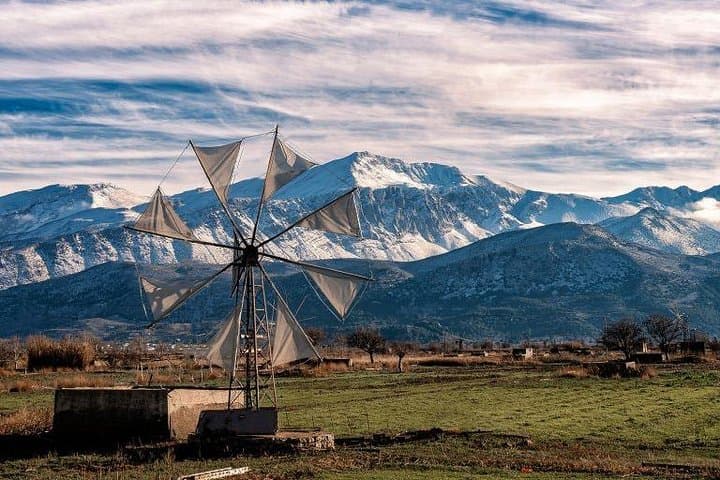
Beyond Knossos the road climbs into Crete’s spine toward the Lasithi Plateau, a broad bowl of farmland ringed by craggy ridges. Geology shifts from limestone gorges to the plateau’s dusty loam; wind-pumps—white-sailed windmills—tilt like patient machines across the plain. The Monastery of Kera Kardiotissa sits in a wooded dip, its 14th-century frescoes speaking to Byzantine devotion and local continuity.
Expect a day that mixes classroom history with textured fieldwork: guided interpretation at the palace, panoramic stops on mountain passes, time to walk the plateau and visit a working monastery. Cultural notes include Cretan hospitality—expect simple taverna fare if you pause for lunch—and a chance to watch or join a pottery demonstration in a nearby village.
Practical guidance: the tour lasts roughly 8–9 hours with moderate walking on uneven surfaces; bring a hat, sturdy shoes, water, and layered clothing for variable mountain winds. Respect restricted areas at Knossos, follow the guide’s route, and budget time for narrow roads and photo stops. This is a full-day, mixed-terrain introduction to Crete’s oldest city and its highland heart.
moderate.
8–9 hours.
Suitable for travelers with moderate fitness; involves standing, walking on uneven surfaces and short climbs.
Admission is not included by default; check booking details—your guide will tell you where to purchase tickets or if entry is covered.
Yes—pick-up is offered from listed zones near Heraklion and nearby resort towns; provide pickup details at least 24 hours before departure.
The tour includes uneven surfaces and stairs at Knossos and in monastery areas; it is not recommended for people with serious back or heart problems.
Yes—there’s typically time for a taverna lunch on the plateau or a short stop at a pottery workshop; bring cash for small purchases.
Knossos is the largest Bronze Age site on Crete and a center of the Minoan civilization; Lasithi’s wind-pumps were developed in the early 20th century to irrigate the high plain.
Visitors should stick to marked paths and avoid touching frescoes; supporting local tavernas and craft workshops helps keep traditional practices viable and reduces overtourism pressure.
Status MLB Travel Agency operates guided outdoor trips and adventures with an emphasis on safety, stewardship, and memorable experiences.
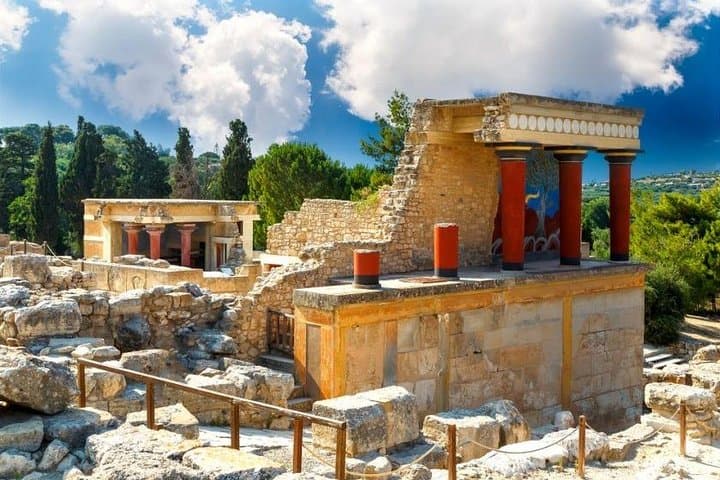
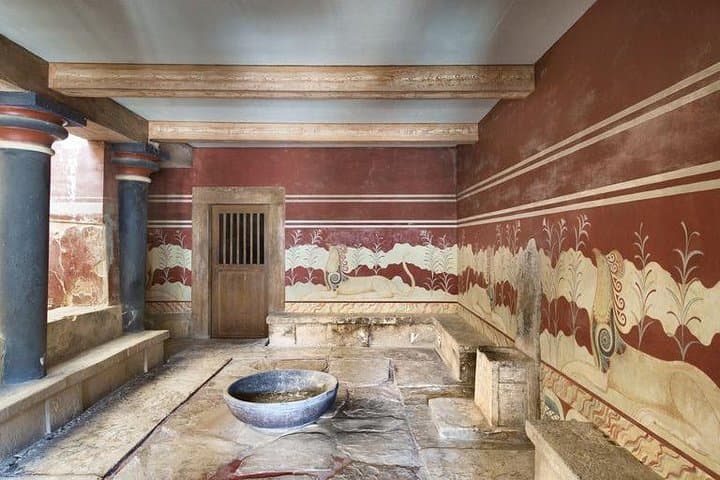
A morning bus peels away from Heraklion’s harbor, and by the time the air smells of scrub and warm stone you are standing before the low, weathered walls of Knossos. Sunlight picks out red and ochre paint on reconstructed columns while guide commentary threads myth and archaeology—Minos, the labyrinth, and the practical politics of a Bronze Age palace—into a clear picture of early Mediterranean urban life.
A morning bus peels away from Heraklion’s harbor, and by the time the air smells of scrub and warm stone you are standing before the low, weathered walls of Knossos. Sunlight picks out red and ochre paint on reconstructed columns while guide commentary threads myth and archaeology—Minos, the labyrinth, and the practical politics of a Bronze Age palace—into a clear picture of early Mediterranean urban life.
Beyond Knossos the road climbs into Crete’s spine toward the Lasithi Plateau, a broad bowl of farmland ringed by craggy ridges. Geology shifts from limestone gorges to the plateau’s dusty loam; wind-pumps—white-sailed windmills—tilt like patient machines across the plain. The Monastery of Kera Kardiotissa sits in a wooded dip, its 14th-century frescoes speaking to Byzantine devotion and local continuity.
Expect a day that mixes classroom history with textured fieldwork: guided interpretation at the palace, panoramic stops on mountain passes, time to walk the plateau and visit a working monastery. Cultural notes include Cretan hospitality—expect simple taverna fare if you pause for lunch—and a chance to watch or join a pottery demonstration in a nearby village.
Practical guidance: the tour lasts roughly 8–9 hours with moderate walking on uneven surfaces; bring a hat, sturdy shoes, water, and layered clothing for variable mountain winds. Respect restricted areas at Knossos, follow the guide’s route, and budget time for narrow roads and photo stops. This is a full-day, mixed-terrain introduction to Crete’s oldest city and its highland heart.