THE ADVENTURE COLLECTIVE® · Independent discovery and booking for outdoor travel

Explore Kisangani on a compact two-hour guided walk that blends riverfront views, colonial history, and the city’s lively media and market culture. Perfect for first-time visitors wanting context, practical tips and a local’s perspective.
Explore Kisangani on a compact two-hour guided walk that blends riverfront views, colonial history, and the city’s lively media and market culture. Perfect for first-time visitors wanting context, practical tips and a local’s perspective.
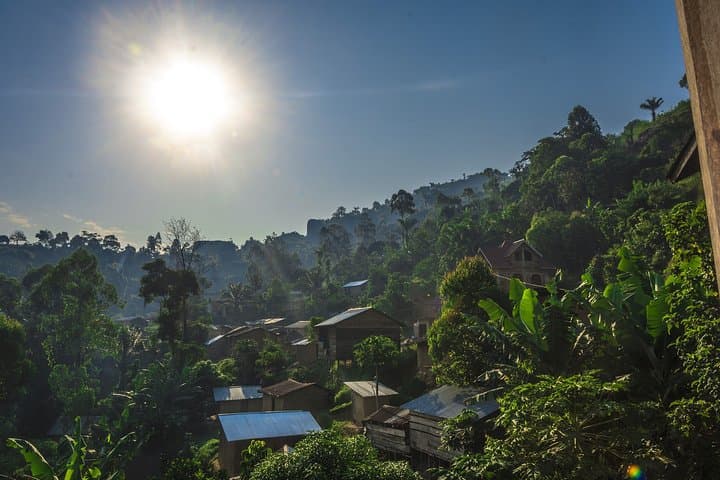
The damp air along the Congo River presses cool and heavy against your face as you step off the main boulevard into Kisangani’s streets. Boats pull and push at the riverbank, the current daring you to look over the rail; behind the market stalls a chorus of radio sellers and theatre posters announce the city’s appetite for media and performance.
Verified experiences and guided adventures in the surrounding area.
Operated by Opatrip.com Congo · Kisangani, Tshopo
The damp air along the Congo River presses cool and heavy against your face as you step off the main boulevard into Kisangani’s streets. Boats pull and push at the riverbank, the current daring you to look over the rail; behind the market stalls a chorus of radio sellers and theatre posters announce the city’s appetite for media and performance.
Founded as Stanleyville during the colonial era and renamed Kisangani after independence, the city sits at a geological hinge where the Congo River widens and channels around the Boyoma Falls upstream. Its architecture is a practical mix of colonial-era buildings and modern concrete blocks; the cultural pulse is visible in small theaters, radio studios and the energetic market life. Lingala, Swahili and French thread through conversations as guides point out sites that map the city’s role in regional trade, broadcasting and post-independence history.
A two-hour guided walk is compact but revealing: expect riverfront viewpoints, a city square that still carries colonial inscriptions, and bustling markets where local crafts and radio flyers are traded. Practicalities matter — mornings give the coolest air for walking, light rain is common in the long wet season, and street surfaces vary from smooth pavement to muddy riverfront alleys. Carry cash in Congolese francs, use insect repellent near shaded river sections, and bring a local guide who knows safe routes and which storefronts welcome photos.
This tour is an efficient, sensory way to understand Kisangani’s layered past and active present — intimate, urban, and rooted to the Congo’s water and weather.
easy.
2 hours.
Suitable for most fitness levels; requires about two hours of standing and walking with occasional uneven ground
Local guides commonly speak French and Lingala; many also speak some English or Swahili—confirm language needs when booking.
Daytime guided walks in Kisangani are generally safe; avoid wandering alone at night and follow your guide’s local safety advice.
Sidewalks and riverfront areas include uneven surfaces and steps; contact the operator ahead of time to discuss accessibility and alternate routes.
This tour offers instant confirmation; note the operator’s all-sales-final policy—verify availability and ask about private-tour arrangements before booking.
Originally named Stanleyville during colonial rule, the city was renamed Kisangani after independence and developed into a regional hub for broadcasting and the performing arts.
Kisagani sits within the Congo Basin’s ecological zone—visitors should minimize waste, avoid disturbing riverbank habitats, and choose local guides who practice low-impact tourism.
Opatrip.com Congo operates guided outdoor trips and adventures with an emphasis on safety, stewardship, and memorable experiences.
The damp air along the Congo River presses cool and heavy against your face as you step off the main boulevard into Kisangani’s streets. Boats pull and push at the riverbank, the current daring you to look over the rail; behind the market stalls a chorus of radio sellers and theatre posters announce the city’s appetite for media and performance.
The damp air along the Congo River presses cool and heavy against your face as you step off the main boulevard into Kisangani’s streets. Boats pull and push at the riverbank, the current daring you to look over the rail; behind the market stalls a chorus of radio sellers and theatre posters announce the city’s appetite for media and performance.
Founded as Stanleyville during the colonial era and renamed Kisangani after independence, the city sits at a geological hinge where the Congo River widens and channels around the Boyoma Falls upstream. Its architecture is a practical mix of colonial-era buildings and modern concrete blocks; the cultural pulse is visible in small theaters, radio studios and the energetic market life. Lingala, Swahili and French thread through conversations as guides point out sites that map the city’s role in regional trade, broadcasting and post-independence history.
A two-hour guided walk is compact but revealing: expect riverfront viewpoints, a city square that still carries colonial inscriptions, and bustling markets where local crafts and radio flyers are traded. Practicalities matter — mornings give the coolest air for walking, light rain is common in the long wet season, and street surfaces vary from smooth pavement to muddy riverfront alleys. Carry cash in Congolese francs, use insect repellent near shaded river sections, and bring a local guide who knows safe routes and which storefronts welcome photos.
This tour is an efficient, sensory way to understand Kisangani’s layered past and active present — intimate, urban, and rooted to the Congo’s water and weather.