THE ADVENTURE COLLECTIVE® · Independent discovery and booking for outdoor travel

Leave Kiruna’s lights behind and follow a local guide into Lapland’s dark roads to seek the Aurora Borealis. This three-hour car-based chase uses weather-savvy routing, photography tips, and warm drinks to maximize your chance of a sighting.
Leave Kiruna’s lights behind and follow a local guide into Lapland’s dark roads to seek the Aurora Borealis. This three-hour car-based chase uses weather-savvy routing, photography tips, and warm drinks to maximize your chance of a sighting.
Night opens like a blank page as the van slips away from Kiruna’s sodium streetlights and into a bowl of black. The guide scans the sky, checks aurora forecasts, and navigates quiet gravel roads until a break in the cloud and color appear — then everyone steps out into the cold, hot drinks steaming in gloved hands, eyes lifted to a slow, green ripple across the arctic vault.
Verified experiences and guided adventures in the surrounding area.
Operated by Explore Arctic · Kiruna, Norrbotten
Night opens like a blank page as the van slips away from Kiruna’s sodium streetlights and into a bowl of black. The guide scans the sky, checks aurora forecasts, and navigates quiet gravel roads until a break in the cloud and color appear — then everyone steps out into the cold, hot drinks steaming in gloved hands, eyes lifted to a slow, green ripple across the arctic vault.
This three-hour chase leans on simple science and local knowing: the aurora is solar wind meeting Earth’s magnetic field, and northern Lapland’s high latitude and long polar nights make it one of the best places to watch. Kiruna itself is a modern mining town on Sámi land; the landscape is shaped by ice age geology, iron ore extraction, and a culture that reads the sky as part of its stories.
Expect short drives to multiple roadside pullouts rather than a single fixed viewpoint — guides stay mobile to outflank clouds and chase higher KP-index displays. Photography tips are part of the tour: bring a tripod, use manual exposure, keep spare batteries warm, and avoid bright screens when your eyes are adapting.
Practicalities: dress in thermal layers, waterproof outerwear, and insulated boots; bathrooms are usually in town before departure; the tour runs roughly three hours and suits most fitness levels since activity is mostly standing and short walks. If conditions aren’t favorable, operators may reschedule or refund; flexibility and patience are part of the experience. When the aurora arrives, the Arctic feels less like a place and more like a live, moving sky inviting you to watch.
easy.
3 hours.
Minimal fitness required — mainly standing and short walks; accessible to most travelers
Sightings depend on solar activity and cloud cover; guides choose dark-sky locations to maximize chances, but sightings cannot be guaranteed — operators often offer rebooking or refunds if conditions prevent viewing.
Layered, windproof, and insulated clothing plus waterproof boots are recommended; bring a warm hat and gloves and avoid cotton next to your skin.
Photography guidance is provided and some operators offer camera or tripod rental — check availability in advance if you need equipment.
Departures are typically from central Kiruna with selected pickup points; confirm your pickup location when booking as times are scheduled around optimal night conditions.
Kiruna sits on Sámi traditional lands and grew around 20th-century iron mining; both the indigenous culture and mining heritage shape local stories and landscapes.
Minimize light pollution and stick to roads and designated pullouts to protect fragile tundra and Sámi grazing areas.
Explore Arctic operates guided outdoor trips and adventures with an emphasis on safety, stewardship, and memorable experiences.
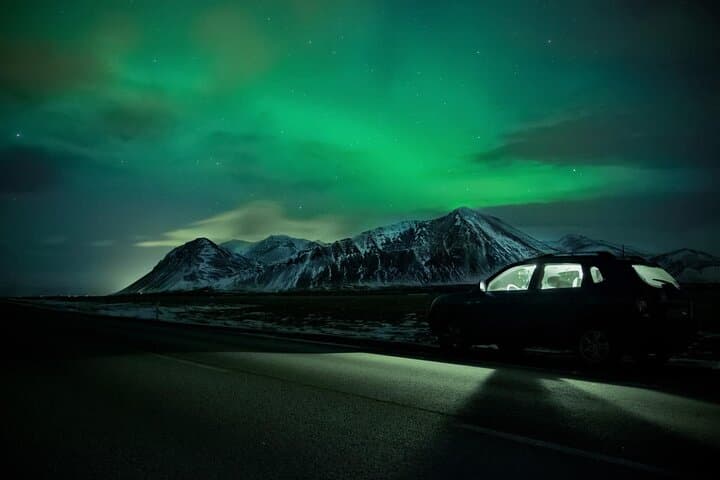


Night opens like a blank page as the van slips away from Kiruna’s sodium streetlights and into a bowl of black. The guide scans the sky, checks aurora forecasts, and navigates quiet gravel roads until a break in the cloud and color appear — then everyone steps out into the cold, hot drinks steaming in gloved hands, eyes lifted to a slow, green ripple across the arctic vault.
Night opens like a blank page as the van slips away from Kiruna’s sodium streetlights and into a bowl of black. The guide scans the sky, checks aurora forecasts, and navigates quiet gravel roads until a break in the cloud and color appear — then everyone steps out into the cold, hot drinks steaming in gloved hands, eyes lifted to a slow, green ripple across the arctic vault.
This three-hour chase leans on simple science and local knowing: the aurora is solar wind meeting Earth’s magnetic field, and northern Lapland’s high latitude and long polar nights make it one of the best places to watch. Kiruna itself is a modern mining town on Sámi land; the landscape is shaped by ice age geology, iron ore extraction, and a culture that reads the sky as part of its stories.
Expect short drives to multiple roadside pullouts rather than a single fixed viewpoint — guides stay mobile to outflank clouds and chase higher KP-index displays. Photography tips are part of the tour: bring a tripod, use manual exposure, keep spare batteries warm, and avoid bright screens when your eyes are adapting.
Practicalities: dress in thermal layers, waterproof outerwear, and insulated boots; bathrooms are usually in town before departure; the tour runs roughly three hours and suits most fitness levels since activity is mostly standing and short walks. If conditions aren’t favorable, operators may reschedule or refund; flexibility and patience are part of the experience. When the aurora arrives, the Arctic feels less like a place and more like a live, moving sky inviting you to watch.