THE ADVENTURE COLLECTIVE® · Independent discovery and booking for outdoor travel

Try both driver and passenger roles on this 18km, 1.5–2 hour husky sled loop near Kiruna. Two people share a sled, each harness a dog, then swap positions before returning to the kennel for dog care and campfire coffee.
Try both driver and passenger roles on this 18km, 1.5–2 hour husky sled loop near Kiruna. Two people share a sled, each harness a dog, then swap positions before returning to the kennel for dog care and campfire coffee.
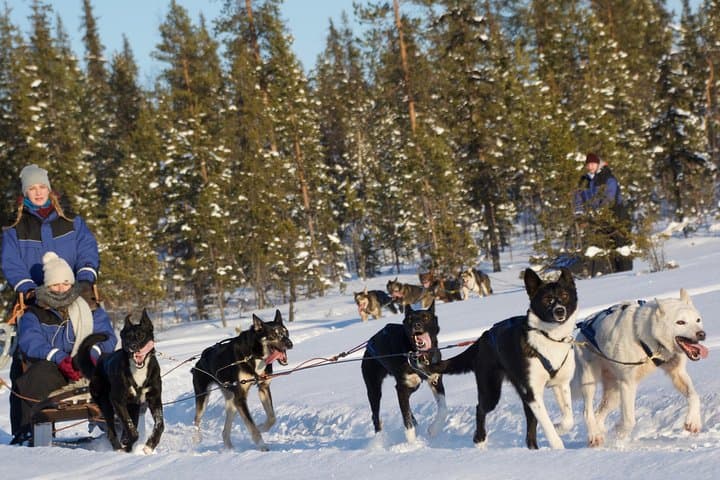
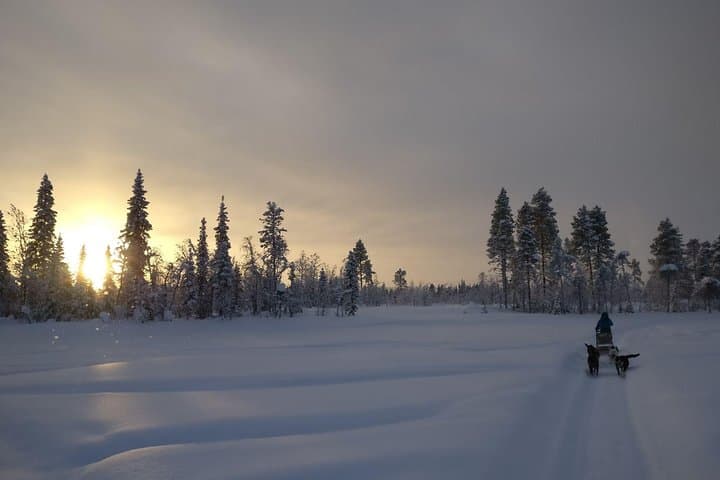
Snow bites at the edges of a forest track as two sleds line up beneath a low Arctic sky. One person steadies the runners while the other straps on the harness; dogs shift, eager and deliberate, ready to move. The route leaves the kennel and threads homemade trails across varied terrain — open birch runs, wind-scoured ridges and sheltered pine gullies — where the cadence of paws and sled runners sets the pace.
Verified experiences and guided adventures in the surrounding area.
Operated by Husky Tours Lapland · Kiruna, Norrbotten County
Snow bites at the edges of a forest track as two sleds line up beneath a low Arctic sky. One person steadies the runners while the other straps on the harness; dogs shift, eager and deliberate, ready to move. The route leaves the kennel and threads homemade trails across varied terrain — open birch runs, wind-scoured ridges and sheltered pine gullies — where the cadence of paws and sled runners sets the pace.
This corner of northern Sweden sits on Precambrian bedrock, the landscape shaped by glaciers and ancient mining. Kiruna is a working Arctic town with deep Sámi presence and a history tied to mining and reindeer herding; local kennels often work alongside that culture, and guides share practical lore about seasons and sled craft.
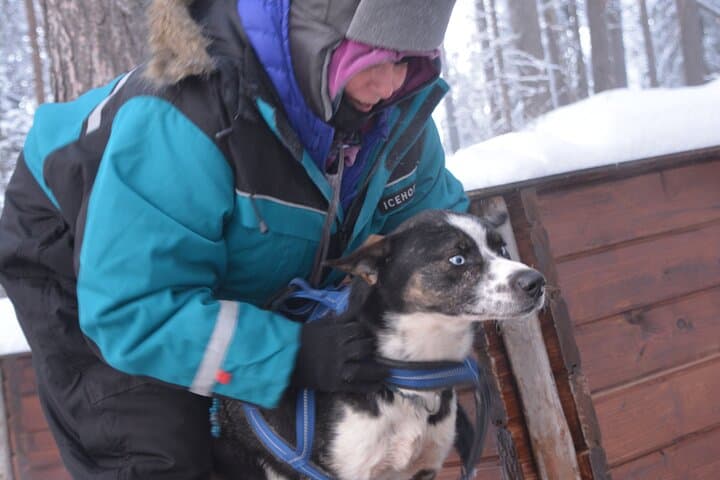
Expect a hands-on session: short instruction, about 1.5–2 hours mushing (roughly 18 km on average), two people per sled and teams of 5–6 dogs sized to rider weight. Back at the kennel you’ll unharness, feed and reward the dogs, and warm by a fire with coffee and cake while asking the guides questions. Pickup and drop-off from designated points is typically offered.
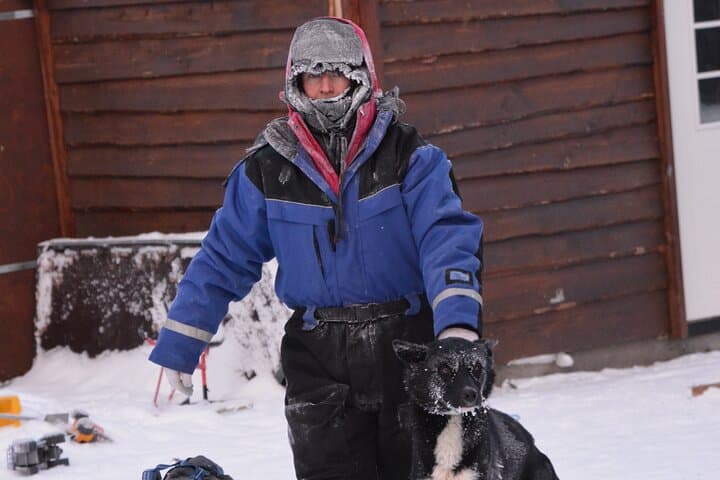
Practical tips: dress in windproof, layered clothing and insulated waterproof boots; practice standing on the runners and communicating with your partner before you swap positions. The trail is groomed but can be uneven; conditions change fast, so plan for cold, wind and bright reflective snow. If you want to photograph the team, carry gloves with removable fingertips or a warm camera mitten. The experience is immersive, instructive and designed for participation — come prepared to move, help and learn.
moderate.
3–4 hours.
Moderate fitness; able to stand on sled runners, help harness light dogs and walk short distances in snow.
On-sled time is about 1.5–2 hours covering approximately 18 km; the full activity with transfers and kennel time is around 3–4 hours.
This is a sit-and-drive combo designed for two people per sled who swap halfway; ask the operator about private or alternative tours if you prefer solo driving.
Children can ride in strollers or on laps (infants up to 4 years must sit on a lap) and specialized infant seats are available; exact weight limits affect dog team size, so provide ages and weights at booking.
Dress in warm layers, windproof outerwear and insulated boots; guides provide basic instruction and sled gear, but personal warm clothing and gloves are recommended.
Kiruna has strong Sámi cultural ties and a long mining history; many local kennels operate within a landscape used for reindeer herding and winter travel.
Tundra vegetation is fragile—stay on established trails, pack out waste, and follow kennel guidance to minimize disturbance to wildlife and dogs.
Husky Tours Lapland operates guided outdoor trips and adventures with an emphasis on safety, stewardship, and memorable experiences.
Snow bites at the edges of a forest track as two sleds line up beneath a low Arctic sky. One person steadies the runners while the other straps on the harness; dogs shift, eager and deliberate, ready to move. The route leaves the kennel and threads homemade trails across varied terrain — open birch runs, wind-scoured ridges and sheltered pine gullies — where the cadence of paws and sled runners sets the pace.
Snow bites at the edges of a forest track as two sleds line up beneath a low Arctic sky. One person steadies the runners while the other straps on the harness; dogs shift, eager and deliberate, ready to move. The route leaves the kennel and threads homemade trails across varied terrain — open birch runs, wind-scoured ridges and sheltered pine gullies — where the cadence of paws and sled runners sets the pace.
This corner of northern Sweden sits on Precambrian bedrock, the landscape shaped by glaciers and ancient mining. Kiruna is a working Arctic town with deep Sámi presence and a history tied to mining and reindeer herding; local kennels often work alongside that culture, and guides share practical lore about seasons and sled craft.
Expect a hands-on session: short instruction, about 1.5–2 hours mushing (roughly 18 km on average), two people per sled and teams of 5–6 dogs sized to rider weight. Back at the kennel you’ll unharness, feed and reward the dogs, and warm by a fire with coffee and cake while asking the guides questions. Pickup and drop-off from designated points is typically offered.
Practical tips: dress in windproof, layered clothing and insulated waterproof boots; practice standing on the runners and communicating with your partner before you swap positions. The trail is groomed but can be uneven; conditions change fast, so plan for cold, wind and bright reflective snow. If you want to photograph the team, carry gloves with removable fingertips or a warm camera mitten. The experience is immersive, instructive and designed for participation — come prepared to move, help and learn.