THE ADVENTURE COLLECTIVE® · Independent discovery and booking for outdoor travel

Spend a few hours wandering the indigenous plant collections and crossing the Boomslang canopy walkway at Kirstenbosch. This guide covers what to expect, practical tips for timing and gear, and how to extend the visit into Table Mountain trails.
Spend a few hours wandering the indigenous plant collections and crossing the Boomslang canopy walkway at Kirstenbosch. This guide covers what to expect, practical tips for timing and gear, and how to extend the visit into Table Mountain trails.
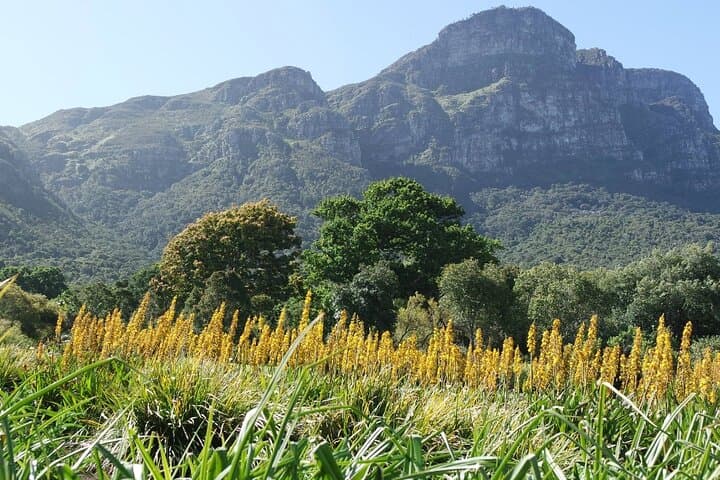
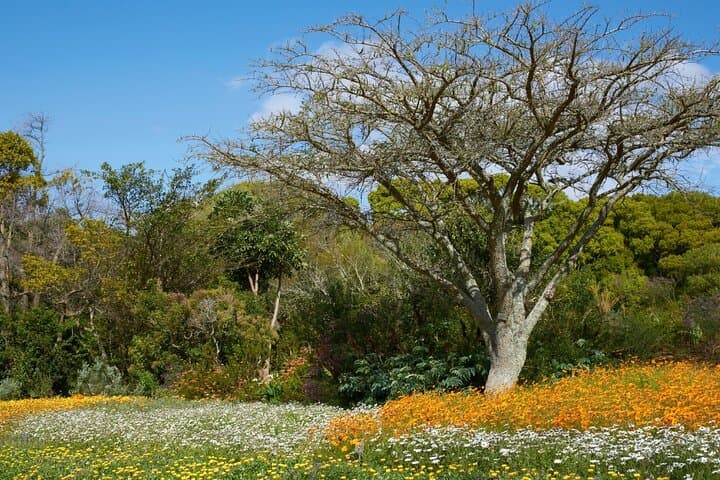
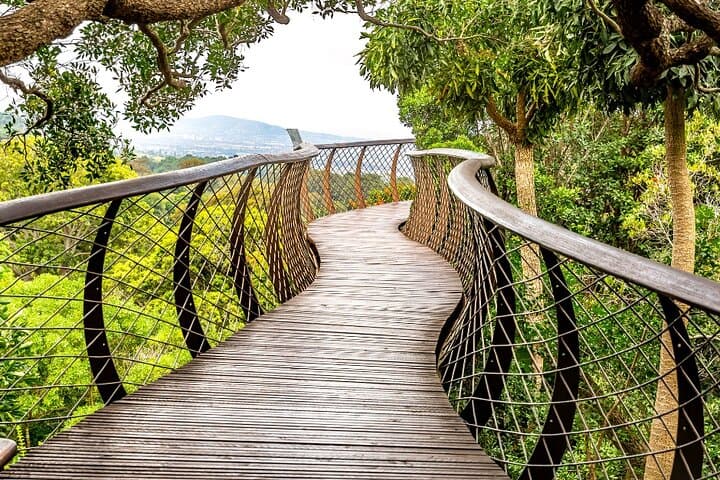
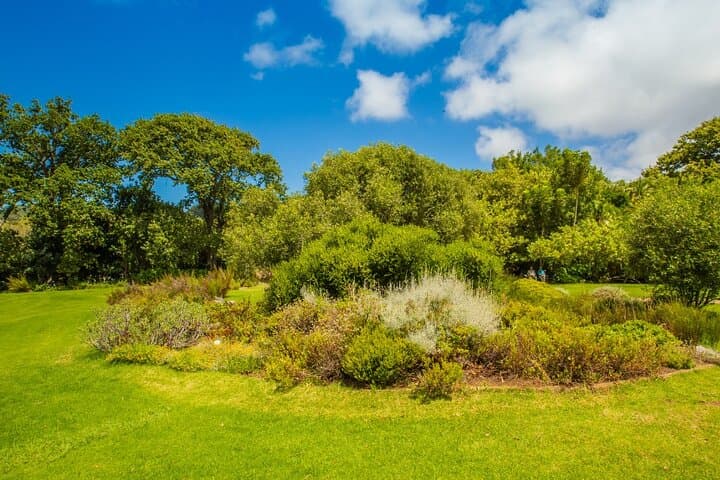
A cool morning wind threads through protea bushes as the Boomslang canopy walkway lifts you above a patchwork of indigenous fynbos and cultivated lawns. Kirstenbosch sits at the eastern foot of Table Mountain, where forested slopes press close and the scent of restio and flowering ericas fills the air.
Verified experiences and guided adventures in the surrounding area.
Operated by PERCY TRAVEL &TOURS · Cape Town, Western Cape
A cool morning wind threads through protea bushes as the Boomslang canopy walkway lifts you above a patchwork of indigenous fynbos and cultivated lawns. Kirstenbosch sits at the eastern foot of Table Mountain, where forested slopes press close and the scent of restio and flowering ericas fills the air.
Established in 1913 to protect South Africa’s unique flora, the gardens occupy a deliberate meeting of culture and geology: granite outcrops, nutrient-poor soils that favor fynbos, and planted collections that showcase Cape floral kingdoms. Sculptures and seasonal displays trace local botanical knowledge while the Boomslang gives a perching vantage over the treetops and the mountain’s basalt flanks.
Visitors can expect paved and crushed-gravel paths that make a casual loop of 1–5 km depending on how far they explore; most routes are gentle, though the Skeleton Gorge trailhead starts inside the gardens for those seeking a strenuous route with 600–800 m of ascent to Table Mountain.
Practical guidance: arrive early to avoid mid-day crowds and Cape Town heat; bring sun protection and refillable water—the gardens have taps and a small café but limited shade seats near popular viewpoints. Strollers and wheelchairs can access major paths, but steeper side trails are uneven. Photography and quiet observation reward slow pacing—listen for Cape sugarbirds and look for rock hyrax on sunny boulders.
A visit to Kirstenbosch is both a botanical primer and a gateway to longer mountain hikes, offering low-effort immersion in one of the world’s most distinctive floral regions.
easy.
2–3 hours.
Suitable for all fitness levels for the formal gardens; add good aerobic fitness if you plan uphill hikes like Skeleton Gorge.
Mobile tickets are accepted; a printed copy is also fine but not required.
Major paths and lawns are accessible to wheelchairs and strollers, though some side trails and slopes are uneven.
Yes—there's a café and public restrooms; facilities can be busy at peak times so plan accordingly.
Yes—trailheads such as Skeleton Gorge start within Kirstenbosch; these routes are steep and require proper hiking preparation.
Kirstenbosch was founded in 1913 to conserve South Africa’s indigenous flora and has long been central to fynbos research and public education.
The gardens are active in fynbos conservation and invasive plant management; visitors are asked to stay on paths and avoid removing plant material.
PERCY TRAVEL &TOURS operates guided outdoor trips and adventures with an emphasis on safety, stewardship, and memorable experiences.
A cool morning wind threads through protea bushes as the Boomslang canopy walkway lifts you above a patchwork of indigenous fynbos and cultivated lawns. Kirstenbosch sits at the eastern foot of Table Mountain, where forested slopes press close and the scent of restio and flowering ericas fills the air.
A cool morning wind threads through protea bushes as the Boomslang canopy walkway lifts you above a patchwork of indigenous fynbos and cultivated lawns. Kirstenbosch sits at the eastern foot of Table Mountain, where forested slopes press close and the scent of restio and flowering ericas fills the air.
Established in 1913 to protect South Africa’s unique flora, the gardens occupy a deliberate meeting of culture and geology: granite outcrops, nutrient-poor soils that favor fynbos, and planted collections that showcase Cape floral kingdoms. Sculptures and seasonal displays trace local botanical knowledge while the Boomslang gives a perching vantage over the treetops and the mountain’s basalt flanks.
Visitors can expect paved and crushed-gravel paths that make a casual loop of 1–5 km depending on how far they explore; most routes are gentle, though the Skeleton Gorge trailhead starts inside the gardens for those seeking a strenuous route with 600–800 m of ascent to Table Mountain.
Practical guidance: arrive early to avoid mid-day crowds and Cape Town heat; bring sun protection and refillable water—the gardens have taps and a small café but limited shade seats near popular viewpoints. Strollers and wheelchairs can access major paths, but steeper side trails are uneven. Photography and quiet observation reward slow pacing—listen for Cape sugarbirds and look for rock hyrax on sunny boulders.
A visit to Kirstenbosch is both a botanical primer and a gateway to longer mountain hikes, offering low-effort immersion in one of the world’s most distinctive floral regions.