THE ADVENTURE COLLECTIVE® · Independent discovery and booking for outdoor travel

Ride from the volcanic rim at Kintamani down into leafy Ubud on a 28 km guided cycling tour that threads village lanes, rice terraces and local temples. Expect a mostly downhill route, cultural commentary from local guides, and a safety vehicle following the group.
Ride from the volcanic rim at Kintamani down into leafy Ubud on a 28 km guided cycling tour that threads village lanes, rice terraces and local temples. Expect a mostly downhill route, cultural commentary from local guides, and a safety vehicle following the group.
You step out where the air is thin and cool — the Kintamani rim above Mount Batur — and the world feels larger: terraces stacked below, the volcano’s silhouette watching. The route peels away from the highland plateau and flows downhill for roughly 28 km, passing quiet village lanes, rice paddies, and roadside temples as the landscape lowers toward Ubud.
Verified experiences and guided adventures in the surrounding area.
Operated by Best Adventure In Bali · Kintamani, Bali
You step out where the air is thin and cool — the Kintamani rim above Mount Batur — and the world feels larger: terraces stacked below, the volcano’s silhouette watching. The route peels away from the highland plateau and flows downhill for roughly 28 km, passing quiet village lanes, rice paddies, and roadside temples as the landscape lowers toward Ubud.
This ride runs through land shaped by volcanic ash and centuries of rice farming. The geology — porous lava soils and steep terraces — feeds the subak irrigation networks that made Balinese wet-rice culture sustainable here. Guides on these tours point out temple shrines and community compounds, explaining ritual life and the cooperative water systems that still govern planting and harvest.
Expect mostly paved village roads with occasional gravel shoulders, a gentle but sustained descent totaling several hundred meters of elevation loss, and stretches where traffic and pedestrians share narrow lanes. Local children and farmers often wave; small roadside stalls sell cold drinks and snacks.
Practically: set off early for cooler temperatures and clearer views of Batur, bring a helmet and a refillable water bottle, and plan for a relaxed 2–3 hour moving window plus stops. Guides typically provide safety briefings, support vehicles, and a buffet lunch in Ubud. Watch for sudden potholes and village dogs that may dart into the road.
For planners: lightweight layers and a compact rain shell handle tropical showers, and modest clothing is appropriate when pausing at temples. This is a cultural ride as much as a cycling route — fast enough for a thrill, slow enough to read the landscape.
moderate.
2–3 hours.
Suitable for people with basic cycling fitness; expect sustained pedaling and some technical descending skills for confidence on mixed surfaces.
The organized route covers about 28 km and typically takes 2–3 hours moving time; it’s mostly downhill but requires basic cycling fitness and attention on narrow village roads.
Yes—many operators advertise this as suitable for a range of fitness levels and family groups; a support vehicle follows for emergencies or those who prefer to skip sections.
Light, breathable clothing that covers shoulders and knees when visiting temples, a helmet, closed-toe shoes, sunscreen, insect repellent, and a refillable water bottle are recommended.
Most all-inclusive packages include pickup/drop-off in the Ubud area, a safety/support vehicle, and a buffet lunch at the finish in Keliki or Ubud.
The route traces slopes formed by Mount Batur’s volcanic activity; local communities here practice subak, the cooperative irrigation system that structures Balinese rice culture.
Stick to designated lanes and avoid trampling terraces; bringing refillable bottles and buying from village stalls supports local economies and reduces waste.
Best Adventure In Bali operates guided outdoor trips and adventures with an emphasis on safety, stewardship, and memorable experiences.
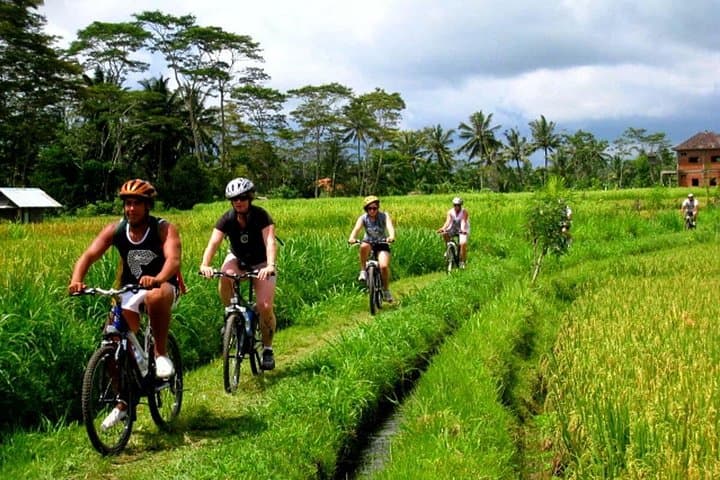
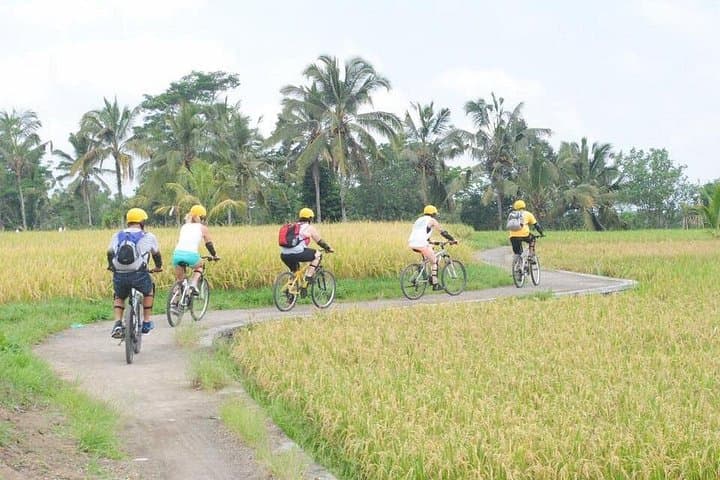
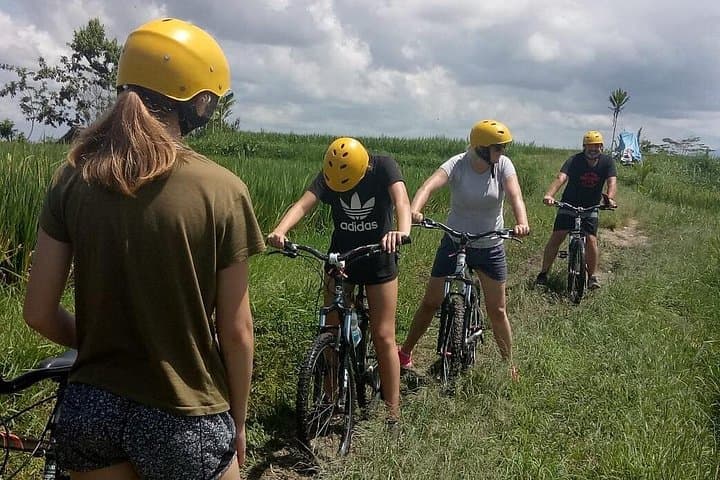
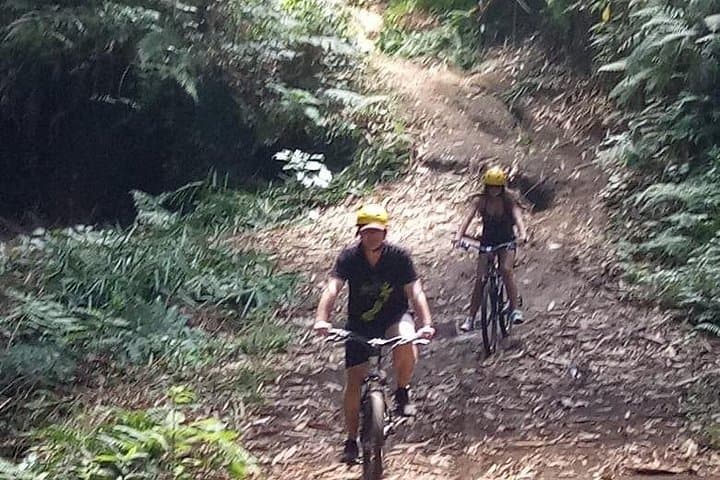
You step out where the air is thin and cool — the Kintamani rim above Mount Batur — and the world feels larger: terraces stacked below, the volcano’s silhouette watching. The route peels away from the highland plateau and flows downhill for roughly 28 km, passing quiet village lanes, rice paddies, and roadside temples as the landscape lowers toward Ubud.
You step out where the air is thin and cool — the Kintamani rim above Mount Batur — and the world feels larger: terraces stacked below, the volcano’s silhouette watching. The route peels away from the highland plateau and flows downhill for roughly 28 km, passing quiet village lanes, rice paddies, and roadside temples as the landscape lowers toward Ubud.
This ride runs through land shaped by volcanic ash and centuries of rice farming. The geology — porous lava soils and steep terraces — feeds the subak irrigation networks that made Balinese wet-rice culture sustainable here. Guides on these tours point out temple shrines and community compounds, explaining ritual life and the cooperative water systems that still govern planting and harvest.
Expect mostly paved village roads with occasional gravel shoulders, a gentle but sustained descent totaling several hundred meters of elevation loss, and stretches where traffic and pedestrians share narrow lanes. Local children and farmers often wave; small roadside stalls sell cold drinks and snacks.
Practically: set off early for cooler temperatures and clearer views of Batur, bring a helmet and a refillable water bottle, and plan for a relaxed 2–3 hour moving window plus stops. Guides typically provide safety briefings, support vehicles, and a buffet lunch in Ubud. Watch for sudden potholes and village dogs that may dart into the road.
For planners: lightweight layers and a compact rain shell handle tropical showers, and modest clothing is appropriate when pausing at temples. This is a cultural ride as much as a cycling route — fast enough for a thrill, slow enough to read the landscape.