THE ADVENTURE COLLECTIVE® · Independent discovery and booking for outdoor travel

Ride Asia’s longest and highest zipline across Chiang Mai’s forested ridgelines. This 3,600‑meter course combines long cable runs, suspended bridges and spiral platforms—perfect for travelers who want a calculated adrenaline rush and scenic views of northern Thailand.
Ride Asia’s longest and highest zipline across Chiang Mai’s forested ridgelines. This 3,600‑meter course combines long cable runs, suspended bridges and spiral platforms—perfect for travelers who want a calculated adrenaline rush and scenic views of northern Thailand.
You step off the wooden platform and the forest exhales beneath you. The cable takes the weight, the valley opens, and for a long ribbon of wire—3,600 meters in total—gravity and speed do the talking. Kingkong Smile Zipline threads across Chiang Mai’s mountain slopes, delivering a sequence of launches, hanging bridges and spiral staircases that force breath into your throat and a grin onto your face.
Verified experiences and guided adventures in the surrounding area.
Operated by Click2GoThailand.com · Chiang Mai, Chiang Mai
You step off the wooden platform and the forest exhales beneath you. The cable takes the weight, the valley opens, and for a long ribbon of wire—3,600 meters in total—gravity and speed do the talking. Kingkong Smile Zipline threads across Chiang Mai’s mountain slopes, delivering a sequence of launches, hanging bridges and spiral staircases that force breath into your throat and a grin onto your face.
The route runs along old ridgelines carved from granite and sandstone, where seasonal streams have cut gullies and fed the evergreen and dry-deciduous mix that crowns northern Thailand’s foothills. This is Lanna country: centuries ago, teak cutters and hill-tribe traders used the same slopes to move goods into Chiang Mai city. Today, the zipline borrows those ancient corridors, converting trade routes into launch points and platforms that look out over terraced farms and jungle pockets.
Locals here are largely from ethnic Thai and hill‑tribe communities; many guides combine technical training with stories about the land—how monsoon rains fatten the rivers, when the wild orchids bloom, and where gibbons used to call at dawn. Geologically the mountains are old; their low, rounded profiles carry soils rich enough for orchards and coffee plots, creating a patchwork that drops away under the cables.
On the activity itself expect a progression of elements: safety briefing, gear fitting, and a warm-up line to test posture and braking. Then the bigger zips—long spans that cross valleys and force a slow, steady descent of adrenaline. Platforms sit on forested ledges; the operator uses modern harnesses and dual‑line backups and provides new gloves and bottled water.
Practical note: the site is roughly 45–60 km from Chiang Mai city center—plan a 1–1.5 hour drive depending on traffic and which hotel pickup you choose. Participants must be 10–65 years old, weigh under 110 kg and be at least 120 cm tall. If you have back or heart issues, skip the ride. Wear closed-toe shoes, lightweight long sleeves to avoid cable rub, and secure any loose items—phones are best tethered or left with staff who often offer photo packages.
Timing matters. Morning slots are cooler and clearer; afternoons can bring thermals or sudden rain in the wet season. Hydrate before you go and budget a full half‑day for transfers, briefings and the full circuit. For a clean, high‑octane taste of northern Thailand’s hills, few activities rival a long, high zipline that makes the forest feel willing to carry you onward.
moderate.
3 hours (including transfers and briefing).
Comfortable with short bursts of exertion; must be able to stand on platforms and follow harnessing instructions.
The full course totals about 3,600 meters across multiple lines, platforms and bridges; your slot includes orientation, gearing and the full circuit.
Some options include round‑trip hotel transfer; otherwise the meeting point is about 50 km from Chiang Mai—confirm pickup when booking.
Yes—operators supply helmets, harnesses, gloves and a dual‑line safety system; staff fit and check all equipment before launch.
Phones are allowed but must be secured; many operators offer photo or video add‑ons taken by trained staff.
The operator may cancel in heavy rain or high winds for safety—refunds are available if canceled 24 hours prior or in bad weather per the policy.
Yes—participants must be 10–65 years old, at least 120 cm tall and weigh less than 110 kg; travelers with certain medical conditions should not join.
The route crosses foothills historically used by Lanna traders and teak loggers; modern adventure operators repurposed old paths into canopy tourism.
Operators emphasize minimal‑impact construction on platforms and encourage guests not to feed or approach wildlife; staying on marked routes keeps erosion and disturbance down.
Click2GoThailand.com operates guided outdoor trips and adventures with an emphasis on safety, stewardship, and memorable experiences.
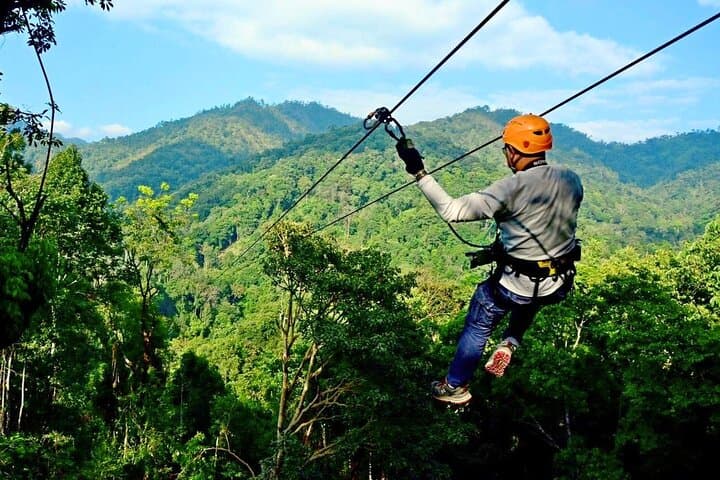
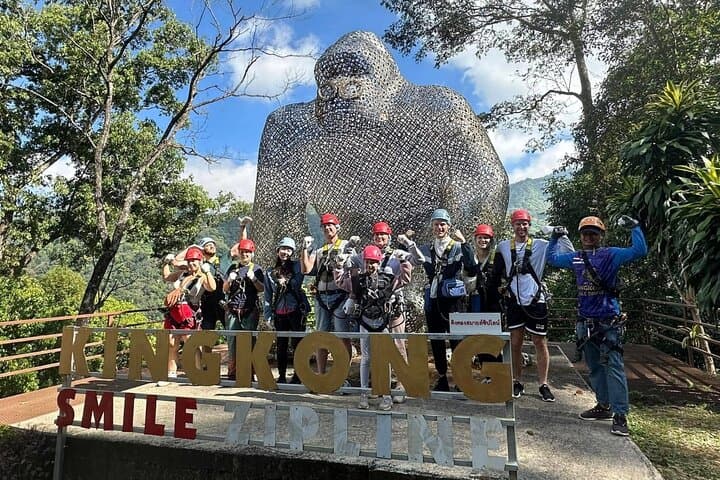
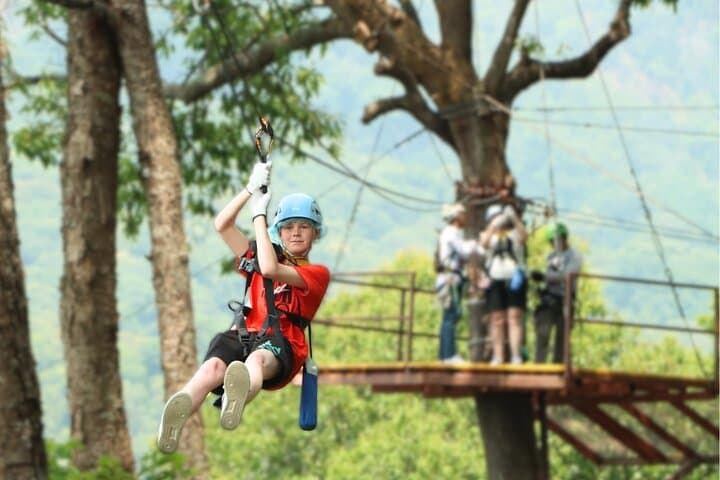
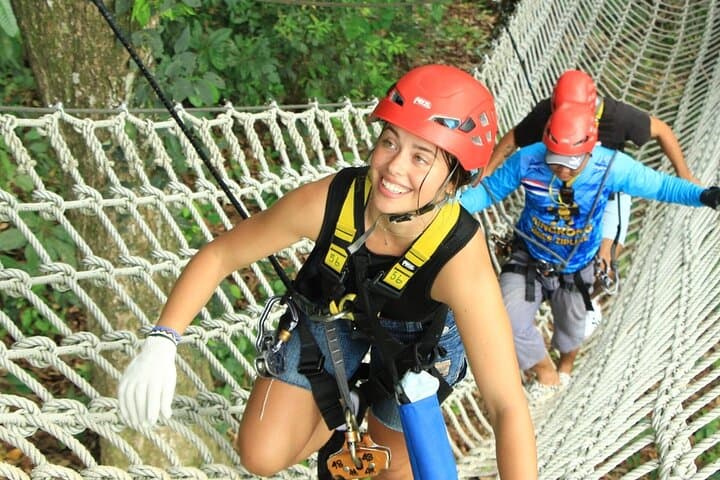
You step off the wooden platform and the forest exhales beneath you. The cable takes the weight, the valley opens, and for a long ribbon of wire—3,600 meters in total—gravity and speed do the talking. Kingkong Smile Zipline threads across Chiang Mai’s mountain slopes, delivering a sequence of launches, hanging bridges and spiral staircases that force breath into your throat and a grin onto your face.
You step off the wooden platform and the forest exhales beneath you. The cable takes the weight, the valley opens, and for a long ribbon of wire—3,600 meters in total—gravity and speed do the talking. Kingkong Smile Zipline threads across Chiang Mai’s mountain slopes, delivering a sequence of launches, hanging bridges and spiral staircases that force breath into your throat and a grin onto your face.
The route runs along old ridgelines carved from granite and sandstone, where seasonal streams have cut gullies and fed the evergreen and dry-deciduous mix that crowns northern Thailand’s foothills. This is Lanna country: centuries ago, teak cutters and hill-tribe traders used the same slopes to move goods into Chiang Mai city. Today, the zipline borrows those ancient corridors, converting trade routes into launch points and platforms that look out over terraced farms and jungle pockets.
Locals here are largely from ethnic Thai and hill‑tribe communities; many guides combine technical training with stories about the land—how monsoon rains fatten the rivers, when the wild orchids bloom, and where gibbons used to call at dawn. Geologically the mountains are old; their low, rounded profiles carry soils rich enough for orchards and coffee plots, creating a patchwork that drops away under the cables.
On the activity itself expect a progression of elements: safety briefing, gear fitting, and a warm-up line to test posture and braking. Then the bigger zips—long spans that cross valleys and force a slow, steady descent of adrenaline. Platforms sit on forested ledges; the operator uses modern harnesses and dual‑line backups and provides new gloves and bottled water.
Practical note: the site is roughly 45–60 km from Chiang Mai city center—plan a 1–1.5 hour drive depending on traffic and which hotel pickup you choose. Participants must be 10–65 years old, weigh under 110 kg and be at least 120 cm tall. If you have back or heart issues, skip the ride. Wear closed-toe shoes, lightweight long sleeves to avoid cable rub, and secure any loose items—phones are best tethered or left with staff who often offer photo packages.
Timing matters. Morning slots are cooler and clearer; afternoons can bring thermals or sudden rain in the wet season. Hydrate before you go and budget a full half‑day for transfers, briefings and the full circuit. For a clean, high‑octane taste of northern Thailand’s hills, few activities rival a long, high zipline that makes the forest feel willing to carry you onward.