THE ADVENTURE COLLECTIVE® · Independent discovery and booking for outdoor travel

Climb Kilimanjaro via the quieter Rongai Route on a private, 7-day itinerary that includes an acclimatization day at Mawenzi Tarn, full meals, tents, and certified guides. Expect montane forest, moorland, a midnight summit push to Uhuru Peak, and expert local support throughout.
Climb Kilimanjaro via the quieter Rongai Route on a private, 7-day itinerary that includes an acclimatization day at Mawenzi Tarn, full meals, tents, and certified guides. Expect montane forest, moorland, a midnight summit push to Uhuru Peak, and expert local support throughout.
The headlamp pool ahead of you is a constellation on the mountain’s dark flank; the path narrows and the cold air begins to bite. On the Rongai Route the night feels deliberate — the mountain moving around you like a living thing — and when the sky blanches toward dawn, Gilman’s Point appears as an impossible line on the crater rim.
Verified experiences and guided adventures in the surrounding area.
Operated by CLIFF AFRICA ADVENTURE · Moshi, Kilimanjaro Region
The headlamp pool ahead of you is a constellation on the mountain’s dark flank; the path narrows and the cold air begins to bite. On the Rongai Route the night feels deliberate — the mountain moving around you like a living thing — and when the sky blanches toward dawn, Gilman’s Point appears as an impossible line on the crater rim.
This seven-day private climb takes you up Kilimanjaro from the northeast, a quieter trail that threads montane forest, moorland, and the lunar saddle between Mawenzi and Kibo. You’ll move from Moshi’s coffee slopes (1,387 m) to Simba Camp (around 2,600 m) on day one (9 km, ~4 hours), traverse the wide moorland toward Kikelewa (Day 2, 17 km, ~7 hours), and gain the high ground at Mawenzi Tarn (4,330 m) for a planned acclimatization day that improves summit odds.
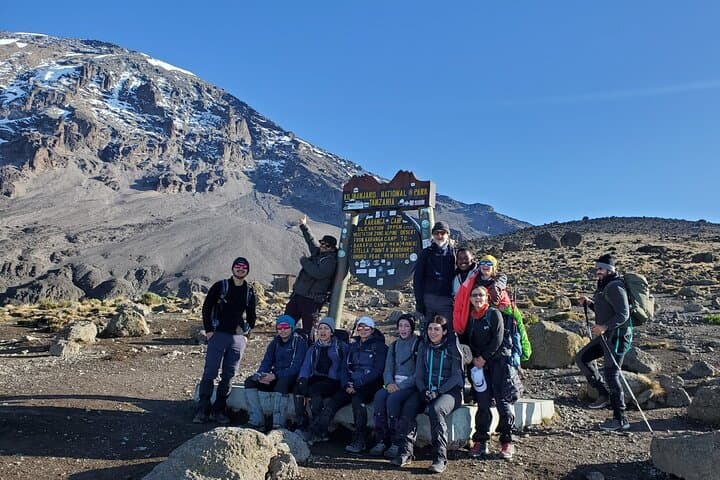
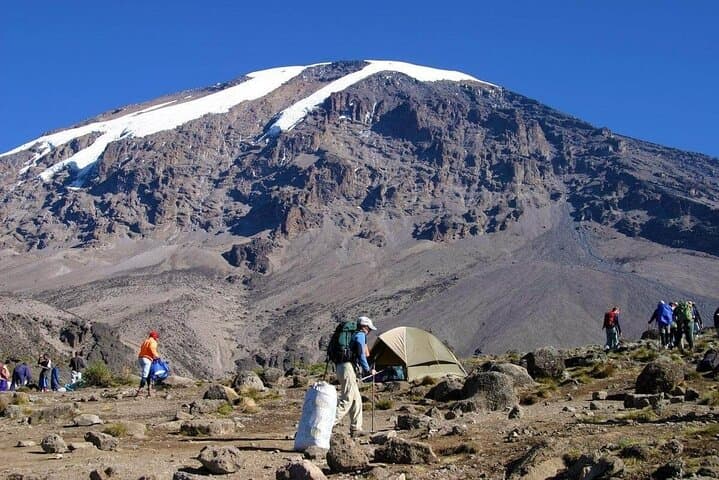
Geologically Kilimanjaro is a stratovolcano complex: Mawenzi’s jagged tower is the eroded remnant of an older cone, while Kibo’s summit still holds permanent ice and a collapsed crater. Culturally the slopes belong to the Chagga people, whose terraced farms and coffee plantations fringe the lower paths; porters and guides are not just staff but local experts who read weather, pace, and altitude. Expect to see forest monkeys in the shade and a distinct treeline that gives way to heath and then to the alpine desert where wind scours any foothold.
The summit push starts at midnight from Kibo Huts (4,695 m). The main climb is steep scree and sometimes snow — roughly 4 km up to Uhuru Peak (5,895 m), then a long descent (about 14 km down) to Horombo for recovery; plan on a 10–15 hour summit day. The itinerary’s built-in acclimatization day at Mawenzi Tarn is the feature that tips this in many climbers’ favor.
Practical notes: train with long uphill hikes and practice sleeping at altitude if possible. Break in waterproof, high-ankle boots and rely on a lightweight layering system (base, insulating, shell). Hydrate consistently — on Kilimanjaro the air is dry and thirst comes later than you think — and use the “climb high, sleep low” principle embedded in the schedule.
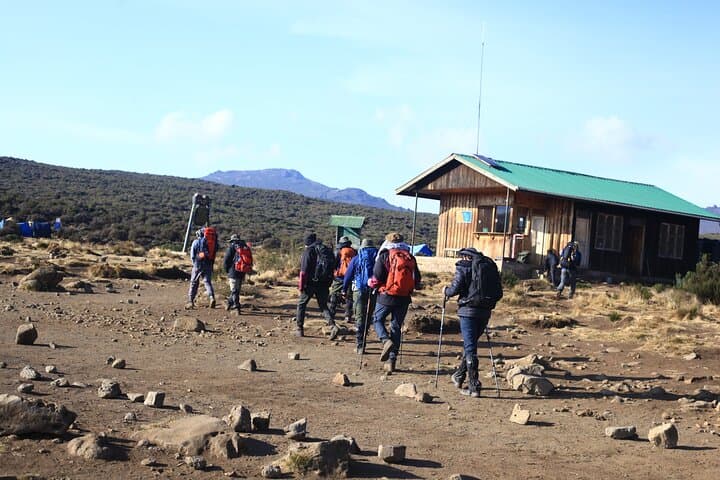
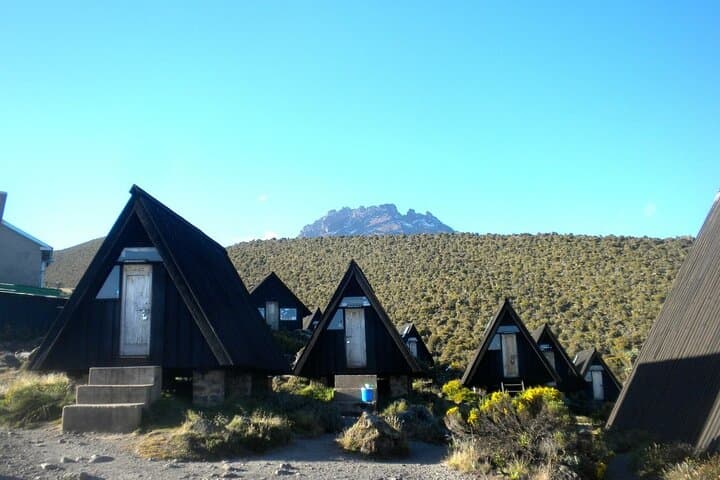
Logistics are straightforward: private transfers from Moshi or Arusha, full meals on the mountain, and certified high-altitude guides and rescue coverage. Expect tents for seven nights (including the mountain camps) and a mix of soft and rocky terrain. If you want fewer crowds and better wildlife chance on approach, Rongai’s northeast aspect delivers.
Take the acclimatization day seriously, travel light but smart, and remember the summit isn’t just a physical goal — it’s a series of small decisions: rest when told, eat even when you don’t feel like it, and let the mountain set your pace.
challenging.
7 days.
Good aerobic fitness with experience on long uphill hikes; capable of 6–10 hour hiking days and long summit pushes.
Yes—Rongai approaches from the northeast and typically sees fewer trekkers, offering quieter camps and different views toward Kenya.
Altitude is the primary challenge; this itinerary’s acclimatization day at Mawenzi Tarn improves success rates but proper pacing and hydration are essential.
Yes—certified guides, cooks, and porters are included to set camps, prepare meals, and carry communal gear.
You’ll have durable two-person tents for sleeping, communal dining tents, and meals prepared by cooks; expect basic but reliable mountain camping.
The drier months (January–March and June–October) offer more stable weather; the Rongai side can be slightly wetter in April–May and November.
Yes—travel insurance with high-altitude evacuation and medical coverage is strongly recommended.
Kilimanjaro’s slopes are part of Chagga lands; their terraced farms and coffee culture have supported mountain guiding since European exploration in the late 19th century.
All park fees support Tanzania National Parks’ conservation and rescue services; stick to marked trails and minimize waste—porters carry out most refuse but your pack-in/pack-out helps.
CLIFF AFRICA ADVENTURE operates guided outdoor trips and adventures with an emphasis on safety, stewardship, and memorable experiences.
The headlamp pool ahead of you is a constellation on the mountain’s dark flank; the path narrows and the cold air begins to bite. On the Rongai Route the night feels deliberate — the mountain moving around you like a living thing — and when the sky blanches toward dawn, Gilman’s Point appears as an impossible line on the crater rim.
The headlamp pool ahead of you is a constellation on the mountain’s dark flank; the path narrows and the cold air begins to bite. On the Rongai Route the night feels deliberate — the mountain moving around you like a living thing — and when the sky blanches toward dawn, Gilman’s Point appears as an impossible line on the crater rim.
This seven-day private climb takes you up Kilimanjaro from the northeast, a quieter trail that threads montane forest, moorland, and the lunar saddle between Mawenzi and Kibo. You’ll move from Moshi’s coffee slopes (1,387 m) to Simba Camp (around 2,600 m) on day one (9 km, ~4 hours), traverse the wide moorland toward Kikelewa (Day 2, 17 km, ~7 hours), and gain the high ground at Mawenzi Tarn (4,330 m) for a planned acclimatization day that improves summit odds.
Geologically Kilimanjaro is a stratovolcano complex: Mawenzi’s jagged tower is the eroded remnant of an older cone, while Kibo’s summit still holds permanent ice and a collapsed crater. Culturally the slopes belong to the Chagga people, whose terraced farms and coffee plantations fringe the lower paths; porters and guides are not just staff but local experts who read weather, pace, and altitude. Expect to see forest monkeys in the shade and a distinct treeline that gives way to heath and then to the alpine desert where wind scours any foothold.
The summit push starts at midnight from Kibo Huts (4,695 m). The main climb is steep scree and sometimes snow — roughly 4 km up to Uhuru Peak (5,895 m), then a long descent (about 14 km down) to Horombo for recovery; plan on a 10–15 hour summit day. The itinerary’s built-in acclimatization day at Mawenzi Tarn is the feature that tips this in many climbers’ favor.
Practical notes: train with long uphill hikes and practice sleeping at altitude if possible. Break in waterproof, high-ankle boots and rely on a lightweight layering system (base, insulating, shell). Hydrate consistently — on Kilimanjaro the air is dry and thirst comes later than you think — and use the “climb high, sleep low” principle embedded in the schedule.
Logistics are straightforward: private transfers from Moshi or Arusha, full meals on the mountain, and certified high-altitude guides and rescue coverage. Expect tents for seven nights (including the mountain camps) and a mix of soft and rocky terrain. If you want fewer crowds and better wildlife chance on approach, Rongai’s northeast aspect delivers.
Take the acclimatization day seriously, travel light but smart, and remember the summit isn’t just a physical goal — it’s a series of small decisions: rest when told, eat even when you don’t feel like it, and let the mountain set your pace.