THE ADVENTURE COLLECTIVE® · Independent discovery and booking for outdoor travel

Trek the 9-day Northern Circuit for the most gradual ascent profile to Uhuru Peak. This itinerary emphasizes acclimatization across diverse ecosystems—from rainforest to alpine desert—culminating in a sunrise summit.
Trek the 9-day Northern Circuit for the most gradual ascent profile to Uhuru Peak. This itinerary emphasizes acclimatization across diverse ecosystems—from rainforest to alpine desert—culminating in a sunrise summit.
Dawn breaks over moss-draped rainforest as porters load gear and the trail ahead narrows into root-choked singletrack. On the Northern Circuit the mountain changes its voice with each zone: humid forest that hums with birds, open moorland where giant senecios lean into wind, and the high alpine desert that dares you toward the crater rim.
Verified experiences and guided adventures in the surrounding area.
Operated by Moshi Treks · Moshi, Kilimanjaro Region
Dawn breaks over moss-draped rainforest as porters load gear and the trail ahead narrows into root-choked singletrack. On the Northern Circuit the mountain changes its voice with each zone: humid forest that hums with birds, open moorland where giant senecios lean into wind, and the high alpine desert that dares you toward the crater rim.
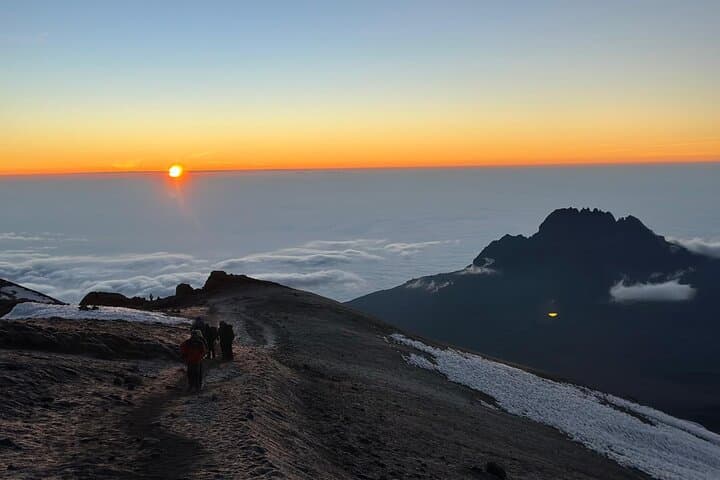
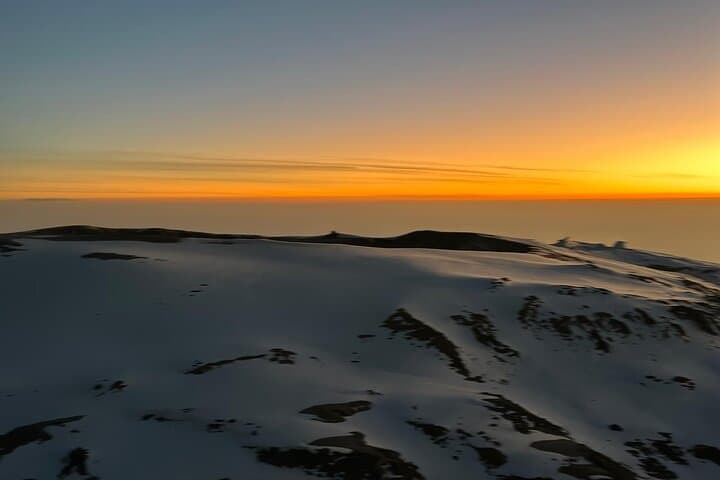
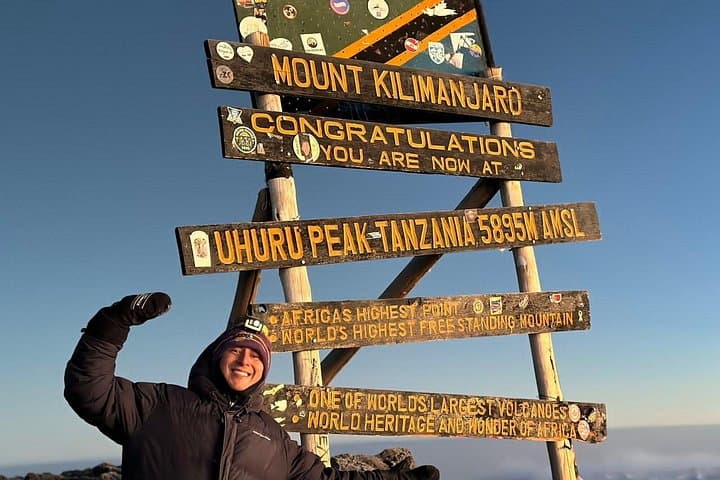
Geologically Kibo is a dormant stratovolcano capped by ice and jagged cliffs. The route follows ancient lava flows and high plateaus left by past eruptions, offering views of Mawenzi’s serrated shoulders and the glacial remains that persist above 5,000 meters. Culturally the slopes sit within Chagga country; Moshi serves as basecamp town where guides, cooks, and porters bring lives and local knowledge to each trek. The first recorded ascent to Uhuru Peak was by Hans Meyer in 1889, and modern climbs balance that history with park regulations.
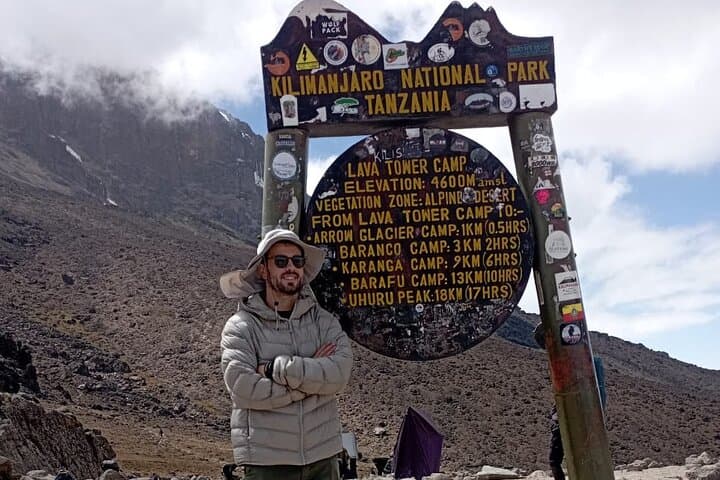
Practical guidance: the 9-day itinerary (Londorossi gate, Shira Plateau, Lava Tower, School Hut, summit at Uhuru Peak, descend to Mweka) prioritizes acclimatization—expect daily gains and a final overnight summit push starting around midnight. Terrain varies: muddy forest tracks, soft moorland, rocky scree near the summit. Hydration, layered insulation, and pacing matter more than speed. Use trekking poles on steep scree, sleep low after high days, and pack a reliable headlamp for the summit effort. Weather changes fast; sun and high winds can appear in the same hour. Respect park rules, tip the crew fairly, and leave no trace—Kilimanjaro rewards patience and preparation.
challenging.
9 days.
Requires excellent aerobic fitness and experience with multi-day hikes at altitude; training hikes and cardio are recommended.
No technical mountaineering skills are required; the route is high-altitude trekking. Good fitness, proper gear, and acclimatization are essential.
Dry months (January–March and June–October) offer more stable weather and clearer summit views, though conditions can change any time of year.
Altitude sickness is the biggest risk—follow the itinerary, ascend slowly, stay hydrated, and report symptoms early; guides carry emergency protocols and evacuation plans.
Gratuities are not included; it’s customary to tip guides, cooks, and porters at trip end based on service and group size.
Kilimanjaro’s peaks were first summited in the late 19th century; Hans Meyer’s 1889 ascent helped open the mountain to scientific and tourist interest.
Kilimanjaro National Park regulates permits and camping zones; stick to established paths, pack out waste, and use provided filtered water to minimize impact.
Moshi Treks operates guided outdoor trips and adventures with an emphasis on safety, stewardship, and memorable experiences.
Dawn breaks over moss-draped rainforest as porters load gear and the trail ahead narrows into root-choked singletrack. On the Northern Circuit the mountain changes its voice with each zone: humid forest that hums with birds, open moorland where giant senecios lean into wind, and the high alpine desert that dares you toward the crater rim.
Dawn breaks over moss-draped rainforest as porters load gear and the trail ahead narrows into root-choked singletrack. On the Northern Circuit the mountain changes its voice with each zone: humid forest that hums with birds, open moorland where giant senecios lean into wind, and the high alpine desert that dares you toward the crater rim.
Geologically Kibo is a dormant stratovolcano capped by ice and jagged cliffs. The route follows ancient lava flows and high plateaus left by past eruptions, offering views of Mawenzi’s serrated shoulders and the glacial remains that persist above 5,000 meters. Culturally the slopes sit within Chagga country; Moshi serves as basecamp town where guides, cooks, and porters bring lives and local knowledge to each trek. The first recorded ascent to Uhuru Peak was by Hans Meyer in 1889, and modern climbs balance that history with park regulations.
Practical guidance: the 9-day itinerary (Londorossi gate, Shira Plateau, Lava Tower, School Hut, summit at Uhuru Peak, descend to Mweka) prioritizes acclimatization—expect daily gains and a final overnight summit push starting around midnight. Terrain varies: muddy forest tracks, soft moorland, rocky scree near the summit. Hydration, layered insulation, and pacing matter more than speed. Use trekking poles on steep scree, sleep low after high days, and pack a reliable headlamp for the summit effort. Weather changes fast; sun and high winds can appear in the same hour. Respect park rules, tip the crew fairly, and leave no trace—Kilimanjaro rewards patience and preparation.