THE ADVENTURE COLLECTIVE® · Independent discovery and booking for outdoor travel

Choose the Northern Circuit for a quieter, more gradual ascent of Kilimanjaro: longer acclimatization, sweeping northern views and a higher summit success rate. This eight-day expedition balances serious trekking with thoughtful logistics, expert guides and overnight tent camping on the mountain.
Choose the Northern Circuit for a quieter, more gradual ascent of Kilimanjaro: longer acclimatization, sweeping northern views and a higher summit success rate. This eight-day expedition balances serious trekking with thoughtful logistics, expert guides and overnight tent camping on the mountain.
At dawn the trail rises out of a green Moshi hotel yard and climbs into cloud—first the rainforest exhales mist across your shoulders, then the mountain’s slopes pull the air thin and bright. The Northern Circuit is the longest route on Kilimanjaro, wrapping around the mountain’s quieter northern flanks before pushing toward Kibo’s rim. On an eight-day schedule the route grants slow, deliberate acclimatization and long windows for those dramatic glacial vistas that make the summit real: a knife-edge of ice and volcanic rock above the plains.
Verified experiences and guided adventures in the surrounding area.
Operated by Altezza Travel · Moshi, Kilimanjaro Region
At dawn the trail rises out of a green Moshi hotel yard and climbs into cloud—first the rainforest exhales mist across your shoulders, then the mountain’s slopes pull the air thin and bright. The Northern Circuit is the longest route on Kilimanjaro, wrapping around the mountain’s quieter northern flanks before pushing toward Kibo’s rim. On an eight-day schedule the route grants slow, deliberate acclimatization and long windows for those dramatic glacial vistas that make the summit real: a knife-edge of ice and volcanic rock above the plains.
This route’s length is not indulgence but physiology: extra days translate into higher summit success. Geologically, Kilimanjaro is a dormant stratovolcano composed of three cones—Kibo, Mawenzi and Shira. The Northern Circuit traverses the Shira Plateau, a high-altitude desert of lichen and wind-sculpted ridges, then skirts Kibo’s northern slopes. Culturally, much of the approach crosses Chagga farmland on the lower flanks—banana terraces and coffee plots—reminders that this mountain is woven into local livelihoods.
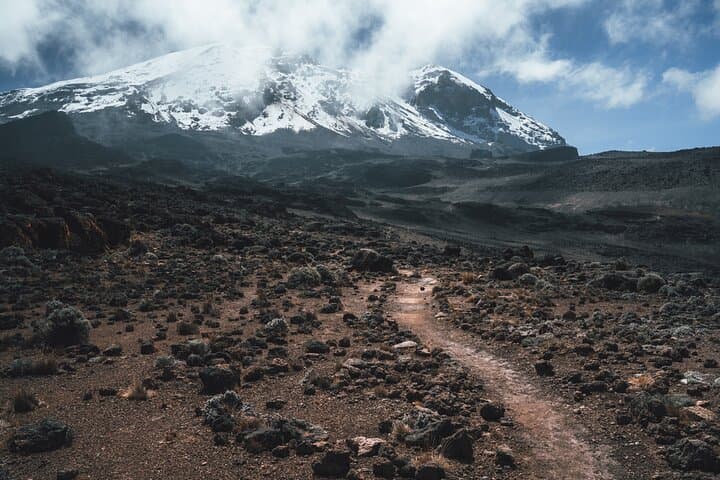
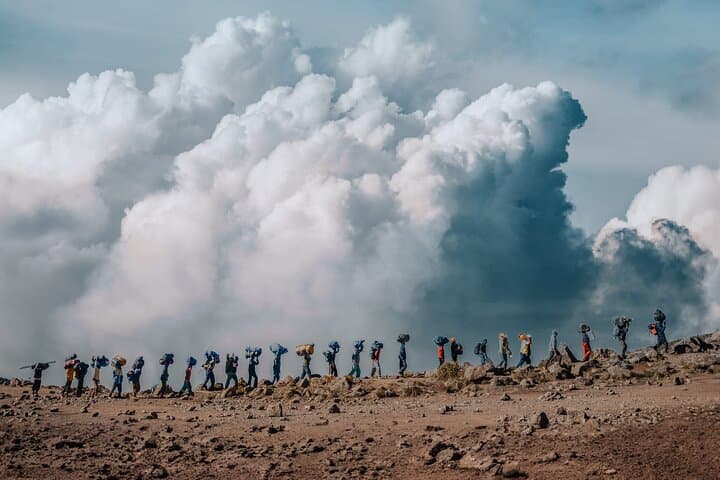
The trail’s character shifts like a mood ring: dense, dripping rainforest gives way to moorland of giant lobelias and groundsels, then to barren alpine desert where each step kicks up volcanic dust and the wind tests your balance. Porters and cooks form the hidden infrastructure of every summit attempt; a well-run crew will make the climb feel like a moving village, with tents, hot tea, and routes cleared for your ascent.
For those planning the Northern Circuit, preparation is practical. Expect 7–9 hours of walking on some midweek days, and a summit push that starts around midnight from School Hut to Uhuru Peak at 5,895 m. Drink frequently—aim for 3–4 liters daily at high altitude—and adhere to pace: slow and steady wins both the summit and safe descent. Layering is essential: temperatures swing from balmy in the valley to well below freezing above 4,500 m.
Medical kits, oxygen cylinders and Wilderness First Responder guides are often standard on quality trips; still, carry your own blister kit, altitude medication (after consulting your doctor) and a reliable down jacket. Expect tented nights on the mountain and hotel stays in Moshi pre- and post-climb.
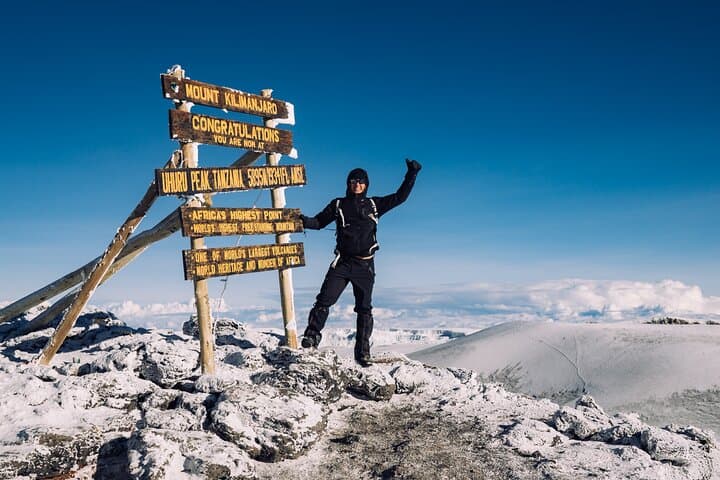
The Northern Circuit is for travelers who value solitude and altitude time over speed. It’s not technical climbing—no ropes or crampons are required for the standard route—but it demands respect for altitude and for a mountain that, though patient, does not forgive complacency. When you stand on Uhuru Peak at sunrise, the continent stretches away beneath you, and the climb’s slow logic—one steady step after another—makes sense.
challenging.
8 days.
Good aerobic fitness with prior multi-day trekking experience; ability to hike 6–8 hours with a daypack.
No ropes or crampons are required for the standard Northern Circuit route; it is non-technical trekking, though you will encounter scree, rock and occasional icy patches near the summit.
Altitude is the primary challenge—this itinerary’s extra days improve acclimatization, but symptoms can still occur; follow guide instructions, hydrate, and consult your physician about Diamox.
Two nights in a hotel in Moshi pre- and post-climb, and mountain nights in North Face VE-25 two-person tents with sleeping pads provided by the operator.
Yes—three meals per day on the mountain are included, with vegetarian, vegan, halal and gluten-free options available when requested in advance.
Professional climbing crews handle camp setup, cooking and portering; reputable operators provide fair treatment, medical checks and insurance for staff.
Dry months (January–March and June–October) are most reliable for stable weather, though the mountain can be climbed year-round with variable conditions.
Kilimanjaro is a dormant stratovolcano with three cones; European recorded ascent began with Hans Meyer in 1889, and local Chagga communities have long lived on its fertile lower slopes.
Kilimanjaro National Park fees support conservation and local communities; stay on trails, avoid single-use plastics and choose operators that follow porter welfare guidelines.
Altezza Travel operates guided outdoor trips and adventures with an emphasis on safety, stewardship, and memorable experiences.
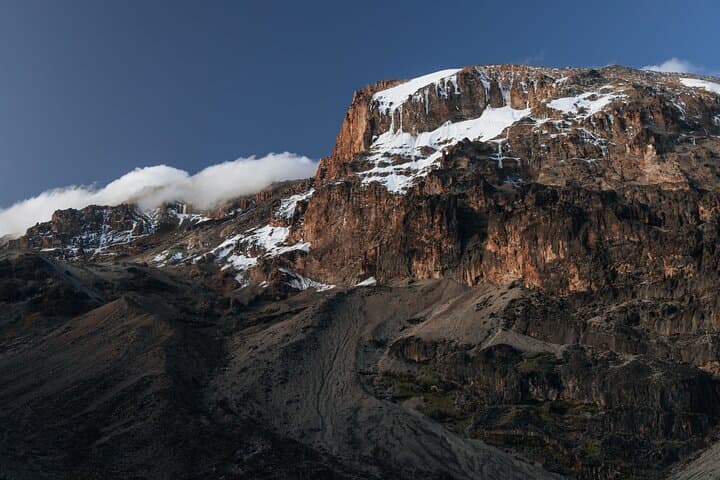
At dawn the trail rises out of a green Moshi hotel yard and climbs into cloud—first the rainforest exhales mist across your shoulders, then the mountain’s slopes pull the air thin and bright. The Northern Circuit is the longest route on Kilimanjaro, wrapping around the mountain’s quieter northern flanks before pushing toward Kibo’s rim. On an eight-day schedule the route grants slow, deliberate acclimatization and long windows for those dramatic glacial vistas that make the summit real: a knife-edge of ice and volcanic rock above the plains.
At dawn the trail rises out of a green Moshi hotel yard and climbs into cloud—first the rainforest exhales mist across your shoulders, then the mountain’s slopes pull the air thin and bright. The Northern Circuit is the longest route on Kilimanjaro, wrapping around the mountain’s quieter northern flanks before pushing toward Kibo’s rim. On an eight-day schedule the route grants slow, deliberate acclimatization and long windows for those dramatic glacial vistas that make the summit real: a knife-edge of ice and volcanic rock above the plains.
This route’s length is not indulgence but physiology: extra days translate into higher summit success. Geologically, Kilimanjaro is a dormant stratovolcano composed of three cones—Kibo, Mawenzi and Shira. The Northern Circuit traverses the Shira Plateau, a high-altitude desert of lichen and wind-sculpted ridges, then skirts Kibo’s northern slopes. Culturally, much of the approach crosses Chagga farmland on the lower flanks—banana terraces and coffee plots—reminders that this mountain is woven into local livelihoods.
The trail’s character shifts like a mood ring: dense, dripping rainforest gives way to moorland of giant lobelias and groundsels, then to barren alpine desert where each step kicks up volcanic dust and the wind tests your balance. Porters and cooks form the hidden infrastructure of every summit attempt; a well-run crew will make the climb feel like a moving village, with tents, hot tea, and routes cleared for your ascent.
For those planning the Northern Circuit, preparation is practical. Expect 7–9 hours of walking on some midweek days, and a summit push that starts around midnight from School Hut to Uhuru Peak at 5,895 m. Drink frequently—aim for 3–4 liters daily at high altitude—and adhere to pace: slow and steady wins both the summit and safe descent. Layering is essential: temperatures swing from balmy in the valley to well below freezing above 4,500 m.
Medical kits, oxygen cylinders and Wilderness First Responder guides are often standard on quality trips; still, carry your own blister kit, altitude medication (after consulting your doctor) and a reliable down jacket. Expect tented nights on the mountain and hotel stays in Moshi pre- and post-climb.
The Northern Circuit is for travelers who value solitude and altitude time over speed. It’s not technical climbing—no ropes or crampons are required for the standard route—but it demands respect for altitude and for a mountain that, though patient, does not forgive complacency. When you stand on Uhuru Peak at sunrise, the continent stretches away beneath you, and the climb’s slow logic—one steady step after another—makes sense.