THE ADVENTURE COLLECTIVE® · Independent discovery and booking for outdoor travel

A single-day ascent from Marangu Gate to Mandara Hut on Kilimanjaro: rainforest, monkeys, and clear views of Kibo and Mawenzi in a 6–8 hour round-trip trek. Ideal for hikers seeking peak panoramas without an overnight climb.
A single-day ascent from Marangu Gate to Mandara Hut on Kilimanjaro: rainforest, monkeys, and clear views of Kibo and Mawenzi in a 6–8 hour round-trip trek. Ideal for hikers seeking peak panoramas without an overnight climb.
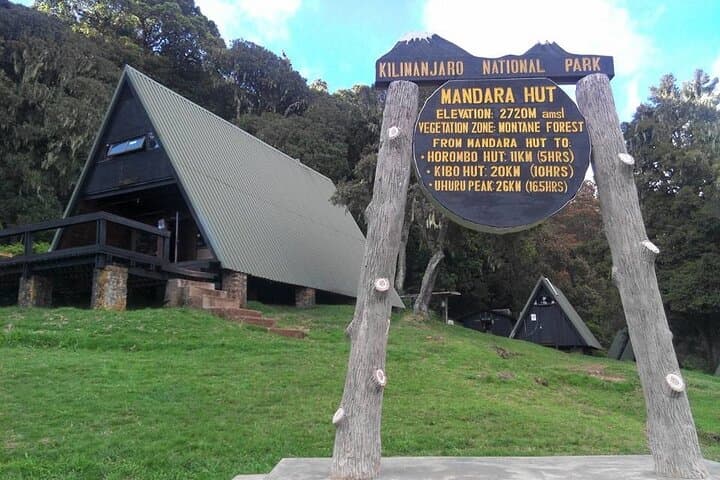
You step out of the vehicle at Marangu Gate and the air changes: damp, cool, and green, with rainforest leaves flicking drops like an impatient crowd. The trail heads up through moss-draped trunks, carrying the cadence of pack boots and bird calls toward Mandara Hut at 2,720 m, where Kibo and Mawenzi loom like stern companions.
Verified experiences and guided adventures in the surrounding area.
Operated by Dancing Simba Safaris · Marangu, Kilimanjaro Region
You step out of the vehicle at Marangu Gate and the air changes: damp, cool, and green, with rainforest leaves flicking drops like an impatient crowd. The trail heads up through moss-draped trunks, carrying the cadence of pack boots and bird calls toward Mandara Hut at 2,720 m, where Kibo and Mawenzi loom like stern companions.
This route follows the oldest, most accessible track on Kilimanjaro, used by guides and the Chagga people for generations. Geologically the path climbs an ancient lava-scoured flank of Kibo; soils turn richer and cooler as you rise, feeding the dense montane forest that supports blue monkeys and black-and-white colobus. A short side-trip from Mandara leads to Maundi Crater, a shallow amphitheater that frames wide views of the ice-capped peaks and the lowlands toward Moshi.
Practically, plan a full day: expect roughly 16 km round-trip with ~840 m (2,720 m minus 1,879 m) of elevation gain and 6–8 hours on trail depending on pace. The drive from Moshi is about 45 km (~1 hour). Permits and park fees are required at Marangu Gate; bottled water and a boxed lunch are typically included on organized tours.
Wear sturdy hiking shoes, layer for quick weather shifts, and carry at least 1.5–2 L of water. Move steadily—short, frequent rests help with breathing in the thinning air—and leave wildlife undisturbed. Early starts reduce afternoon cloud and rain. For a compact, rewarding Kilimanjaro experience, the Marangu Day Hike delivers rainforest immersion, primate encounters, and peak panoramas without camping overnight.
moderate.
6–8 hours.
Suitable for people with regular aerobic fitness; expect sustained uphill walking and brief steep sections.
Yes—park entrance fees and registration at Marangu Gate are required to start the hike; organized day tours usually handle this for you.
The one-way distance is about 8 km with roughly 840 m of elevation gain; plan on 3–4 hours each way depending on pace and breaks.
Yes—dense montane forest commonly hosts blue monkeys and black-and-white colobus; sightings are best in the quieter morning hours.
While the hike reaches 2,720 m, most people tolerate the elevation without prior acclimatization, but if you’re coming from low altitude, take it slower and watch for mild symptoms of altitude change.
The Marangu route follows long-used paths of the Chagga people and early explorers; Marangu Hut itself was established as a shelter for climbers in the early 20th century.
Kilimanjaro National Park fees fund trail maintenance and anti-poaching; stick to marked tracks and pack out waste to protect fragile montane forest.
Dancing Simba Safaris operates guided outdoor trips and adventures with an emphasis on safety, stewardship, and memorable experiences.
You step out of the vehicle at Marangu Gate and the air changes: damp, cool, and green, with rainforest leaves flicking drops like an impatient crowd. The trail heads up through moss-draped trunks, carrying the cadence of pack boots and bird calls toward Mandara Hut at 2,720 m, where Kibo and Mawenzi loom like stern companions.
You step out of the vehicle at Marangu Gate and the air changes: damp, cool, and green, with rainforest leaves flicking drops like an impatient crowd. The trail heads up through moss-draped trunks, carrying the cadence of pack boots and bird calls toward Mandara Hut at 2,720 m, where Kibo and Mawenzi loom like stern companions.
This route follows the oldest, most accessible track on Kilimanjaro, used by guides and the Chagga people for generations. Geologically the path climbs an ancient lava-scoured flank of Kibo; soils turn richer and cooler as you rise, feeding the dense montane forest that supports blue monkeys and black-and-white colobus. A short side-trip from Mandara leads to Maundi Crater, a shallow amphitheater that frames wide views of the ice-capped peaks and the lowlands toward Moshi.
Practically, plan a full day: expect roughly 16 km round-trip with ~840 m (2,720 m minus 1,879 m) of elevation gain and 6–8 hours on trail depending on pace. The drive from Moshi is about 45 km (~1 hour). Permits and park fees are required at Marangu Gate; bottled water and a boxed lunch are typically included on organized tours.
Wear sturdy hiking shoes, layer for quick weather shifts, and carry at least 1.5–2 L of water. Move steadily—short, frequent rests help with breathing in the thinning air—and leave wildlife undisturbed. Early starts reduce afternoon cloud and rain. For a compact, rewarding Kilimanjaro experience, the Marangu Day Hike delivers rainforest immersion, primate encounters, and peak panoramas without camping overnight.