THE ADVENTURE COLLECTIVE® · Independent discovery and booking for outdoor travel

A compact six-day Machame itinerary that trades extra days for a steeper acclimatization curve and a demanding, late-night summit push. Read what to expect on trail, how the route climbs, and the practical gear and pacing tips that help climbers reach Uhuru Peak.
A compact six-day Machame itinerary that trades extra days for a steeper acclimatization curve and a demanding, late-night summit push. Read what to expect on trail, how the route climbs, and the practical gear and pacing tips that help climbers reach Uhuru Peak.
You step out of the van before dawn, cool air pressing at 1,800 m while the rainforest ahead seems to breathe around the trail. The Machame route climbs fast — muddy root sections give way to heath and then brittle alpine desert — and the mountain pulls you upward with a steady, uncompromising patience.
Verified experiences and guided adventures in the surrounding area.
Operated by Kanje grand tours · Moshi, Kilimanjaro Region
You step out of the van before dawn, cool air pressing at 1,800 m while the rainforest ahead seems to breathe around the trail. The Machame route climbs fast — muddy root sections give way to heath and then brittle alpine desert — and the mountain pulls you upward with a steady, uncompromising patience.
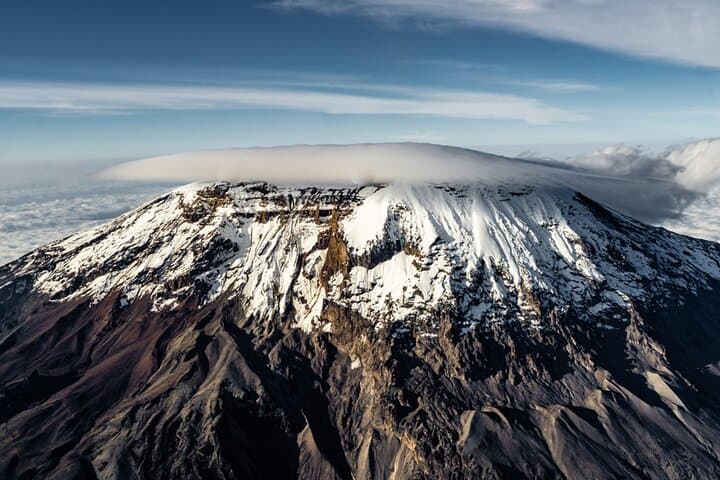
Kilimanjaro is a dormant stratovolcano whose peaks, Mawenzi and Kibo, were formed by successive eruptions hundreds of thousands of years ago. Hans Meyer made the first recorded ascent of Kibo in 1889; today the mountain is both a cultural symbol for the Chagga people on its flanks and a global barometer of climate change as its glaciers recede.
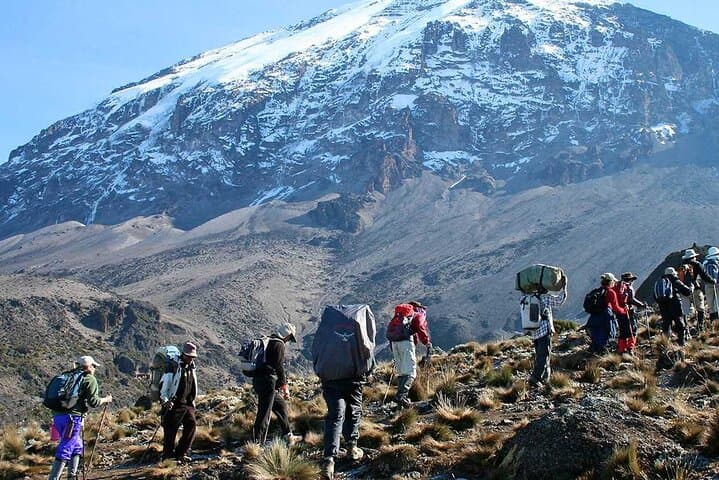
Over six days this Machame variation moves 1,830 m to the summit at 5,895 m, covering steep ridges, the Shira Plateau, the Lava Tower (4,650 m) and the dramatic Barranco Wall. Expect mixed terrain: rainforest mud (day 1, ~11 km, 1,220 m gain), moorland ridges, scree fields and a final night-time summit push from Barafu around midnight. The schedule demands endurance — summit day and the approach to Barafu combine into some of the longest, hardest hours on the mountain.
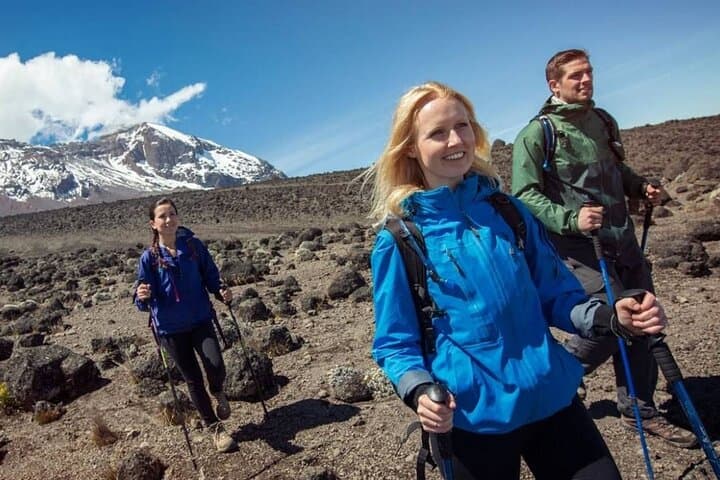
Practical guidance: pace conservatively, hydrate 3–4 L per day, eat calorie-rich small meals, and use trekking poles and gaiters for mud and scree. Layering is critical; temperatures swing from jungle warmth to sub-zero on the crater rim. Carry a reliable headlamp, a sleeping bag rated for -10°C, and allow time for acclimatization. If you feel severe altitude symptoms, descend immediately — rapid descent is the most effective treatment.
This route rewards disciplined hikers with wide summit views, intimate high-alpine landscapes and the stark reminder of a changing climate above the clouds.
difficult.
6 days.
You should be in strong aerobic condition, able to hike 6–8 hours on steep terrain and recover with limited sleep; prior multi-day trekking experience is recommended.
No technical climbing is required; the route is non-technical but demands strong fitness, experience with long day hikes, and the ability to manage altitude.
Acute Mountain Sickness can occur above 3,000 m; itinerary includes acclimatization days, but guides monitor symptoms and will descend anyone showing severe signs — immediate descent is the primary treatment.
Meals (breakfast, lunch, dinner) are provided on the mountain and camping is at designated sites each night; expect communal tents and basic campsite facilities provided by the outfitter.
The clearest windows are during the dry seasons: late June to October and late December to early March; weather can still change rapidly at altitude.
Kilimanjaro’s volcanic cones were raised by successive eruptions; early European ascents began in the late 19th century and the mountain remains central to Chagga culture on its slopes.
Kilimanjaro National Park charges permits and fees that fund conservation; stay on marked trails to protect fragile alpine soils and be aware that the summit glaciers are rapidly retreating due to climate change.
Kanje grand tours operates guided outdoor trips and adventures with an emphasis on safety, stewardship, and memorable experiences.
You step out of the van before dawn, cool air pressing at 1,800 m while the rainforest ahead seems to breathe around the trail. The Machame route climbs fast — muddy root sections give way to heath and then brittle alpine desert — and the mountain pulls you upward with a steady, uncompromising patience.
You step out of the van before dawn, cool air pressing at 1,800 m while the rainforest ahead seems to breathe around the trail. The Machame route climbs fast — muddy root sections give way to heath and then brittle alpine desert — and the mountain pulls you upward with a steady, uncompromising patience.
Kilimanjaro is a dormant stratovolcano whose peaks, Mawenzi and Kibo, were formed by successive eruptions hundreds of thousands of years ago. Hans Meyer made the first recorded ascent of Kibo in 1889; today the mountain is both a cultural symbol for the Chagga people on its flanks and a global barometer of climate change as its glaciers recede.
Over six days this Machame variation moves 1,830 m to the summit at 5,895 m, covering steep ridges, the Shira Plateau, the Lava Tower (4,650 m) and the dramatic Barranco Wall. Expect mixed terrain: rainforest mud (day 1, ~11 km, 1,220 m gain), moorland ridges, scree fields and a final night-time summit push from Barafu around midnight. The schedule demands endurance — summit day and the approach to Barafu combine into some of the longest, hardest hours on the mountain.
Practical guidance: pace conservatively, hydrate 3–4 L per day, eat calorie-rich small meals, and use trekking poles and gaiters for mud and scree. Layering is critical; temperatures swing from jungle warmth to sub-zero on the crater rim. Carry a reliable headlamp, a sleeping bag rated for -10°C, and allow time for acclimatization. If you feel severe altitude symptoms, descend immediately — rapid descent is the most effective treatment.
This route rewards disciplined hikers with wide summit views, intimate high-alpine landscapes and the stark reminder of a changing climate above the clouds.