THE ADVENTURE COLLECTIVE® · Independent discovery and booking for outdoor travel

Take the Lemosho Route to Kilimanjaro’s summit on an eight-day private trek designed around acclimatization. Expect montane forests, high desert plateaus and a pre-dawn summit push to Uhuru Peak with a support team handling meals, tents and safety.
Take the Lemosho Route to Kilimanjaro’s summit on an eight-day private trek designed around acclimatization. Expect montane forests, high desert plateaus and a pre-dawn summit push to Uhuru Peak with a support team handling meals, tents and safety.
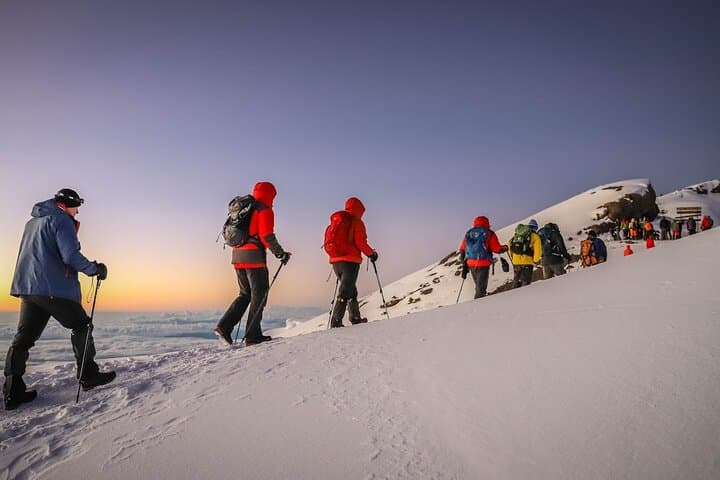
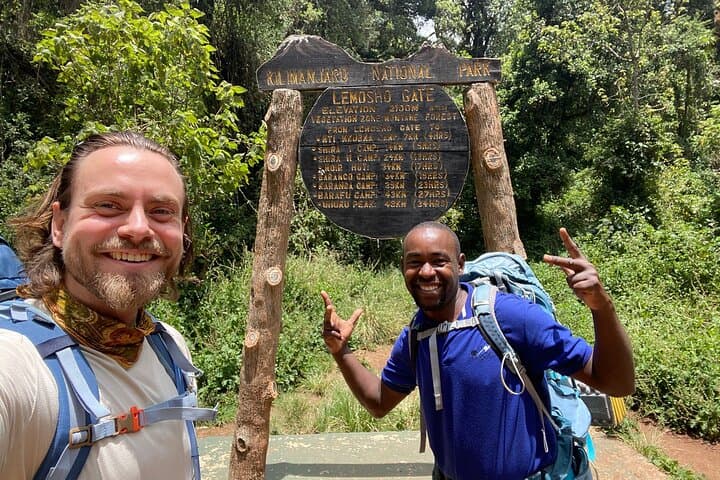
Before dawn the silhouette of Kibo sits like an impossible cathedral above the clouds — a dark tooth of volcanic rock capped in ice, daring you to move. On the Lemosho Route the mountain unfolds slowly: first an emerald band of montane forest where colobus monkeys watch from high branches, then a wide, bleached Shira Plateau that feels like another planet, and finally the thin, cold air above Barafu where every step becomes measured against breath.
Verified experiences and guided adventures in the surrounding area.
Operated by Kilele Climb Tours Co Ltd · Moshi, Kilimanjaro Region
Before dawn the silhouette of Kibo sits like an impossible cathedral above the clouds — a dark tooth of volcanic rock capped in ice, daring you to move. On the Lemosho Route the mountain unfolds slowly: first an emerald band of montane forest where colobus monkeys watch from high branches, then a wide, bleached Shira Plateau that feels like another planet, and finally the thin, cold air above Barafu where every step becomes measured against breath.
The Lemosho approach is one of Kilimanjaro’s most gradual itineraries, built to maximize acclimatization. The route traces old lava flows and eroded calderas formed by Kibo’s ancient eruptions; Shira itself is the remnant of a collapsed peak. For centuries the Chagga people lived on Kilimanjaro’s lower slopes, farming and telling stories of the mountain’s glaciers long before it became a global challenge for climbers.
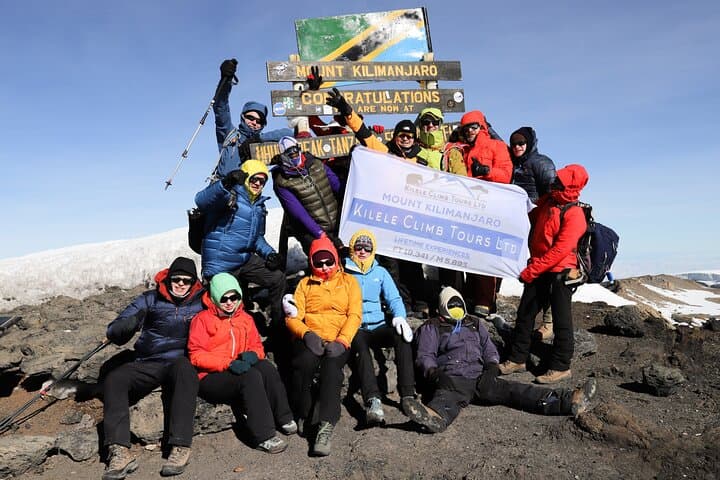
Cultural cues are simple but present: Moshi’s markets send last-minute supplies, guides speak both English and KiSwahili, and the crew — cooks and porters — are central to the rhythm of the trip. The outfit running this private eight-day program provides full camping gear, a staffed dining tent, pulse oximeters, and portable oxygen for emergencies. That support lets hikers concentrate on the terrain: montane forest (1,200–2,850 m), moorland and heath (up to 3,800 m), an alpine desert on the Barafu ridge, and finally snow and ice near Stella Point and Uhuru Peak (5,895 m).
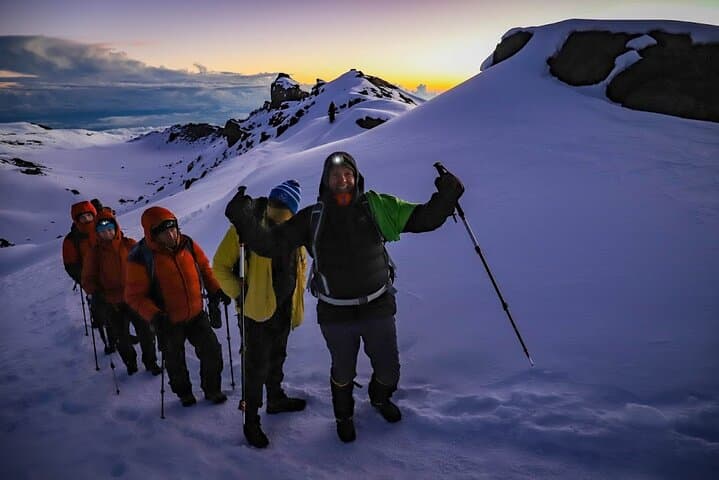
Practical edge: the itinerary balances daily gains (typical day distances 3.5–13 km) with extra acclimatization stops like Lava Tower and Cathedral Peak. Expect long summit night hours — a midnight departure and 6–8 hours to reach the crater rim — and a demanding descent afterward. Tents are four-season; food is hearty and cooked by the team.
How to prepare: train with long uphill hikes, practice walking on scree, and build aerobic stamina. Bring layered clothing for large temperature swings, a reliable headlamp for summit time, and boots with good ankle support. Hydrate deliberately at altitude and use the ‘pole-pole’ approach (slowly, slowly) that guides on Kilimanjaro insist upon.
Logistics: pickups are handled from Moshi hotels or Kilimanjaro Airport; permits and park fees are included. Respect park rules: leave no trace, follow guide instructions, and tip porters and guides as customary. The Lemosho route rewards patience — reach the crater at sunrise and the view will make every uphill hour feel earned.
challenging.
8 days.
Good aerobic fitness; ability to hike 5–8 hours a day at altitude, plus experience on steep scree is helpful.
Success varies with fitness and weather, but 8-day Lemosho has one of the better success rates because of its acclimatization profile.
No technical climbing is required; crampons and ice axe are rarely necessary on standard Lemosho routes, but guides will advise if conditions demand them.
The crew carries pulse oximeters, oxygen tanks and first-aid equipment, but evacuation costs are typically not included—travel insurance covering high-altitude rescue is recommended.
You should have good cardiovascular fitness and experience with multi-day hikes; training on hills and long days with a pack prepares you best.
Meals are prepared by a kitchen team and included; drinkable water is provided after treatment or filtration—bring a reusable bottle and purification tablets if desired.
Pickup from Moshi hotels or Kilimanjaro Airport is included; exact pickup time is confirmed on booking and a company representative will meet you in uniform.
Kibo’s volcanic activity shaped the plateau and caldera; the Chagga people farmed Kilimanjaro’s slopes and remain the mountain’s closest cultural stewards.
Park fees fund conservation and local communities; stay on trails, avoid single-use plastics, and follow guide instructions to minimize impact.
Kilele Climb Tours Co Ltd operates guided outdoor trips and adventures with an emphasis on safety, stewardship, and memorable experiences.
Before dawn the silhouette of Kibo sits like an impossible cathedral above the clouds — a dark tooth of volcanic rock capped in ice, daring you to move. On the Lemosho Route the mountain unfolds slowly: first an emerald band of montane forest where colobus monkeys watch from high branches, then a wide, bleached Shira Plateau that feels like another planet, and finally the thin, cold air above Barafu where every step becomes measured against breath.
Before dawn the silhouette of Kibo sits like an impossible cathedral above the clouds — a dark tooth of volcanic rock capped in ice, daring you to move. On the Lemosho Route the mountain unfolds slowly: first an emerald band of montane forest where colobus monkeys watch from high branches, then a wide, bleached Shira Plateau that feels like another planet, and finally the thin, cold air above Barafu where every step becomes measured against breath.
The Lemosho approach is one of Kilimanjaro’s most gradual itineraries, built to maximize acclimatization. The route traces old lava flows and eroded calderas formed by Kibo’s ancient eruptions; Shira itself is the remnant of a collapsed peak. For centuries the Chagga people lived on Kilimanjaro’s lower slopes, farming and telling stories of the mountain’s glaciers long before it became a global challenge for climbers.
Cultural cues are simple but present: Moshi’s markets send last-minute supplies, guides speak both English and KiSwahili, and the crew — cooks and porters — are central to the rhythm of the trip. The outfit running this private eight-day program provides full camping gear, a staffed dining tent, pulse oximeters, and portable oxygen for emergencies. That support lets hikers concentrate on the terrain: montane forest (1,200–2,850 m), moorland and heath (up to 3,800 m), an alpine desert on the Barafu ridge, and finally snow and ice near Stella Point and Uhuru Peak (5,895 m).
Practical edge: the itinerary balances daily gains (typical day distances 3.5–13 km) with extra acclimatization stops like Lava Tower and Cathedral Peak. Expect long summit night hours — a midnight departure and 6–8 hours to reach the crater rim — and a demanding descent afterward. Tents are four-season; food is hearty and cooked by the team.
How to prepare: train with long uphill hikes, practice walking on scree, and build aerobic stamina. Bring layered clothing for large temperature swings, a reliable headlamp for summit time, and boots with good ankle support. Hydrate deliberately at altitude and use the ‘pole-pole’ approach (slowly, slowly) that guides on Kilimanjaro insist upon.
Logistics: pickups are handled from Moshi hotels or Kilimanjaro Airport; permits and park fees are included. Respect park rules: leave no trace, follow guide instructions, and tip porters and guides as customary. The Lemosho route rewards patience — reach the crater at sunrise and the view will make every uphill hour feel earned.