THE ADVENTURE COLLECTIVE® · Independent discovery and booking for outdoor travel

A long, single-day ascent from Machame Gate to the windswept Shira Plateau offers a condensed Kilimanjaro experience: rainforest, waterfalls, alpine moorland and sweeping views of Kibo Peak in 9–10 hours. Ideal for travelers short on time who can manage significant altitude gain.
A long, single-day ascent from Machame Gate to the windswept Shira Plateau offers a condensed Kilimanjaro experience: rainforest, waterfalls, alpine moorland and sweeping views of Kibo Peak in 9–10 hours. Ideal for travelers short on time who can manage significant altitude gain.
The morning bus eases out of Moshi before sunrise and the silhouette of Kilimanjaro grows like a slow-eyed giant on the horizon. By the time guides check permits at Machame Gate (1,640 m) the rainforest is already busy — vervet and blue monkeys shifting through the moss-draped canopy, turacos calling like a far-off horn. The trail climbs without mercy, first through a dim, fern-heavy jungle where the air smells of wet earth, then cleaves upward into heather and moorland, opening into the broad, wind-swept Shira Plateau at roughly 3,800 m.
Verified experiences and guided adventures in the surrounding area.
Operated by 21 Africa safaris · Moshi, Kilimanjaro Region
The morning bus eases out of Moshi before sunrise and the silhouette of Kilimanjaro grows like a slow-eyed giant on the horizon. By the time guides check permits at Machame Gate (1,640 m) the rainforest is already busy — vervet and blue monkeys shifting through the moss-draped canopy, turacos calling like a far-off horn. The trail climbs without mercy, first through a dim, fern-heavy jungle where the air smells of wet earth, then cleaves upward into heather and moorland, opening into the broad, wind-swept Shira Plateau at roughly 3,800 m.
This is a one-day window onto Kilimanjaro’s layered geology: the gate sits on old volcanic soils at the forest edge; higher, the trail crosses pumice and basalt left by the mountain’s three volcanic cones. The Machame Route itself is a relatively recent development in the history of alpine travel on Kilimanjaro, favored for its varied scenery and dramatic views of Kibo Peak. Cultural notes arrive in small ways — Chagga farmers tend terraces lower down, and porters’ practiced pace is a reminder that respectful guiding and local livelihoods still make these one-day ascents possible.
Expect roughly 14–18 km round-trip and about 2,100–2,200 m of elevation gain if you push to the Shira Ridge viewpoints. Terrain moves from packed earth and exposed roots in the forest to loose volcanic scree and tussock grass on the plateau. Weather can flip quickly; the plateau behaves like an ocean, wind pushing and pulling hikers toward shelter. Take altitude seriously — though this day trip doesn’t aim for the summit, lumbar pressure and head discomfort are common at 3,000–3,800 m.
Practical planning: pickups are offered from Arusha (7:00) and Moshi (8:30), the full day runs about 9–10 hours door-to-door, and the hike includes a guide, porters, lunch and park fees. Bring at least 2–3 liters of water, a layered system (base layer, fleece, wind/rain shell), and sturdy boots with good ankle support. Pace yourself — walk slow, eat steadily, and tell your guide if you feel dizzy or nauseous. Photographers should time the plateau for late afternoon light on Kibo, while birders will want the quieter dawn in the forest.
This itinerary is a compact but demanding way to sample Kilimanjaro’s vertical world without multi-day camping. It’s ideal for travelers short on time who understand that altitude, not technical difficulty, is the real test. Leave no trace: stay on marked trails, carry out waste, and support operators who pay fair wages to porters — they are the reason a single-day glimpse of this mountain can feel so full-bodied and immediate.
challenging.
9–10 hours.
Good aerobic fitness recommended — expect sustained uphill hiking with steep sections and high-altitude exposure.
The trail is non-technical, but the rapid elevation gain (to ~3,800 m) makes it physically demanding; beginners in good general fitness can do it but should be cautious of altitude symptoms.
Yes — the advertised package includes park fees, guide services, lunch, bottled water and all taxes.
Plan on approximately 14–18 km round-trip with about 2,100–2,200 m of elevation gain if you reach Shira Ridge viewpoints.
While not mandatory for a single day, spending a night in Moshi or doing a light acclimatization walk before the hike reduces risk of altitude discomfort.
Typical returns are late afternoon — expect to be back in Moshi or Arusha by 5:00–6:00 PM depending on traffic and pace.
This hike is not recommended for people with serious back, heart conditions or pregnant travelers; infants must sit on laps and special seats are available.
Kilimanjaro is a stratovolcano with three volcanic cones; local Chagga communities historically farmed its lower slopes and maintain mountain hospitality traditions.
Kilimanjaro National Park enforces permits and limits to protect fragile alpine ecosystems—stick to trails, pack out waste, and choose operators who pay porters fair wages.
21 Africa safaris operates guided outdoor trips and adventures with an emphasis on safety, stewardship, and memorable experiences.
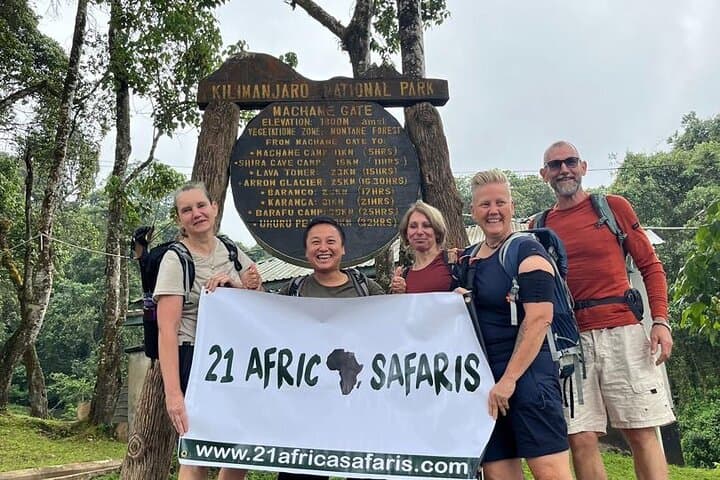
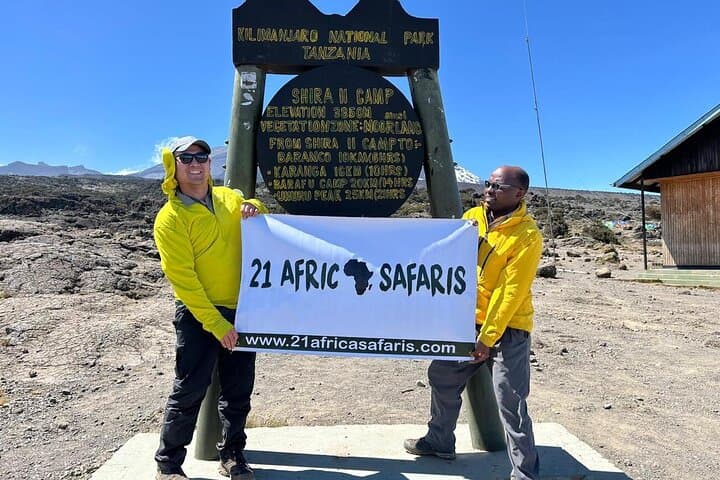
The morning bus eases out of Moshi before sunrise and the silhouette of Kilimanjaro grows like a slow-eyed giant on the horizon. By the time guides check permits at Machame Gate (1,640 m) the rainforest is already busy — vervet and blue monkeys shifting through the moss-draped canopy, turacos calling like a far-off horn. The trail climbs without mercy, first through a dim, fern-heavy jungle where the air smells of wet earth, then cleaves upward into heather and moorland, opening into the broad, wind-swept Shira Plateau at roughly 3,800 m.
The morning bus eases out of Moshi before sunrise and the silhouette of Kilimanjaro grows like a slow-eyed giant on the horizon. By the time guides check permits at Machame Gate (1,640 m) the rainforest is already busy — vervet and blue monkeys shifting through the moss-draped canopy, turacos calling like a far-off horn. The trail climbs without mercy, first through a dim, fern-heavy jungle where the air smells of wet earth, then cleaves upward into heather and moorland, opening into the broad, wind-swept Shira Plateau at roughly 3,800 m.
This is a one-day window onto Kilimanjaro’s layered geology: the gate sits on old volcanic soils at the forest edge; higher, the trail crosses pumice and basalt left by the mountain’s three volcanic cones. The Machame Route itself is a relatively recent development in the history of alpine travel on Kilimanjaro, favored for its varied scenery and dramatic views of Kibo Peak. Cultural notes arrive in small ways — Chagga farmers tend terraces lower down, and porters’ practiced pace is a reminder that respectful guiding and local livelihoods still make these one-day ascents possible.
Expect roughly 14–18 km round-trip and about 2,100–2,200 m of elevation gain if you push to the Shira Ridge viewpoints. Terrain moves from packed earth and exposed roots in the forest to loose volcanic scree and tussock grass on the plateau. Weather can flip quickly; the plateau behaves like an ocean, wind pushing and pulling hikers toward shelter. Take altitude seriously — though this day trip doesn’t aim for the summit, lumbar pressure and head discomfort are common at 3,000–3,800 m.
Practical planning: pickups are offered from Arusha (7:00) and Moshi (8:30), the full day runs about 9–10 hours door-to-door, and the hike includes a guide, porters, lunch and park fees. Bring at least 2–3 liters of water, a layered system (base layer, fleece, wind/rain shell), and sturdy boots with good ankle support. Pace yourself — walk slow, eat steadily, and tell your guide if you feel dizzy or nauseous. Photographers should time the plateau for late afternoon light on Kibo, while birders will want the quieter dawn in the forest.
This itinerary is a compact but demanding way to sample Kilimanjaro’s vertical world without multi-day camping. It’s ideal for travelers short on time who understand that altitude, not technical difficulty, is the real test. Leave no trace: stay on marked trails, carry out waste, and support operators who pay fair wages to porters — they are the reason a single-day glimpse of this mountain can feel so full-bodied and immediate.