THE ADVENTURE COLLECTIVE® · Independent discovery and booking for outdoor travel

Paddle quiet channels beneath ancient limestone towers and through teeming mangroves on a four‑hour guided tour of Langkawi’s Kilim Karst Geoforest Park. Expect wildlife sightings, a floating fish farm stop and practical, family‑friendly kayaking.
Paddle quiet channels beneath ancient limestone towers and through teeming mangroves on a four‑hour guided tour of Langkawi’s Kilim Karst Geoforest Park. Expect wildlife sightings, a floating fish farm stop and practical, family‑friendly kayaking.
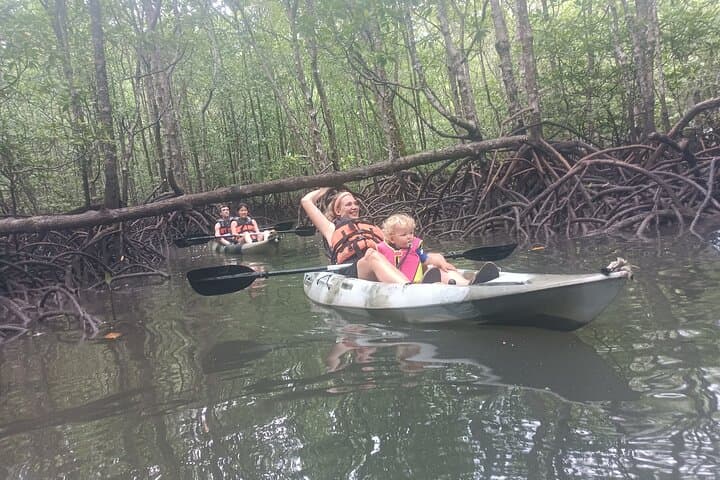
The paddle slices a green corridor open — mangrove roots curve like the ribs of the shore, limestone towers loom from the water and an eagle wheelingly inspects the group from a jagged outcrop. In the Kilim Karst Geoforest Park, kayakers move quietly through channels where river, rainforest and sea meet, watching otters slip and kingfishers perch just beyond reach.
Verified experiences and guided adventures in the surrounding area.
Operated by Fauna Flora Eco Sdn. Bhd. · Kuah, Kedah
The paddle slices a green corridor open — mangrove roots curve like the ribs of the shore, limestone towers loom from the water and an eagle wheelingly inspects the group from a jagged outcrop. In the Kilim Karst Geoforest Park, kayakers move quietly through channels where river, rainforest and sea meet, watching otters slip and kingfishers perch just beyond reach.
Geologically this coastline is ancient: Ordovician-to-Silurian limestones folded and eroded over 380–450 million years form sheer cliffs, caves and sheltered inlets. The mangroves are both nursery and shoreline armor; local fishing communities and floating fish farms still use these waterways, and guides often point out the spots where fruit bats roost and where shell middens hint at long-term human use.
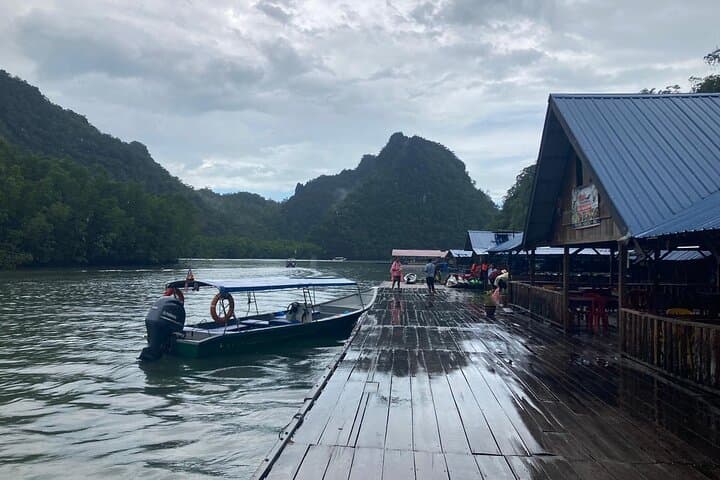
A typical half-day tour lasts about four hours and mixes short walks (a cave/bat viewing), a visit to a floating fish farm for a demo and lunch, plus roughly two hours of guided paddling inside the mangrove channels. Expect narrow tidal channels, shallow mudflats at low tide, and the occasional chop near the river mouth. Guides provide drybags, lifevests and a basic lunch; groups are small (under 10), making wildlife sightings easier.
Practical advice: start early to avoid midday heat, wear quick-dry layers and reef shoes, hydrate, and bring binoculars and sunscreen. Follow the guide’s wildlife etiquette — no feeding — and be prepared for tropical weather; rain can turn a calm canal into a lively, leaf-strewn ride. This is a focused, accessible paddle that puts geology and wildlife front and center while remaining family-friendly for active travelers.
moderate.
4 hours.
Moderate fitness; you should be comfortable paddling for stretches of 20–30 minutes and walking short uneven paths.
No — tours are guided and provide basic instruction; participants should be able to sit and paddle for segments of the trip.
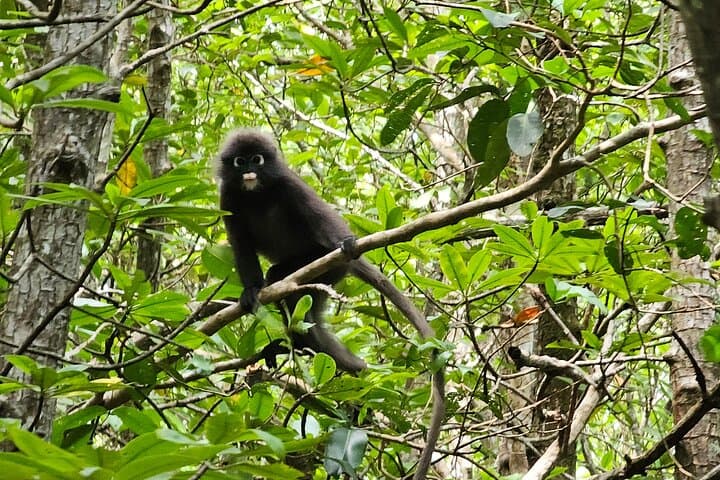
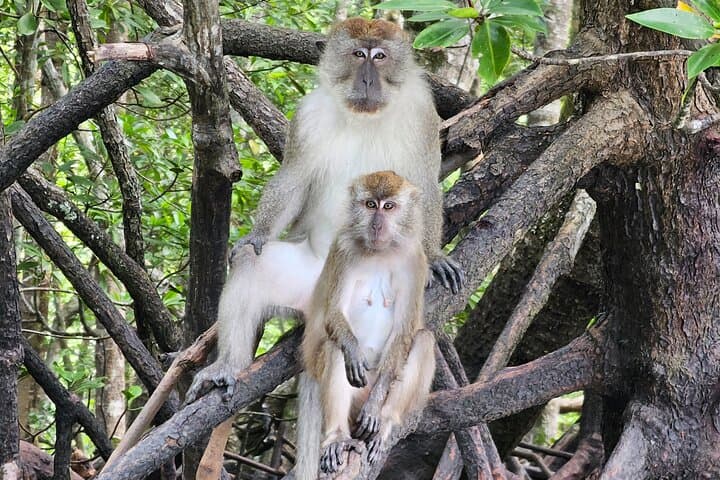
Common sightings include white-bellied sea eagles, long-tailed macaques, otters and kingfishers; sightings vary by season and time of day.
Yes for supervised children; life vests are provided and operators set group limits, though infants must sit on an adult’s lap and very young children may be discouraged.
Tours operate in light rain but can be canceled ahead of time for severe weather; check the operator’s 24‑hour cancellation window and local forecasts.
Local communities have used the Kilim waterways for fishing and transport for generations; the karst formations are remnants of ancient marine sediments uplifted and sculpted over hundreds of millions of years.
The geoforest is a protected area; stick to guided routes, avoid littering and do not disturb wildlife to reduce impacts on sensitive mangrove and karst habitats.
Fauna Flora Eco Sdn. Bhd. operates guided outdoor trips and adventures with an emphasis on safety, stewardship, and memorable experiences.
The paddle slices a green corridor open — mangrove roots curve like the ribs of the shore, limestone towers loom from the water and an eagle wheelingly inspects the group from a jagged outcrop. In the Kilim Karst Geoforest Park, kayakers move quietly through channels where river, rainforest and sea meet, watching otters slip and kingfishers perch just beyond reach.
The paddle slices a green corridor open — mangrove roots curve like the ribs of the shore, limestone towers loom from the water and an eagle wheelingly inspects the group from a jagged outcrop. In the Kilim Karst Geoforest Park, kayakers move quietly through channels where river, rainforest and sea meet, watching otters slip and kingfishers perch just beyond reach.
Geologically this coastline is ancient: Ordovician-to-Silurian limestones folded and eroded over 380–450 million years form sheer cliffs, caves and sheltered inlets. The mangroves are both nursery and shoreline armor; local fishing communities and floating fish farms still use these waterways, and guides often point out the spots where fruit bats roost and where shell middens hint at long-term human use.
A typical half-day tour lasts about four hours and mixes short walks (a cave/bat viewing), a visit to a floating fish farm for a demo and lunch, plus roughly two hours of guided paddling inside the mangrove channels. Expect narrow tidal channels, shallow mudflats at low tide, and the occasional chop near the river mouth. Guides provide drybags, lifevests and a basic lunch; groups are small (under 10), making wildlife sightings easier.
Practical advice: start early to avoid midday heat, wear quick-dry layers and reef shoes, hydrate, and bring binoculars and sunscreen. Follow the guide’s wildlife etiquette — no feeding — and be prepared for tropical weather; rain can turn a calm canal into a lively, leaf-strewn ride. This is a focused, accessible paddle that puts geology and wildlife front and center while remaining family-friendly for active travelers.