THE ADVENTURE COLLECTIVE® · Independent discovery and booking for outdoor travel

A private, two-hour walking tour designed for families that turns Venice’s iconic sites — San Marco, Rialto and hidden campos — into a kid-friendly adventure with games, history, and practical insights.
A private, two-hour walking tour designed for families that turns Venice’s iconic sites — San Marco, Rialto and hidden campos — into a kid-friendly adventure with games, history, and practical insights.
The guide waits beneath the shadow of San Zaccaria’s bell tower, a bright flag in hand and a stack of picture cards for the children. Behind them, the lagoon works quietly — tides rehearsing their slow, predictable push against stone and pier. For the next two hours the city becomes a playground: narrow calle, low bridges daring little feet to run, and canals that whisper stories of merchants and mariners.
Verified experiences and guided adventures in the surrounding area.
Operated by Tour with Kids · Venice, Veneto
The guide waits beneath the shadow of San Zaccaria’s bell tower, a bright flag in hand and a stack of picture cards for the children. Behind them, the lagoon works quietly — tides rehearsing their slow, predictable push against stone and pier. For the next two hours the city becomes a playground: narrow calle, low bridges daring little feet to run, and canals that whisper stories of merchants and mariners.
You move from the hush of the church into the theatrical space of Piazza San Marco, where basilica mosaics flare and pigeons sidle up like small, gray locals. The route threads past the house once associated with Marco Polo and through Campo San Bartolomeo, where a statue of Carlo Goldoni keeps watch over rowdy markets. Along the way the guide pairs short history bites with games — a scavenger hunt for Renaissance details, a map puzzle of Venice’s islands — keeping attention sharp and legs moving.
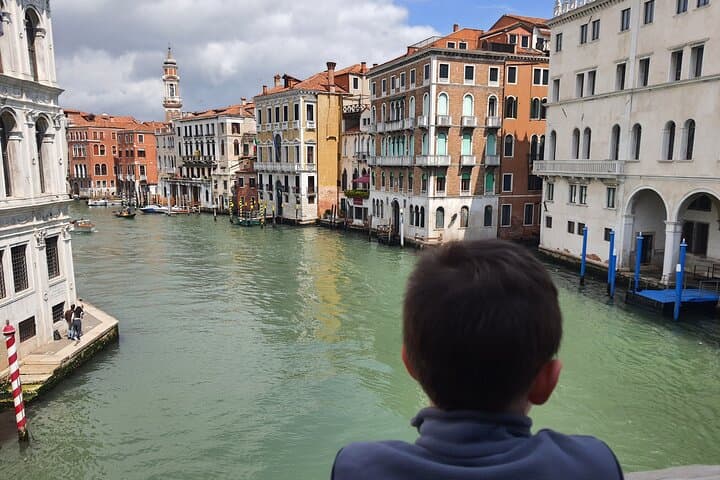
Venice is built on shifting mud and timber piles driven into the lagoon floor; the city’s architecture is a product of trade and engineering as much as art. Rialto’s bridge marks the old commercial heart: once crates of spices and bolts of silk clattered along those streets. That commercial past still lives in the mercato’s scents and the hands-on bustle around the bridge.
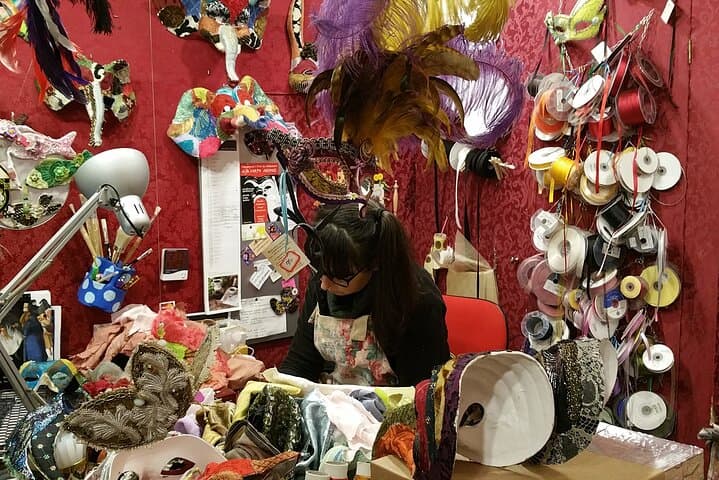
Culturally the tour offers a compact primer: why canals replaced streets, how Venetian masks and guilds shaped civic life, and why cicchetti culture makes food a social pause rather than a hurried meal. The experience is practical as well as playful — expect 1–2 short stops for snacks or photos, and a steady, family-friendly pace that balances sightseeing with wiggle-room for kids.
Practicalities matter: meet in front of San Zaccaria (quiet compared with the main square), and the walk ends in the Rialto district. The tour is private and designed for children six and up; it’s labeled physically easy but Venice’s bridges include steps — strollers are usable in parts but a lightweight carrier is recommended for infants. Bring water, sun protection, and shoes with grip for damp steps. Note: on some dates a municipal access fee (around €5) may apply to day visitors staying off-island. Bookings require manual confirmation and are nonrefundable.
By the time the tour finishes near Rialto, canals no longer feel foreign; they’ve become companions — routes of sound and shadow. Children leave with trivia badges and adults leave with context: a short, concentrated introduction to a city that rewards afternoons of wandering and evenings of quiet, canal-side pauses.
easy.
2 hours.
Suitable for families and casual walkers; children should be able to walk short distances and handle stairs.
Meet just in front of San Zaccaria church; the tour concludes in the Rialto district near the bridge and market.
The tour is recommended for children aged 6 and above, but infants can join if carried in a lightweight carrier since many bridges have steps.
No—this walking tour focuses on exterior highlights and storytelling; entry fees to museums or basilicas are not included.
Guides are local and typically speak English; confirm language availability at booking as private tours may offer other languages on request.
Parts of the route are accessible with a stroller, but many bridges have steps; a carrier is recommended for uninterrupted movement.
Yes—short snack stops are common and there are opportunities near Rialto to sample cicchetti, but avoid eating in restricted historic sites.
Venice rose from lagoon islands through maritime trade; Rialto became the commercial core, while civic institutions and guilds shaped the city’s public life.
Venice faces challenges from overtourism and tidal flooding; support local businesses, follow waste rules, and avoid feeding wildlife to reduce impact.
Tour with Kids operates guided outdoor trips and adventures with an emphasis on safety, stewardship, and memorable experiences.
The guide waits beneath the shadow of San Zaccaria’s bell tower, a bright flag in hand and a stack of picture cards for the children. Behind them, the lagoon works quietly — tides rehearsing their slow, predictable push against stone and pier. For the next two hours the city becomes a playground: narrow calle, low bridges daring little feet to run, and canals that whisper stories of merchants and mariners.
The guide waits beneath the shadow of San Zaccaria’s bell tower, a bright flag in hand and a stack of picture cards for the children. Behind them, the lagoon works quietly — tides rehearsing their slow, predictable push against stone and pier. For the next two hours the city becomes a playground: narrow calle, low bridges daring little feet to run, and canals that whisper stories of merchants and mariners.
You move from the hush of the church into the theatrical space of Piazza San Marco, where basilica mosaics flare and pigeons sidle up like small, gray locals. The route threads past the house once associated with Marco Polo and through Campo San Bartolomeo, where a statue of Carlo Goldoni keeps watch over rowdy markets. Along the way the guide pairs short history bites with games — a scavenger hunt for Renaissance details, a map puzzle of Venice’s islands — keeping attention sharp and legs moving.
Venice is built on shifting mud and timber piles driven into the lagoon floor; the city’s architecture is a product of trade and engineering as much as art. Rialto’s bridge marks the old commercial heart: once crates of spices and bolts of silk clattered along those streets. That commercial past still lives in the mercato’s scents and the hands-on bustle around the bridge.
Culturally the tour offers a compact primer: why canals replaced streets, how Venetian masks and guilds shaped civic life, and why cicchetti culture makes food a social pause rather than a hurried meal. The experience is practical as well as playful — expect 1–2 short stops for snacks or photos, and a steady, family-friendly pace that balances sightseeing with wiggle-room for kids.
Practicalities matter: meet in front of San Zaccaria (quiet compared with the main square), and the walk ends in the Rialto district. The tour is private and designed for children six and up; it’s labeled physically easy but Venice’s bridges include steps — strollers are usable in parts but a lightweight carrier is recommended for infants. Bring water, sun protection, and shoes with grip for damp steps. Note: on some dates a municipal access fee (around €5) may apply to day visitors staying off-island. Bookings require manual confirmation and are nonrefundable.
By the time the tour finishes near Rialto, canals no longer feel foreign; they’ve become companions — routes of sound and shadow. Children leave with trivia badges and adults leave with context: a short, concentrated introduction to a city that rewards afternoons of wandering and evenings of quiet, canal-side pauses.