THE ADVENTURE COLLECTIVE® · Independent discovery and booking for outdoor travel

Walk Kibera with a local guide to see markets, nursery schools, and an innovative biogas project that powers homes. This half-day cultural tour offers an unvarnished look at daily life and community-led solutions in Nairobi’s largest informal settlement.
Walk Kibera with a local guide to see markets, nursery schools, and an innovative biogas project that powers homes. This half-day cultural tour offers an unvarnished look at daily life and community-led solutions in Nairobi’s largest informal settlement.
A narrow lane opens into morning light and the clatter of a working neighborhood — charcoal sellers call out, nursery-school children line up with tiny backpacks, and women sweep front stoops as a local guide leads you past corrugated iron roofs. This half-day guided walk through Kibera presents a grounded view of day-to-day life in one of Nairobi’s largest informal settlements, where improvisation and community projects shape daily routines.
Verified experiences and guided adventures in the surrounding area.
Operated by Muringa Kenya Tours & Safaris Ltd · Nairobi, Nairobi County
A narrow lane opens into morning light and the clatter of a working neighborhood — charcoal sellers call out, nursery-school children line up with tiny backpacks, and women sweep front stoops as a local guide leads you past corrugated iron roofs. This half-day guided walk through Kibera presents a grounded view of day-to-day life in one of Nairobi’s largest informal settlements, where improvisation and community projects shape daily routines.
Kibera’s roots extend from colonial-era labor settlements to decades of rapid urban growth; what began as temporary housing became dense, permanent neighborhoods. Geologically the area sits on Nairobi’s plateau — firm red soils and shallow drainage channels shape narrow footpaths rather than tree-lined trails. Culture here is vivid and pragmatic: markets, handcraft workshops that repurpose bone and metal, community-run schools, and an experimental biogas project that uses human waste to generate energy for homes.
Expect close-up encounters with everyday commerce and social enterprise rather than staged attractions. The guide will typically explain sanitation initiatives, local microenterprises, and education partnerships while respecting household privacy. Practical guidance: wear sturdy, closed-toe shoes for uneven ground; dress modestly and ask before photographing people; carry bottled water and small change for purchases. The tour runs about four hours with hotel pickup and is suitable for most fitness levels, though mobility constraints may make some lanes difficult.
A visit here rewards patience and respectful curiosity: you’ll leave with a clearer sense of Nairobi’s urban dynamics and the community-led innovations quietly reshaping livelihoods.
easy.
3–4 hours.
Suitable for most fitness levels; expect standing and walking on uneven surfaces for several hours.
Guided visits are generally safe when organized through reputable operators; guides navigate appropriate routes and brief visitors on etiquette and safety.
Yes, but always ask for permission before photographing people or inside homes; some residents may decline.
Children can join, but consider noise and crowd sensitivity; infants are typically expected to sit on an adult’s lap during transfers.
Most bookings include hotel pickup and drop-off within Nairobi—confirm pickup location and time when you book.
Kibera grew from colonial-era squatter settlements into a dense urban neighborhood; decades of informal development have produced strong community networks and grassroots initiatives.
Visitors should support community-led projects and minimize waste; the area benefits from responsible tourism, donations to education programs, and initiatives like biogas that reduce reliance on charcoal.
Muringa Kenya Tours & Safaris Ltd operates guided outdoor trips and adventures with an emphasis on safety, stewardship, and memorable experiences.

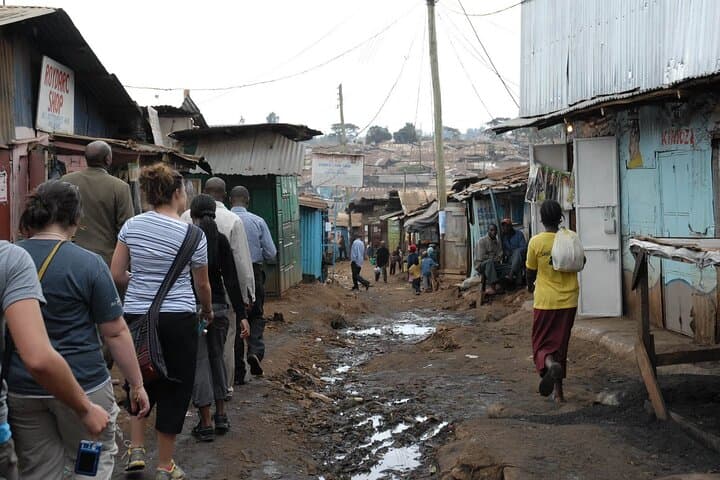

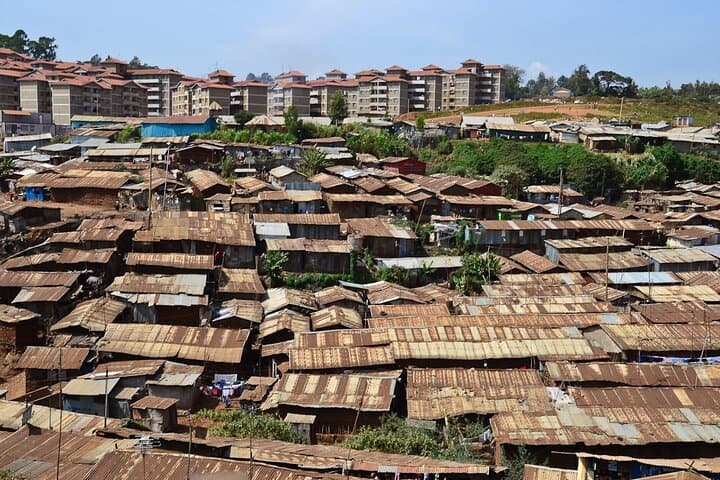
A narrow lane opens into morning light and the clatter of a working neighborhood — charcoal sellers call out, nursery-school children line up with tiny backpacks, and women sweep front stoops as a local guide leads you past corrugated iron roofs. This half-day guided walk through Kibera presents a grounded view of day-to-day life in one of Nairobi’s largest informal settlements, where improvisation and community projects shape daily routines.
A narrow lane opens into morning light and the clatter of a working neighborhood — charcoal sellers call out, nursery-school children line up with tiny backpacks, and women sweep front stoops as a local guide leads you past corrugated iron roofs. This half-day guided walk through Kibera presents a grounded view of day-to-day life in one of Nairobi’s largest informal settlements, where improvisation and community projects shape daily routines.
Kibera’s roots extend from colonial-era labor settlements to decades of rapid urban growth; what began as temporary housing became dense, permanent neighborhoods. Geologically the area sits on Nairobi’s plateau — firm red soils and shallow drainage channels shape narrow footpaths rather than tree-lined trails. Culture here is vivid and pragmatic: markets, handcraft workshops that repurpose bone and metal, community-run schools, and an experimental biogas project that uses human waste to generate energy for homes.
Expect close-up encounters with everyday commerce and social enterprise rather than staged attractions. The guide will typically explain sanitation initiatives, local microenterprises, and education partnerships while respecting household privacy. Practical guidance: wear sturdy, closed-toe shoes for uneven ground; dress modestly and ask before photographing people; carry bottled water and small change for purchases. The tour runs about four hours with hotel pickup and is suitable for most fitness levels, though mobility constraints may make some lanes difficult.
A visit here rewards patience and respectful curiosity: you’ll leave with a clearer sense of Nairobi’s urban dynamics and the community-led innovations quietly reshaping livelihoods.