THE ADVENTURE COLLECTIVE® · Independent discovery and booking for outdoor travel

Walk through the lanes of Kibera on a four-hour, guide-led visit that blends community projects, local craft workshops, and everyday life. This practical half-day tour focuses on respectful engagement and hands-on insights into urban resilience.
Walk through the lanes of Kibera on a four-hour, guide-led visit that blends community projects, local craft workshops, and everyday life. This practical half-day tour focuses on respectful engagement and hands-on insights into urban resilience.
You step out of the minivan into a network of narrow lanes where life moves at street level: women balancing water jerrycans, children darting between stalls, and the market’s rhythm pushing the air forward. The guide leads you down the main road into Soweto Village homesteads — a compact, human-scale landscape where ingenuity meets necessity.
Verified experiences and guided adventures in the surrounding area.
Operated by Muringa Kenya Tours & Safaris Ltd · Nairobi, Nairobi County
You step out of the minivan into a network of narrow lanes where life moves at street level: women balancing water jerrycans, children darting between stalls, and the market’s rhythm pushing the air forward. The guide leads you down the main road into Soweto Village homesteads — a compact, human-scale landscape where ingenuity meets necessity.
Kibera began expanding in the early 20th century as labor migration to Nairobi outpaced housing; today it’s a dense, largely informal neighborhood that reveals urban Kenya’s social and economic history. Geologically the area sits on Nairobi’s highland plain, so expect flat, often compacted dirt and concrete paths rather than steep climbs. Culturally, the walk highlights community initiatives: curio workshops recycling bones into ornaments, nursery schools supported by donations, and a pioneering biogas plant converting human waste into usable energy.
On this half-day tour you’ll cover short distances at walking pace (roughly 1–3 km of lanes and compounds over two walking hours), guided interactions with residents, and visits to community projects. Practicalities matter: wear closed-toe shoes for uneven surfaces, carry water and small Kenyan shillings for purchases or donations, and follow your guide’s cues when photographing people.
This is a listening walk more than a sightseeing sprint — expect to encounter everyday commerce, resilient local enterprise, and candid conversations. Morning departures avoid the heat and give clearer access to schools and workshops. Keep curiosity paired with respect: ask before photographing, accept invitations slowly, and treat the visit as a cultural exchange that supports local economies.
easy.
4 hours.
Suitable for most fitness levels; involves 1–3 km of mostly flat walking with short stops.
Yes; tours are guide-led with hotel pickup and drop-off in Nairobi. Follow the guide’s instructions, avoid showing valuables, and stay with the group.
Families are welcome; the tour is low-impact but consider age and attention span — photography and interactions require supervision.
The listed service includes an English-speaking guide; local staff may also speak Kiswahili and other Kenyan languages.
Hotel pickup and drop-off, transport, and the guided walking tour through Kibera’s community sites; personal purchases and gratuities are not included.
Kibera expanded during colonial and post-colonial labor migrations to Nairobi and grew as informal housing for workers; many community structures emerged through grassroots initiatives.
Local NGOs and social enterprises run sanitation, schooling, and recycling programs; visitors are encouraged to minimize waste and support community-run initiatives directly.
Muringa Kenya Tours & Safaris Ltd operates guided outdoor trips and adventures with an emphasis on safety, stewardship, and memorable experiences.



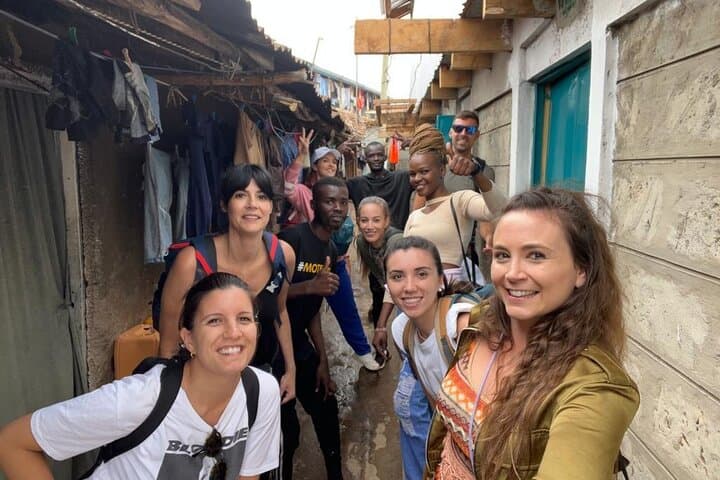
You step out of the minivan into a network of narrow lanes where life moves at street level: women balancing water jerrycans, children darting between stalls, and the market’s rhythm pushing the air forward. The guide leads you down the main road into Soweto Village homesteads — a compact, human-scale landscape where ingenuity meets necessity.
You step out of the minivan into a network of narrow lanes where life moves at street level: women balancing water jerrycans, children darting between stalls, and the market’s rhythm pushing the air forward. The guide leads you down the main road into Soweto Village homesteads — a compact, human-scale landscape where ingenuity meets necessity.
Kibera began expanding in the early 20th century as labor migration to Nairobi outpaced housing; today it’s a dense, largely informal neighborhood that reveals urban Kenya’s social and economic history. Geologically the area sits on Nairobi’s highland plain, so expect flat, often compacted dirt and concrete paths rather than steep climbs. Culturally, the walk highlights community initiatives: curio workshops recycling bones into ornaments, nursery schools supported by donations, and a pioneering biogas plant converting human waste into usable energy.
On this half-day tour you’ll cover short distances at walking pace (roughly 1–3 km of lanes and compounds over two walking hours), guided interactions with residents, and visits to community projects. Practicalities matter: wear closed-toe shoes for uneven surfaces, carry water and small Kenyan shillings for purchases or donations, and follow your guide’s cues when photographing people.
This is a listening walk more than a sightseeing sprint — expect to encounter everyday commerce, resilient local enterprise, and candid conversations. Morning departures avoid the heat and give clearer access to schools and workshops. Keep curiosity paired with respect: ask before photographing, accept invitations slowly, and treat the visit as a cultural exchange that supports local economies.