THE ADVENTURE COLLECTIVE® · Independent discovery and booking for outdoor travel

Walk Toi Market, meet bead artisans and see the Victorious Bone Crafts cooperative on a private, guided visit through Kibera. This four‑to‑five‑hour tour pairs close cultural encounters with practical insights into daily life in one of Nairobi’s largest informal settlements.
Walk Toi Market, meet bead artisans and see the Victorious Bone Crafts cooperative on a private, guided visit through Kibera. This four‑to‑five‑hour tour pairs close cultural encounters with practical insights into daily life in one of Nairobi’s largest informal settlements.
You step from the vehicle into a maze of narrow alleys where corrugated roofs and stalls press close; the air carries the sharp tang of market spices, second‑hand fabric and fresh beadwork. A guide moves ahead, opening doors into homes and workshops, translating the daily rhythm of a community that turned scarcity into craft.
Verified experiences and guided adventures in the surrounding area.
Operated by Kairi Tours and Safaris · Nairobi, Nairobi County
You step from the vehicle into a maze of narrow alleys where corrugated roofs and stalls press close; the air carries the sharp tang of market spices, second‑hand fabric and fresh beadwork. A guide moves ahead, opening doors into homes and workshops, translating the daily rhythm of a community that turned scarcity into craft.
Kibera began as a labor camp during the Ugandan Railway construction in the late 19th century and evolved into one of Africa’s largest informal neighborhoods, now home to roughly a quarter million people. The ground here is the high Nairobi plateau—firm red soils and gentle slopes that slope toward the city center. Culture is visible in practical artistry: beads strung into necklaces, bones and metal repurposed into bowls and jewelry, and small businesses that supply Nairobi’s wider economy.
Expect a four‑ to five‑hour private walking tour that visits Toi Market, bead studios, and the Victorious Bone Crafts cooperative, and includes a guided visit to a typical household. Conversation and commerce are central; the tour emphasizes one‑on‑one interactions rather than voyeuristic observation.
Practicalities are straightforward: wear closed‑toe shoes for uneven ground, carry water and small change for purchases, and follow your guide’s lead when photographing people. Transport, guide and a guard are usually included, and this is a chance to support local entrepreneurs directly. Move with curiosity and respect—Kibera’s resilience is best seen through the steady work and ingenuity of its residents.
easy.
4–5 hours.
Suitable for most fitness levels; expect moderate walking with some standing and negotiating tight spaces
Tours include a local guide and guard and follow established routes; stick with the group, follow guide instructions, and avoid showing valuables.
Yes—beadwork, bone crafts and small household items are commonly sold; purchases directly support local artisans.
Generally yes, but children should be supervised in tight alleys and around busy market areas; discuss age and mobility with the operator when booking.
Always ask permission first; some people may ask for a small fee—respect personal boundaries and follow your guide’s advice.
Kibera grew from a late‑19th century railway labor camp; it expanded through the 20th century into a dense, informal settlement shaped by migration and limited formal land tenure.
Local cooperatives repurpose waste materials into craft; visitors can reduce impact by avoiding single‑use plastics and buying directly from artisans.
Kairi Tours and Safaris operates guided outdoor trips and adventures with an emphasis on safety, stewardship, and memorable experiences.


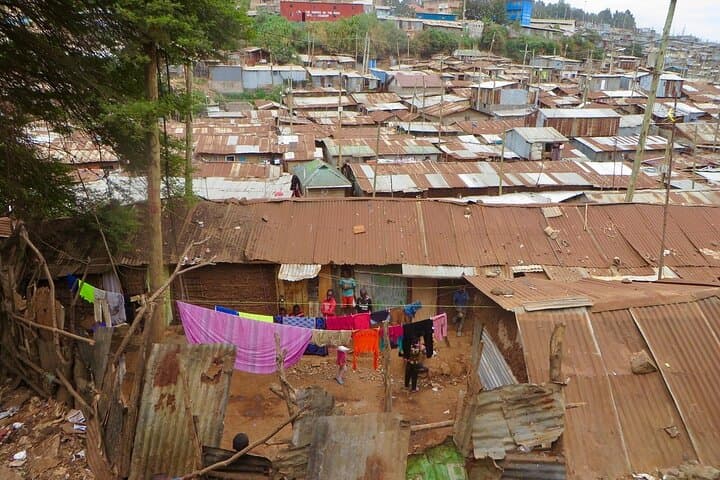

You step from the vehicle into a maze of narrow alleys where corrugated roofs and stalls press close; the air carries the sharp tang of market spices, second‑hand fabric and fresh beadwork. A guide moves ahead, opening doors into homes and workshops, translating the daily rhythm of a community that turned scarcity into craft.
You step from the vehicle into a maze of narrow alleys where corrugated roofs and stalls press close; the air carries the sharp tang of market spices, second‑hand fabric and fresh beadwork. A guide moves ahead, opening doors into homes and workshops, translating the daily rhythm of a community that turned scarcity into craft.
Kibera began as a labor camp during the Ugandan Railway construction in the late 19th century and evolved into one of Africa’s largest informal neighborhoods, now home to roughly a quarter million people. The ground here is the high Nairobi plateau—firm red soils and gentle slopes that slope toward the city center. Culture is visible in practical artistry: beads strung into necklaces, bones and metal repurposed into bowls and jewelry, and small businesses that supply Nairobi’s wider economy.
Expect a four‑ to five‑hour private walking tour that visits Toi Market, bead studios, and the Victorious Bone Crafts cooperative, and includes a guided visit to a typical household. Conversation and commerce are central; the tour emphasizes one‑on‑one interactions rather than voyeuristic observation.
Practicalities are straightforward: wear closed‑toe shoes for uneven ground, carry water and small change for purchases, and follow your guide’s lead when photographing people. Transport, guide and a guard are usually included, and this is a chance to support local entrepreneurs directly. Move with curiosity and respect—Kibera’s resilience is best seen through the steady work and ingenuity of its residents.